
Caterpillar is a leading manufacturer of construction and mining equipment worldwide, renowned for its heavy machinery, industrial gas turbines, and off-highway diesel and natural gas engines.
Always seen tied to construction cycles, Caterpillar is now breaking out of the mold with its Q3 2025 earnings, released on October 28, by positioning itself as an emerging player in the digital infrastructure ecosystem.
The company stock surged 12% on Oct. 28, following a stronger-than-expected earnings and a positive full-year outlook.
Highlights from Caterpillar’s Q3 2025 earnings report:
- Revenue is $17.6 billion, up 10% year over year.
- Adjusted EPS $4.95 is above analyst estimates.
- $1.1 billion of cash for dividends and share repurchases.
- A record backlog of $39.8 billion.
- Energy & Transportation sales increased 17%.
- The full-year 2025 net tariff impact is expected to be between $1.6 billion and $1.75 billion.
Now, the 100-year-old manufacturer, perhaps best known for bulldozers, has emerged as one of Wall Street’s most unexpected beneficiaries of the artificial intelligence boom.
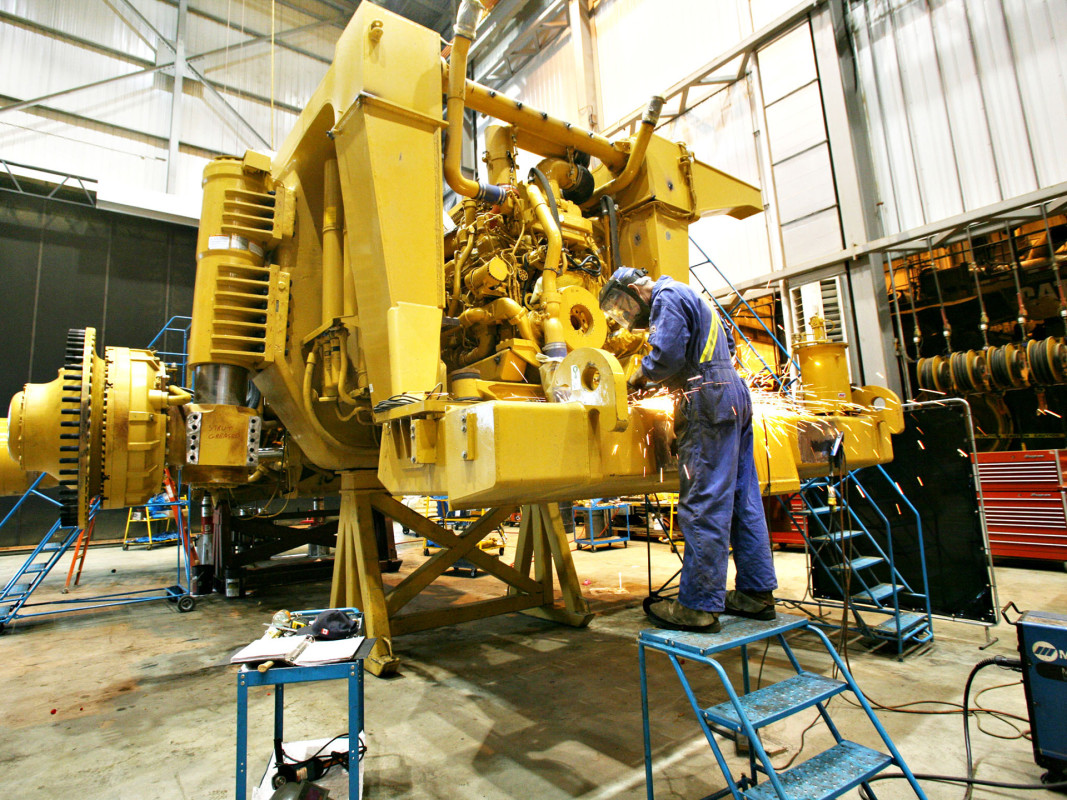 Caterpillar’s stock has increased 62% year to date.
Getty
Caterpillar shows energy-driven growth
Caterpillar management stated that business and customer health remain strong, providing the company with confidence as it heads into 2026.
Our team’s continued discipline in a dynamic environment, coupled with a growing backlog, positions us for sustained momentum and long-term profitable growth.
Joe Creed, Caterpillar CEO
Caterpillar’s Energy and Transportation division was the standout, increasing investor confidence in its ability to transition into a pivotal player in this AI-dominated market boom.
Its sales climbed 17% to $8.4 billion, driven by large engines and turbines used in data centers and oil and gas projects. The surge in these areas also highlights a growing electricity demand, driven by AI computing.
More Wall Street:
- Why 2 major asset managers just suspended investments into silver
- JP Morgan CEO issues blunt warning on auto industry bankruptcies
- Bank of America hiring data rings alarm on economy
This strength helped Caterpillar offset the softer trends in the construction and mining equipment sectors. The Construction unit grew by 7%, while Resource industries recorded a small 2% gain, primarily due to higher manufacturing costs and tariff-pressured margins.
However, overall, the company’s adjusted operating margin declined to 17.5%, down from 20% the previous year. The company reported $686 million in unfavorable manufacturing costs and $191 million in unfavorable pricing.
An AI beginning for legacy industries
The 3Q earnings reporting season is in full swing, and according to Bank of America global research, they have come in +6.9% above expectations and well above +3.7% pre-Covid average.
Caterpillar’s exceeding revenues also highlights a similar case, underscoring a broader shift in market narrative.
Related: Global shipping and logistics company files Chapter 11 bankruptcy
Legacy industrial firms such as Caterpillar are becoming increasingly tied to the AI economy. Their turbines, which initially centered on mines and oilfields, now power server farms, keeping the ever-expanding AI systems running.
Amid the AI boom, computing power has become one of the world’s most valuable resources. Servers in Data centers, which run 24/7, already consume 460 terawatt hours of electricity globally, and an IEA report suggests that this may more than double in five years.
Global electricity demand from data centers is set to more than double over the next five years, consuming as much electricity by 2030 as the whole of Japan does today.
IEA Executive Director Faith Birol
According to a McKinsey report, to keep pace with the demand for computing power, “data centers are projected to require $6.7 trillion worldwide.”
This relentless demand for power underscores why companies like Caterpillar are emerging as key beneficiaries of the AI era’s infrastructure.
Its engines, turbines, and hybrid power systems keep these data centers running, along with their capability to provide on-site generation, backup systems, and grid-independent solutions, positioning it as the center of the growing computing economy.
Related: Major analyst updates gold forecast as break below 4,000 sparks fears