
Back in the 1980s, when I needed new sneakers, my mother took me to a local retail store, The Athlete’s Corner. In that store, once you selected the shoes you might want, someone measured your foot, brought you sneakers to try on, and made sure they fit correctly.
That type of hands-on customer service used to be how most shoe stores worked.
It’s a level of service that’s no longer the default. When I bought a pair of New Balance sneakers at a DSW in January, for example, I picked the shoe, found my size on the shelf, and tried it on, with no help from a store employee.
That saves money, but it’s also an inferior experience that could lead to customers not getting the right shoes. It has, however, become the industry norm as traditional shoe stores that help customers find the right fit have been closing in large numbers.
Now, a 116-year-old icon, Raupp’s Shoes in Downtown Decatur, Ill., will soon join the list of service-based shoe stores that have closed their doors.
Shoe stores have been closing in large numbers
GlobalData Managing Director Neil Saunders questioned the overall need for shoe stores.
“The truth is that although they’re getting better, there is still this question: Do we need this specialist sneaker retailer?” he told CNBC, speaking of Foot Locker.
- Foot Locker: Announced plans to close 400 underperforming stores by 2026, including 275 Foot Locker locations and 125 Champs Sports stores, as part of a strategic “reset,” according to ABC News. The chain was later purchased by Dick’s Sporting Goods, which could lead to more closures, Cody Kline reported at TheStreet.
- Shoe City: The regional shoe chain filed for Chapter 11 in March 2023 and liquidated all 39 stores by May 2023, closing its remaining footprint, Retail Dive reported.
- Rockport Group: This footwear brand filed for Chapter 11 in 2023 and sold assets amid restructuring, illustrating financial stress in specialty footwear, according to documents filed on PacerMonitor.
- Olympia Sports (includes shoe offerings): Filed Chapter 11 in 2022 and shut down stores, showing pressures beyond typical apparel, according to documents filed on PacerMonitor.
- Payless ShoeSource: Liquidated and closed all 2,100 U.S. locations following its bankruptcy in 2019, representing one of the largest U.S. shoe retailer closures ever, PacerMonitor reported.
Over the past six years, the U.S. shoe retail sector has steadily contracted, with store counts declining and pandemic-driven sales drops accelerating closures nationwide.
- 2019: 77,000 U.S. shoe stores, according to POI Data
- 2025: 74,096 U.S. shoe stores added, per POI Data
- Covid Sales Drop: Down 87% in April 2020 and down 56% in May 2020, according to World Footwear
These nationwide declines in stores and sales help explain why local, service-focused retailers such as Raupp’s Shoes are closing after more than a century in business.
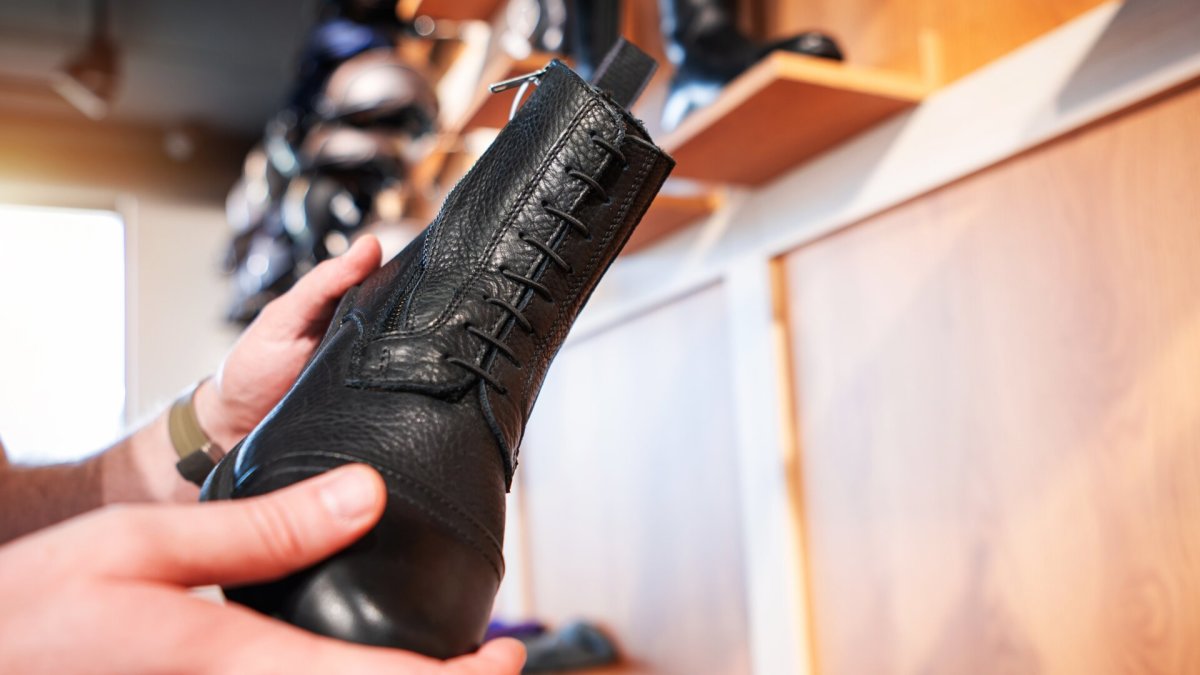 More shoe stores have become self-service.
Shutterstock
A local legend shoe store closes
Raupps, which has been open since 1909, will soon close its doors.
The chain has been passed down through the family and is now owned by Linda Brilley, along with her uncle, and she plans to retire soon. Since no family member wants to take the brand over, she will close its doors forever at an undecided date in the near future.
“Raupp’s is a sit and fit store where the sellers specialize in perfectly sizing each customer’s shoes,” WAND News reported.
More Retail:
- Costco sees major shift in member behavior
- Retail chain shuts all locations as legal changes hit industry
- Lululemon struggles to reverse concerning customer behavior
- T-Mobile launches free offer for customers after major loss
The closing marks the end of an era.
“I was self-taught by my dad. He worked here probably 70 years before he finally retired. And my uncle also did that,” Brilley said. “It’s the last sit and fit shoe store in Decatur.”
Shoe stores lose relevance
Standalone shoe stores are operating at a disadvantage.
Rick Scardino, principal at Lee & Associates of Illinois, pointed to the combination of high-quality real estate and the ease of shopping afforded by department stores as instrumental to Payless’ downfall, Rebusiness Online reported.
“One can assume that the company’s sales volume did not support the usually very visible real estate it chose,” says Scardino. “Consumers have less time than ever to make separate shopping trips for individual clothing, and other department stores created a convenience factor that was too difficult to overcome.”
Numerous local, full-service shoe stores have closed over the past few years as business has moved to lower-priced chains and the internet.
Related: Major fast-food chicken franchisee files Chapter 11 bankruptcy