
The British royal family never makes direct endorsements of a brand.
Even implying an endorsement violates the Advertising Standards Authority (ASA), which regulates advertising in the United Kingdom.
“Rule 6.2 states that members of the Royal Family shouldn’t normally be shown or mentioned in a marketing communication without their prior permission, but an incidental reference (unconnected with the advertised product), or references to material such as a book, article, or film about a member of the Royal Family, may be acceptable,” the agency shared on its website.
That’s a very narrow line, according to the ASA.
“So, although very general references to the King’s birthday or expressions of birthday wishes would seem likely to be acceptable, ads must not claim or imply that a product is endorsed by the Royal Family or that it is affiliated with Royal events if it’s not,” according to the ASA.
The ASA, however, cannot stop an inferred endorsement. In the case of Russell & Bromley, multiple members of the royal family, including Princess of Wales Kate Middleton and Queen Camilla, have regularly been spotted wearing the brand.
That’s not a direct endorsement, but it certainly suggests a fondness for the shoe brand, which has been closing stores and fighting for survival under administration, the U.K. version of a Chapter 11 bankruptcy.
Russell & Bromley closes stores, sells brand
Despite the affinity of members of the royal family, Russell & Bromley has struggled. The company has entered a Company Voluntary Arrangement (CVA), the United Kingdom’s version of Chapter 11 bankruptcy, in order to keep the brand alive.
Russell & Bromley entered administration in January 2026, according to filings with Companies House.
“In what is being seen as a significant blow to the high street fashion, the popular brand Russell & Bromley has announced that its chain was acquired by Next in an administration deal, triggering the closure of ten of its stores,” The Guardian reported.
Next, a leader in the U.K. fashions space partnered with Retail Realisation, a liquidation specialist with connections to Modella Capital, in order to acquire the family-owned shoe and bag retailer.
“Industry sources indicate Next’s interest lies solely in the Russell & Bromley name rather than its physical store network or existing stock,” GB News reported.
Restructuring experts say CVAs are designed to give struggling companies breathing room while protecting creditor returns.
“A Company Voluntary Arrangement (CVA) allows a business to restructure its debts while continuing to trade, often providing a better return for creditors than immediate liquidation,” according to PwC UK.
Next bought Russell & Bromley in January
Nearly all Russell & Bromley stores will close down.
“The transaction… sees Next acquire the Russell & Bromley brand and other intellectual property, as well as the transfer of three Russell & Bromley stores in Chelsea, Mayfair and the Bluewater Shopping Centre,” according to Interpath.
The acquisition by Next in January involved a £2.5 million deal for the brand name, domain names, and intellectual property, but crucially, only included three of the original 36 stores.
Next has launched a digital Russell & Bromley store on its website.
“Founded in 1873, Russell & Bromley has been a staple of British luxury for over 150 years. However, like many heritage brands, it has struggled to adapt to the post-pandemic retail landscape. The company cited several factors for the current crisis, but primarily it’s the shifting consumer habits that have marked an increase in online shopping and has reduced footfall in traditional shopping districts, The Guardian reported.
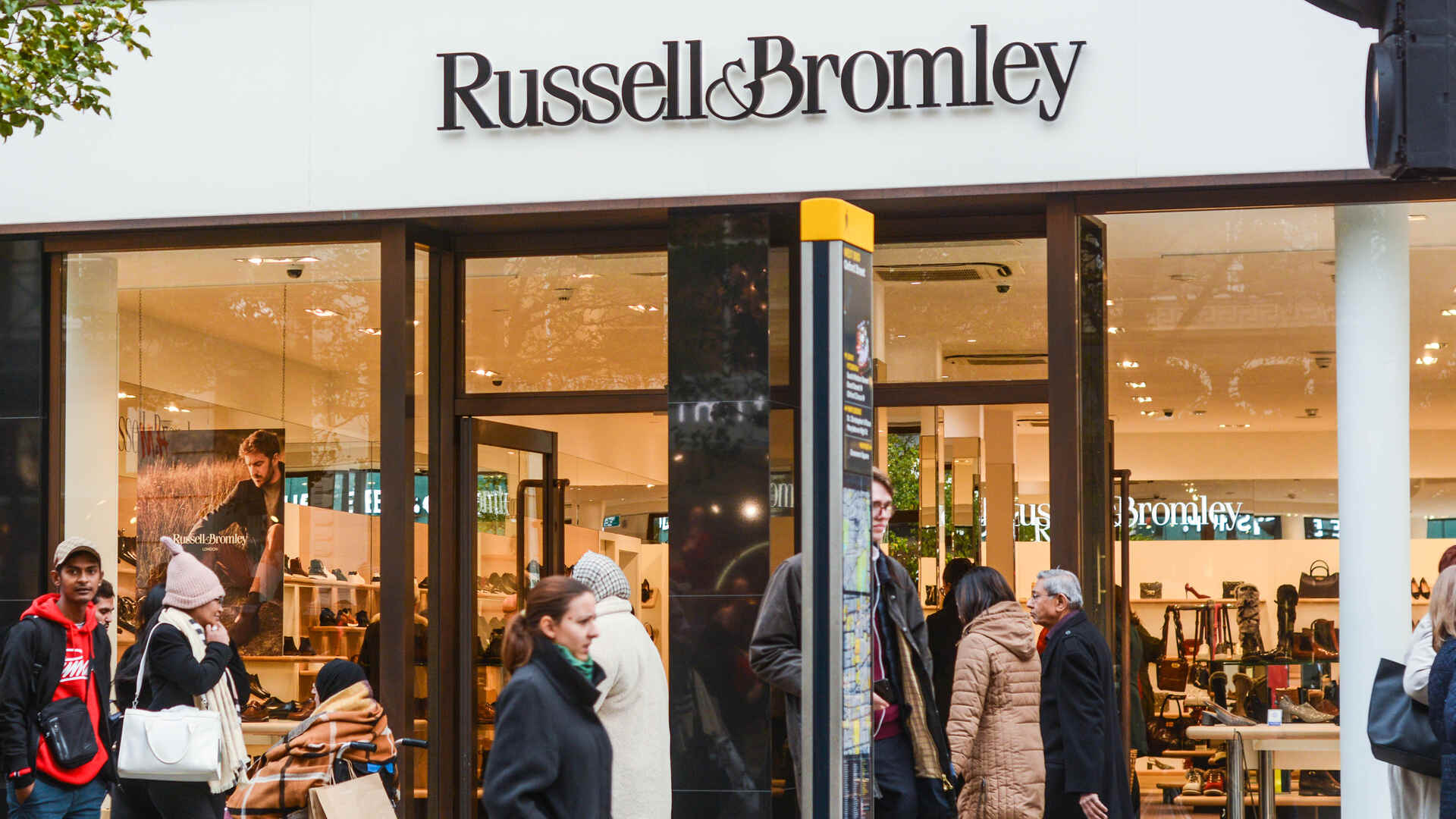 Most Russell & Bromley stores face closure.
Shutterstock
Company Voluntary Arrangement (CVA) key facts (U.K.):
- A CVA is a formal insolvency process that allows a company to agree a repayment plan with creditors while continuing to trade.
- CVAs are available to limited companies and LLPs that are insolvent or facing financial distress but are still viable.
- They require creditor approval of at least 75% (by value) of those who vote.
- Once approved, the agreement is legally binding on all creditors, including those who voted against it.
- Directors remain in control of the business, and the company can continue operating during the CVA.
- CVAs typically cover unsecured debts such as suppliers, landlords, and HMRC obligations.
- Payments are made over time under a structured plan, overseen by a licensed insolvency practitioner.
- Failure to meet the terms can result in liquidation or legal action from creditors.
- This type of agreement is used frequently by retailers and hospitality companies to reduce costs (especially leases) while avoiding closure.
- As an alternative to liquidation, a CVA allows the business to continue rather than shut down and sell assets. Source: GOV.UK
Related: Casino operator closes locations after bankruptcy filing