
When a company gets put into a receivership, that’s usually a last-ditch effort to save the brand.
“The receiver’s job is to literally operate the business,” said John Mark Jennings, apartner in the law firm of Shulman Hodges & Bastian LLP to Smart Business. “A receivership is an action brought against your company because it is being operated to the detriment of shareholders or creditors.”
It’s an extreme situation that could result in the company’s assets being sold off.
“If the right thing is to keep the business open, the receiver will do that,” Jenningssaid. “If a business cannot pay its debts and is a dying proposition, the receiver is moreapt to wind down his operations, rather than spending his time attempting to resurrect the company.”
Receiverships are often used by lenders to stabilize companies they believe are salvageable without a bankruptcy filing.
In the case of legendary liquor brand Uncle Nearest, the company has been under a receivership, which the brand’s founders are trying to end. That’s a situation the receiver, Phillip G. Young Jr., wants to prevent.
Uncle Nearest is on the financial brink
When he was appointed, Young made some immediate moves to improve Uncle Nearest’s finances.
“Uncle Nearest Inc. is preparing to sell off non-core assets, including French vineyards, a Cognac château, and other real estate, as part of efforts to stabilize the Shelbyville whiskey company under court-appointed receivership,” the Moore County Observer reported.
In a report filed Oct. 1 in U.S. District Court, Young did say that other assets might be sold, but the core brand was viable.
Young, in his position as receiver, has made a number of changes to the company. The receivership was initiated after a lawsuit was filed by Farm Credit Mid-America, Uncle Nearest’s senior lender.
Young has repaired that relationship, along with making other changes:
- The lender has agreed to offer $2.5 million in short-term funding to cover overdue bills and professional fees.
- A 13-week budget indicates that the company’s revenues are sufficient to cover its operating expenses.
- The company laid off 12 employees.
“While cash flow was ‘a major challenge’ in the first weeks, shipments are resuming, and interest from potential investors and buyers is growing,” the paper reported.
Now, Young faces a court battle over whether control of the company will be handed back to founder Fawn Weaver.
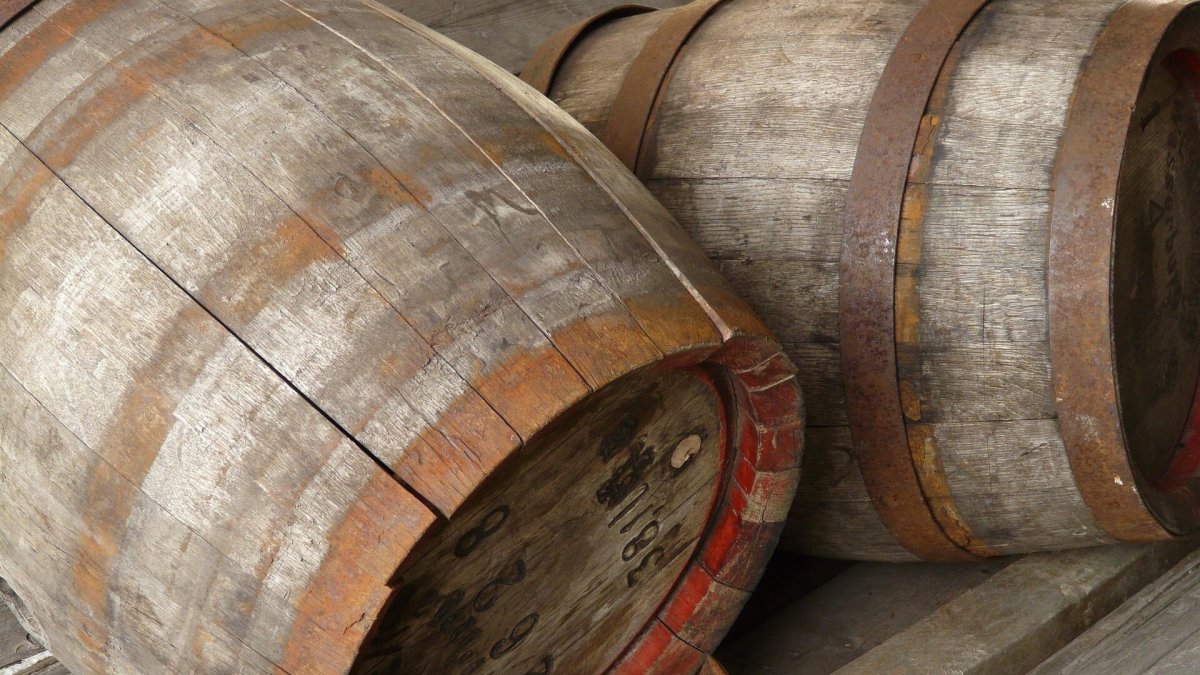 The fate of Uncle Nearest’s inventory is in the hands of the federal court in Tennessee.
Pixabay
Uncle Nearest faces insolvency
Young said that if Weaver regains control of the company, Farm Credit, the company’s principle creditor will foreclose.
That became public from newly unsealed documents filed Feb. 2 in federal court in Tennessee. Young said that if his receivership is ended by U.S. District Judge Charles E. Atchley on Feb. 9, when a hearing is scheduled on the matter, and Fawn and Keith Weaver regain control, “I believe that the company’s monthly losses would be approximately $2 million per month,” The Lexington Herald Leader reported.
Young told the court that when he took over in September, Uncle Nearest was unable to cover its $450,000 payroll except with a loan from the payroll processing company, repaid by advances from Farm Credit.
“But if the receivership, which was requested by Farm Credit after Uncle Nearest defaulted on more than $100 million in loans last fall, is ended, ‘I believe that Farm Credit would immediately cease covering these operational losses and move to foreclose on and repossess its collateral,'” according to an affidavit by Young.
Weaver, in an email sent to investors and employees that was obtained by the Herald-Leader, wrote that she plans to answer all the assertions made by the receiver.
“I want to be absolutely clear. Neither Keith nor I have ever personally gained anything monetarily from Uncle Nearest,” Fawn Weaver said.
More Bankruptcy:
- Key auto parts and services company files Chapter 11 bankruptcy
- Key travel brand files for Chapter 11 bankruptcy
- Self-driving-car company files for Chapter 11 bankruptcy protection
- 35-year-old consumer company files Chapter 11 bankruptcy
If Farm Credit pulls its support, according to Young, Uncle Nearest will immediately be on the hook for about $164 million in debt, including nearly $22 million in debts to vendors and $4.1 million to WhistlePig, among others. Uncle Nearest also apparently owes more than $10 million to Advanced Sprits, which purchased barrels of whiskey from Uncle Nearest that the company is required to repurchase at higher prices, according to the newspaper.
Young wants to maintain the receivership and expand it to seven related companies that have been “essentially operating as one company.”
Uncle Nearest’s history
- Nathan “Nearest” Green was a formerly enslaved man who became a master distiller and is credited with teaching a young Jasper Newton “Jack” Daniel how to distill whiskey, according to CBS News.
- After emancipation, Nearest became Jack Daniel’s first “head stiller” (master distiller).
- The brand Uncle Nearest was later created (launched in July 2017) in honor of Nearest Green, celebrating his legacy, reported Alcohol Professor.
- The brand emphasizes reclaiming and telling that history; for example, the founder Fawn Weaver researched and documented Nearest Green’s story and descendants. added, Alcohol Professor.
- In 2020, Uncle Nearest and Jack Daniel’s (owned by Brown‑Forman Corporation) collaborated on an initiative to promote diversity in the whiskey/spirits industry (the Nearest & Jack Advancement Initiative).
Young has been trying to keep the historic brand operating in order to avoid a bankruptcy filing.
“The receiver does not believe that a fire sale liquidation of the company (be that as part of this receivership or as part of a bankruptcy proceeding) is necessary or in the best interest of this company,” he wrote in the court documents.
Related: 70-year-old furniture retailer files Chapter 7 after sudden shutdown