
If you’re like me, you’ve noticed that the past few years haven’t been easy on Macy’s. The 160-year-old department store chain has suffered a slate of challenges, ranging from increased online shopping to mall closures to cash-strapped consumers.
As a result, Macy’s is closing underperforming stores, including two large mall-based locations near me, as it retrenches amid off-price apparel retailers like TJ Maxx cutting into its business.
I’ll miss shopping in person at Macy’s, especially during the holidays, as it was one of my favorite places to shop before Covid caused foot traffic at my local indoor mall to decline, and the holiday vibe at Macy’s to suffer. Those locations, which opened as two of the four anchor stores when the mall debuted in 1983 (as Jordan Marsh and Filene’s, respectively), were among my favorites to visit this time of year.
Regardless, Macy’s closures reflect a widespread trend that has already caused many mall-based chains to struggle to survive as sales have shifted online and away from indoor malls, where many Macy’s are located.
And, while closures are concerning, they may position Macy’s for a quiet comeback, given that recent data suggests sales at stores that will remain open are climbing.
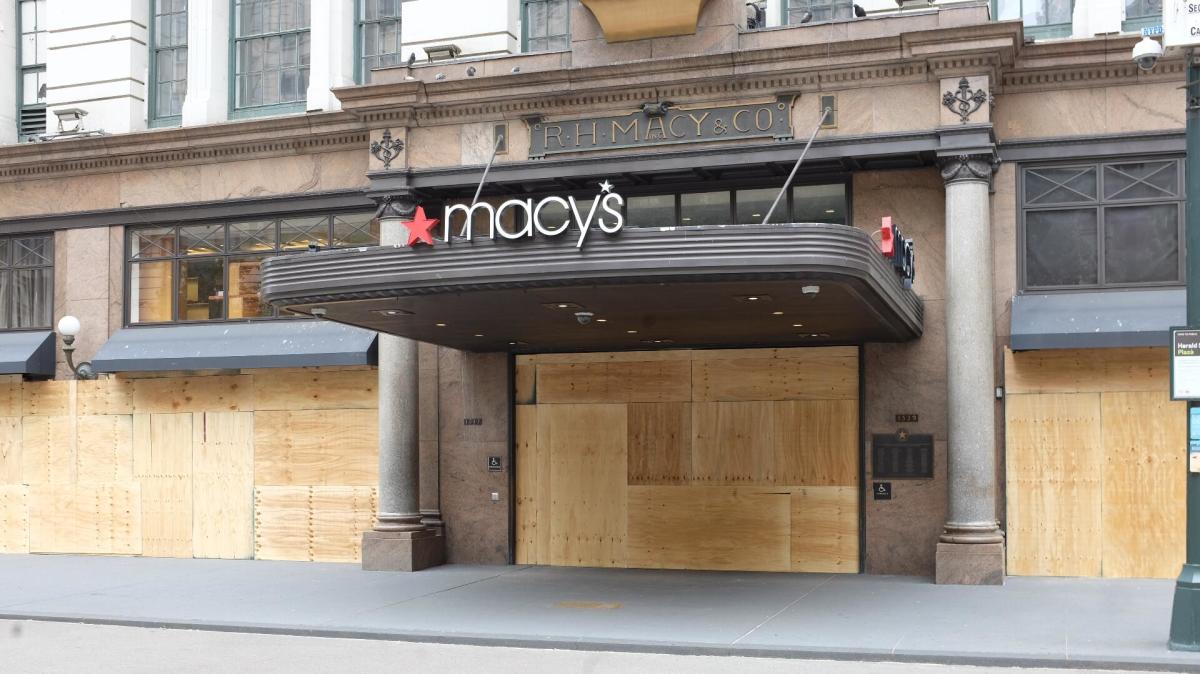 Macy’s is closing 150 stores as part of a major restructuring.
Shutterstock.
Macy’s has a long, storied history
The department store has been an American staple for over 150 years, since it was founded in 1858 by Rowland Hussey Macy. The retailer, which opened its first store on Sixth Avenue in Manhattan, between 13th and 14th Streets, focused on dry goods.
Over the years, it has been sold, seen one of its owners die on the Titanic, gone bankrupt, been merged with rivals, acquired regional competitors, and grown to become one of the country’s largest retail chains.
Macy’s historical timeline:
- 1858: Founded by Rowland Hussey Macy.
- 1896: Straus brothers, Isidor and Nathan Straus, acquire full ownership of R. H. Macy & Co. after becoming partners in 1888, according to RWCPulse.
- 1902: Flagship store opens at iconic Herald Square location in Manhattan, according to Macy’s.
- 1912: Isidor Straus and his wife, Ida Straus, perish when the Titanic strikes an iceberg and sinks, claiming the lives of over 1,500 on its maiden voyage, reports Titanic Belfast.
- 1924: A massive expansion completed the Seventh Avenue addition, crowning it the world’s largest store.
- 1924: First Macy’s Thanksgiving Day Parade, according to WCNC.
- 1986: R.H. Macy & Co. Management-led Leveraged Buyout (LBO), reports The New York Times.
- 1992: R.H. Macy & Co. files for Chapter 11 Bankruptcy, according to UPI.
- 1994: Acquired by Federated Department Stores, Inc, creating nation’s largest department store chain, reports The Washington Post.
- 2003-2005: Federated begins rebranding regional department store chains under the Macy’s banner.
- 2005: Acquires The May Department Stores Company, including Marshall Fields, adding approximately 500 department stores to its footprint, according to Federated Department Stores, Inc.
- 2007: Federated Department Stores changes name to Macy’s, and stock symbol to M, according to CNBC.
- 2016-Present: Company launches multiple restructuring efforts, resulting in the closure of hundreds of Macy’s stores. Source: Macy’s
Macy’s revamps as customer trends shift
At its peak, Macy’s, Inc. (M) operated 850 stores in 2007. Since then, a lot has changed. The rise of e-commerce, including online shopping for apparel, has forced department stores to rethink their footprints, especially mall-based retail chains, which saw foot traffic decline as Kmart and Sears closed anchor stores following Walmart’s rapid expansion into a national brand.
The move away from indoor malls, where many Macy’s stores are located, to outdoor malls and the rise of online shopping have pressured sales and profits — a trend that accelerated when the Covid pandemic forced us indoors.
More Retail:
- Costco CFO makes rare pricing promise
- Home Depot faces growing consumer boycott calls ahead of holidays
- Target’s efforts to make amends with customers hit a snag
- Amazon lawsuit could be a warning to other employers
Macy’s fiscal revenue in 2008 totaled $24.9 billion, or $36.3 billion in today’s dollars, adjusted for inflation. Instead, Macy’s revenue has declined, totaling just $22.7 billion in fiscal 2024.
A significant reason behind Macy’s revenue decline is its decreasing store count. The retailer operated 685 stores, including Bloomingdale’s and Bluemercury locations, last quarter, with Macy’s name-brand stores accounting for 450 locations, down from 737 in 2015.
Macy’s brand store count by year:
- 2024: 450
- 2023: 539
- 2022: 566
- 2021: 570
- 2020: 572
- 2019: 613
- 2018: 649
- 2017: 660
- 2016: 673
- 2015: 737 Source: Statista.
It’s unlikely to improve next year, given Macy’s plans to close 65 stores after the holiday shopping season, as part of a larger initiative announced in February 2024 to shutter approximately 150 stores through 2026 under a plan called “A Bold New Chapter.”
Macy’s “A Bold New Chapter” restructuring plan:
- Closing approximately 150 underproductive locations through 2026
- Prioritizing Macy’s investments in approximately 350 go-forward locations
- Expanding Bloomingdale’s and Bluemercury store count by up to 45 locations through 2026
- Monetizing $600-$750 million of assets through 2026 (via selling stores, parking lots (outparcels), and distribution centers).
Macy’s sees early signs of restructuring success
Macy’s overall sales fell slightly year-over-year in Q3, but dig deeper into the numbers and there are encouraging signs that Macy’s may return to growth once its store closure program has finished.
The company reported that sales across all brands fell 0.6% last quarter, with Macy’s weakness due to store closures offset mainly by 8.6% and 3.8% sales growth at Bloomingdale’s and Bluemercury, respectively, as well as sales growth at the remaining stores.
Performance at Macy’s name-sake branded stores varied significantly depending on their closure and remodel status. Across all stores, sales declined 2.3% due to closures. However, comparable sales at stores open for more than a year grew 2% overall, comp sales at go-forward stores rose 2.3%, and comp sales increased 2.7% at locations remodeled under its Reimagine 125 program.
In other words, absent the closures, Macy’s revenue would have increased by nearly 3%.
As a result, across all brands, including Bloomingdale’s and Bluemercury, comparable store sales at go-forward stores grew 3.4% year over year.
“Macy’s had its strongest comp growth in 13 quarters, led by a Go-Forward business, which achieved another quarter of positive comps,” said CEO Tony Spring on Macy’s third quarter earnings call. “Bloomingdale’s posted its fifth consecutive quarter of growth and its best comp in 13 quarters. And Bluemercury recorded another consecutive quarter of comparable sales growth.”
The Reimagine 125 plan involves remodeling 75 locations with better assortment, presentation, and increased staffing following its previous “first 50” pilot plan in 2023 and 2024.
Coupled with the success at Bloomingdale’s and Bluemercury, the growth on a go-forward basis and for remodeled locations is encouraging, suggesting the company is on the right path.
What’s next for Macy’s
Macy’s isn’t entirely out of the woods yet. It has more stores to close, which will drag on top-line sales growth in 2026; more stores need remodeling, and it faces ongoing hurdles from tariffs, given that 20% of its products are imported from China.
That said, so far, the company has kept tariffs’ bite relatively limited due to negotiating with suppliers, absorbing some of the cost from its profit (reducing full-year earnings per share by $0.25 to $0.35), and selectively increasing prices.
Still, management expects tough year-over-year comparisons associated with past closures, resulting in guidance for fourth quarter results to be flat to down 2.5% from 2024.
Nevertheless, Macy’s remains profitable, and management upped its earnings outlook after last quarter’s performance. It now targets full fiscal year earnings per share, or EPS, of at least $2, up from $1.70 previously.
Wall Street appears impressed by the initial progress. Goldman Sachs analysts raised their Macy’s stock price target to $22 from $16.50, while JP Morgan increased its target to $23 from $18. Jefferies also increased its target to $26 from $18.50.
Related: Beloved retailer makes comeback after 100s of stores close