
Grocery shopping is a basic necessity, but for many communities, access to nearby stores is becoming increasingly limited.
Now, a new wave of closures is highlighting that reality, as a long-established regional grocer is undertaking a significant restructuring in its key market. The changes will impact about 17 locations, reducing its presence across several communities and leaving many customers with fewer in-person options.
Founded in late 1987 and employee-owned since 2011, Homeland Stores has grown into Oklahoma’s largest locally owned grocery chain. The company operates 35 locations statewide under multiple banners, including Homeland Stores, CashSaver, United Supermarket, Food World, and Piggly Wiggly.
Homeland Stores confirms store closures, consolidations, and sales
Homeland confirmed that it will close select stores, consolidate others, and market several locations for sale in the coming weeks as part of a broader effort to strengthen its long-term operations and improve financial stability.
“These are not easy decisions,” Homeland Stores posted on social media. “Some of these locations have been part of their communities for years, and we’ve worked hard to keep them open as long as possible. But to move forward, we have to focus on building a stronger foundation for the future.”
Stores closing
Three Homeland stores and one CashSaver location will permanently close in Oklahoma within the next 45 days.
- Homeland Store 238: 1151 N. Bryant Ave., Edmond
- Homeland Store255: 1251 E. Alameda St., Norman
- Homeland Store219: 2600 W. Robinson St., Norman
- CashSaver 511: 902 W. Gore Blvd., Lawton
Stores being consolidated
Three Oklahoma United Supermarket locations will be consolidated and converted into Homeland stores, with a planned reopening scheduled for July 1, 2026.
- United Supermarket in Clinton transitioning to Homeland
- United Supermarket in Elk City transitioning to Homeland
- United Supermarket on Oklahoma Ave. in Woodward transitioning to United Supermarket on 8th in Woodward
Stores listed for sale
Homeland will also market 10 Oklahoma stores for sale, though no timeline has been set yet.
- United Supermarket 381: 1849 W. 4th St., Bartlesville
- HomelandStores 467: 2501 SE Washington Blvd., Bartlesville
- HomelandStores 515: 915 S. Madison Blvd., Bartlesville
- HomelandStores 563: 811 SE Frank Phillips Blvd., Bartlesville
- Homeland Stores 151: 625 NE 36th St., Oklahoma City
- Homeland Stores460: 904 S. 4th St., Ponca City
- Homeland Stores 469: 421 N. Main St., Stillwater
- CashSaver 752: 501 N. Broadway St., Cleveland
- CashSaver 592: 250 S. State Hwy. 97, Sand Springs
- CashSaver 778: 4001 OK-97, Sand Springs
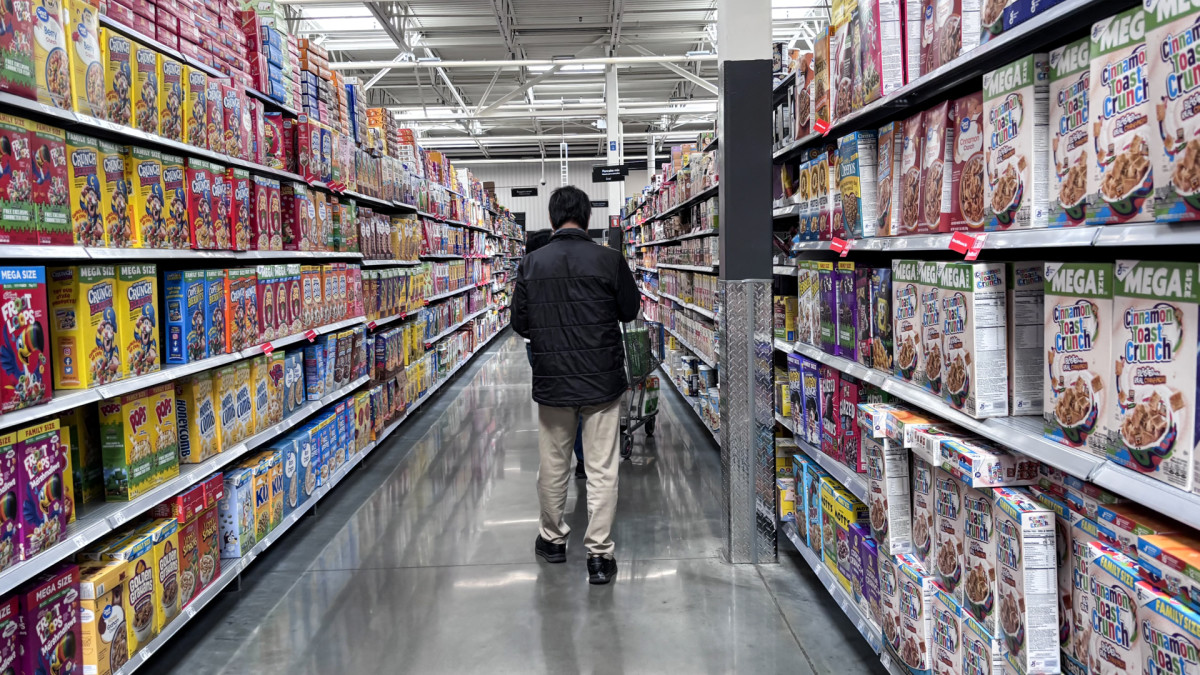 Homeland Stores confirms it will close select stores, consolidate others, and market several locations for sale across Oklahoma.
RONALDO SCHEMIDT / AFP via Getty Images
Grocery industry faces mounting pressure
Homeland’s restructuring reflects broader challenges across the U.S. grocery industry. Retailers are increasingly reducing their physical footprints as they adapt to rising costs, changing consumer habits, and the continued growth in e-commerce.
U.S. retailers are expected to close about 7,900 stores in 2026, down 4.5% from 2025, while 5,500 locations are projected to open, up 4.4%, according to Coresight’s U.S. Store Tracker 2026 Outlook.
Coverage on more grocery store closures:
- 100-year-old grocery chain closes another store in major shift
- 111-year-old grocery chain closing more stores in 2026
- 110-year-old grocery chain operator closes store after 40 years
Industry analysts warn that continued store closures may have ripple effects beyond retail, particularly in smaller or underserved communities. Fewer physical locations can limit access to essential goods, weaken local economies, and accelerate reliance on online shopping.
“For consumers, the fallout means fewer choices, diminished access to in-person shopping, and, in some cases, higher prices due to reduced competition,” said Approved Funding President and Chief Lending Officer Shmuel Shayowitz.
In some affected areas, the Homeland closures could leave residents with limited nearby grocery options, especially in smaller markets, as some will have no remaining Homeland stores in their immediate neighborhoods.
Competition from major retailers intensifies
At the same time, traditional grocers are facing growing pressure from large-scale and nontraditional competitors.
Scott Moses, a partner and head of the grocery, pharmacy, and restaurants advisory group at Solomon Partners, highlighted the rise of national and discount chains such as Walmart, Target, Costco, and Amazon, as well as dollar-store operators such as Dollar General, Family Dollar, and Dollar Tree.
“For many years, I’ve been sounding the alarm about the rise of national/discount grocers,” said Moses to Supermarket News. “[It’s an] existential threat that they pose to supermarket grocers, just as we’ve all seen over the last 20 years how department stores have been marginalized.”
What it means for the future of grocery retail
Homeland’s latest move signals a broader shift underway across the grocery industry. Companies are reevaluating their physical footprints to better align with evolving consumer habits and ongoing economic pressures.
As inflation reshapes spending behavior, shoppers are becoming more price-sensitive and selective, contributing to lower foot traffic in some markets. In response, retailers are adapting by focusing on efficiency, consolidation, and digital growth.
While these changes may help stabilize operations, they also point to a future in which fewer physical stores serve wider areas, and in which convenience, competitive pricing, and online ordering play a growing role in how Americans buy groceries.
Related: The Giant Company acquires stores as owner exits market