
Few brands are as deeply embedded in youth culture as one that helped define the style identities of multiple generations, and whose site evokes nostalgia in many shoppers.
From its expansive selection of Vans sneakers to its Thrasher graphic T-shirts and Santa Cruz Skateboards, the retailer has long embodied a distinct skater culture rooted in late-1990s and early-2000s fashion, an influence that continues to resonate today, even nearly five decades later.
Originally founded in 1978 as “Above the Belt,” Zumiez has grown into a leading specialty retailer focused on apparel, footwear, and accessories for teens and young adults. Its stores became a staple of the American mall experience, serving as a shopping destination and cultural moment.
Today, however, the retail landscape is changing. As malls lose their popularity in everyday social life, Zumiez is adapting to the shift, including closing multiple stores heading into 2026.
Zumiez confirms store closures in 2026
Zumiez (ZUMZ) has confirmed plans to close 25 stores in fiscal 2026, including 20 in North America and five internationally, according to its fourth-quarter fiscal 2025 earnings report.
This represents an increase from the 17 closures in fiscal 2025. However, the company framed the move as part of a long-term optimization strategy rather than a response to declining demand.
As of Feb. 28, 2026, Zumiez operates 716 stores globally under the Zumiez, Blue Tomato, and Fast Times banners.
Store count by region
- United States: 560
- Canada: 45
- Europe: 83
- Australia: 28
Zumiez CEO Richard Brooks described the closures as the final phase of a broader industry shift away from lower-performing malls.
“What we’re seeing in the U.S. is actually finally the end of, I think, the final leg on a bunch of mall locations at the lower end C- and D-volume mall locations, where we had traditionally been able to make some money, but now they’ve just got to the point where they’re just not working anymore,” said Brooks.
Notably, Zumiez reported that overall sales in North America continued to grow, even as store counts declined. This shows that the closures are primarily tied to shifting consumer preferences toward stronger retail environments, rather than weakening brand performance.
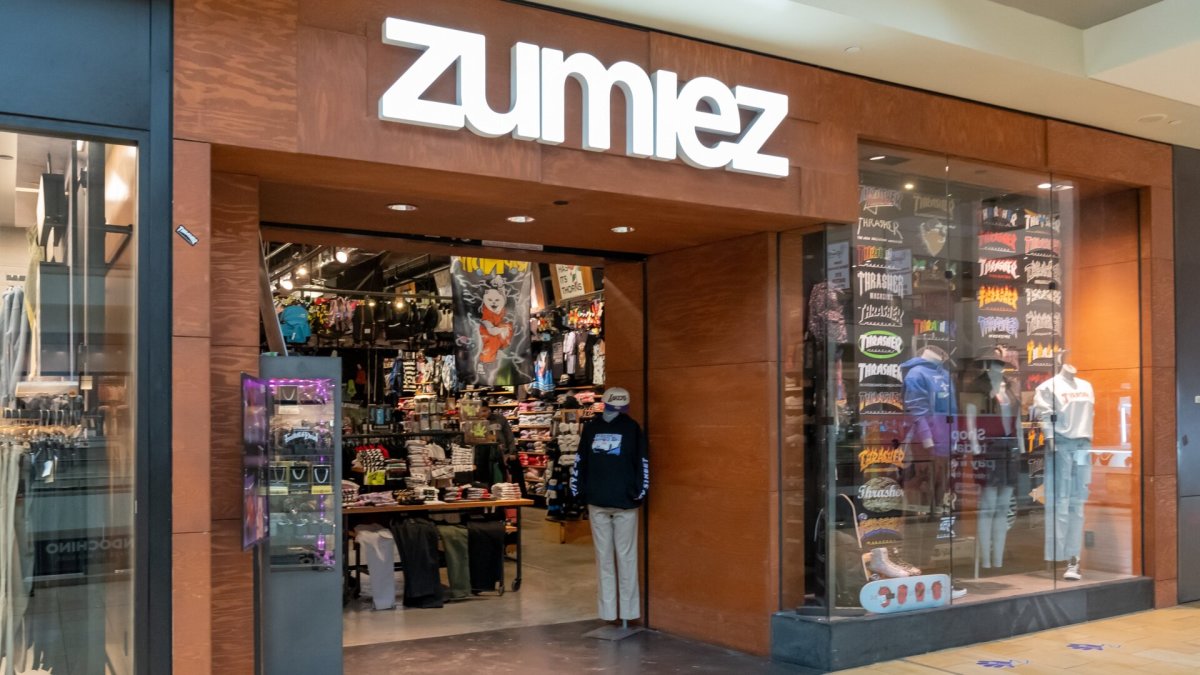 Zumiez confirms store closures in 2026.
Zumiez’s financial performance signals resilience
Zumiez’s recent financial results suggest resilience amid industry changes.
In the fourth quarter of 2025, net sales increased 4.4% year over year, and comparable sales rose 2.2%, according to Zumiez’s 10-K filing.
For the full fiscal year ending January 2026, revenue grew across nearly all regions, with U.S. sales up 5.5% year over year.
Zumiez expects approximately $12 million in lost sales due to store closures in fiscal 2026. Even so, the company projects low single-digit total sales growth, demonstrating confidence in its streamlined store footprint and omnichannel strategy.
By consolidating into stronger locations and improving per-store performance, Zumiez is aligning its brick-and-mortar strategy with modern consumer patterns.
The mall isn’t dead; it’s evolving
While malls have faced years of declining foot traffic, recent data show signs of recovery.
In 2025, visits to indoor malls increased by 1.3%, and visits to outdoor mallsclimbedby0.6%, according to Placer.ai’s The Mall Index.
Placer.ai Retail and Real Estate Analyst Shira Petrack noted that malls continue to attract affluent and suburban consumers, particularly those seeking experiences beyond traditional shopping.
More Retail Store Closures:
- 77-year-old jewelry giant will close 100 stores, shut 2 brands
- 106-year-old retail brand operator closing all stores in bankruptcy
- Kohl’s shares surprising store closure news
“Indoor malls and open-air centers attract a disproportionate share of ultra-wealthy and affluent suburban households, underscoring malls’ ongoing relevance for consumers seeking family-friendly activities and experiences,” said Petrack.
However, competition has intensified. More than 70% of mall visitors also shop at big-box retailers such as Walmart and Target, highlighting a shift in consumer behavior and underscoring that malls are no longer primary shopping hubs, but instead are part of a broader retail ecosystem.
To remain competitive, high-performing malls are increasingly leaning into experiential offerings, such as entertainment, dining, and services that cannot easily be replicated online or by mass merchants.
Mixed analyst sentiments on Zumiez
Despite Zumiez’s solid financial performance, analysts’ opinions remain divided.
Some see upside. Seeking Alpha analysts recently upgraded the stock to a “buy,” citing strong fourth-quarter performance and potential margin expansion driven by easing tariff pressures.
“Zumiez’s execution and margin expansion make it a relatively attractive option in the retail sector,” said Seeking Alpha analysts.
Others remain cautious. Wall Street Zen downgraded the stock from “buy” to “hold,” with additional firms expressing concerns about long-term growth in a changing retail environment, MarketBeat reported.
Share buyback signals confidence
On March 11, 2026, Zumiez unveiled a $40 million share repurchase program, allowing the company to buy back up to 10.2% of its outstanding shares.
Share buybacks are often interpreted as a sign that leadership believes the stock is undervalued, reinforcing confidence in the company’s long-term outlook.
As of March 26, 2026, Zumiez shares are down 14.5% year to date, reflecting broader market pressures and mixed investor sentiment.
Zumiez’s bottom line
Zumiez is not retreating; it’s refining.
By closing underperforming stores while maintaining sales growth, the company is aligning its physical footprint with current behavior.
At the same time, improving mall traffic and strategic financial moves suggest that both Zumiez and the mall business may be entering a new phase, defined less by scale and more by experience, efficiency, and adaptability.
Related: 106-year-old retail brand operator selling 170 stores in bankruptcy