
- Freight companies have struggled despite demand.
- Multiple bankruptcies have already been filed in October.
- High operating costs and tariffs remain risks.
America has a freight and trucking crisis.
“According to the American Trucking Association, there’s a shortage of 50,000 truck drivers nationally. It’s increasing shipping costs not just to businesses, but to consumers, too,” CBS News reported.
The challenge is that there is a shortage of licensed drivers, and many who get a CDL actually drop out of the field due to low wages and a difficult lifestyle. Many truck drivers struggle to cope with overnights and long hours, which has contributed to the problem.
And while the driver shortage has gotten slightly better in recent years, the reason for that is not a good one.
“The truck driver shortage eased for a third straight year in 2023 because of the prolonged downturn in freight demand, not because recruiting quality drivers has gotten easier,” American Trucking Associations SVP and Chief Economist Bob Costello told TruckingDive.
He made it clear that the easing was likely short-term.
“It’s gotten better for all the wrong reasons,” Costello said, in response to an audience question. “I would totally anticipate, if things pick up a little bit better than I’m anticipating, that we would start to see the driver shortage end up rearing its ugly head again.”
Trucking has been a challenging business with low margins, and even though demand is there, a number of companies have failed. Five different trucking and freight companies have filed for Chapter 11 bankruptcy, while another is headed for a Chapter 7 bankruptcy filing.
Why are freight companies failing?
Trucking and freight can be an early warning of a struggling economy, Michael H. Belzer, professor of transportation economics and labor relations at Wayne State University, told Bloomberg Law.
“The canary in this coal mine is trucking, which runs on the narrowest margins and is notoriously structured to cannibalize itself to survive, until it fails,” Belzer said.
Many trucking companies have failed despite the demand because of over-expansion and high operating costs.
“After the boom, companies overinvested in trucks and drivers based on a temporary spike in demand,” Daniel Alpert, executive chairman at Westwood Capital and macroeconomics professor at Cornell Law School told Bloomberg Law.
In some cases, the cost of fuel and labor has been the driving factor.
John H. Ohle, president and sole shareholder of Tony’s Express, bought the company in May 2023 from brothers Anthony “Tony” Raluy and George Raluy. Their father started the business in 1954, and the new owner filed for Chapter 11 bankruptcy in 2024.
“The current market just didn’t support our ability to operate and be a profitable company, and the cost of fuel in California made it very difficult,” Ohle told FreightWaves a few days after the closure.
“We were in very serious discussions with two different companies about coming in and partnering or taking over Tony’s, and those fell apart at the very end, and literally, it was a last-minute decision.”
The crisis has not slowed down, and five freight/shipping companies of various sizes filed for Chapter 11 bankruptcy protection in the first two weeks of October. Another stopped operating and essentially entered Chapter 7 bankruptcy (a formal filing is expected).
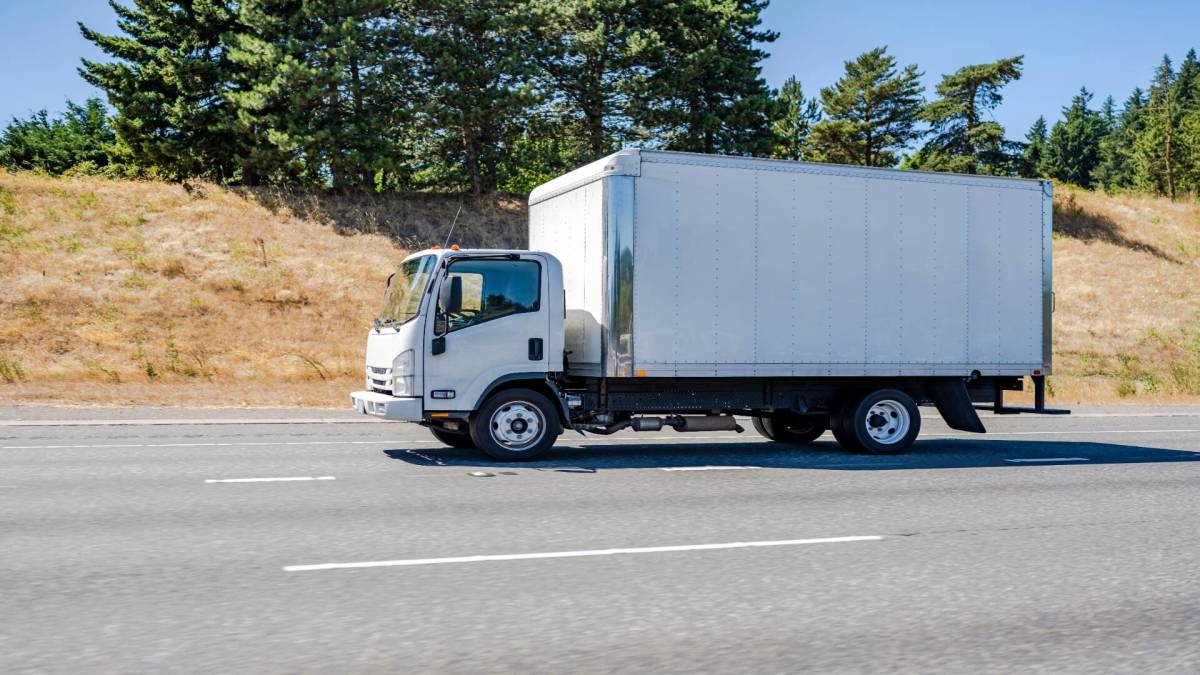 A number of large freight companies have failed in 2025.
Shutterstock
October trucking and freight bankruptcies
G1 Transport, LLC
- Filing date: October 3, 2025
- Court: District of Minnesota
- Type: Chapter 11 (reorganization)
- Assets/Liabilities: Under $1 million
- Reason: Equipment loan defaults and freight rate declines
- Plan: Restructure + retain customer contracts Source: PACERMonitor
GEC Transport Solutions LLC
- Filing date: October 6, 2025
- Court: U.S. Bankruptcy Court, Northern District of Texas
- Type: Chapter 11 (reorganization)
- Assets/Liabilities: $1 million -$10 million
- Creditors: 50-99
- Business: Regional freight carrier (dry van + flatbed)
- Reason: Rate compression and rising insurance costs Source: PACERMonitor
Styx Logistics LLC
- Filing date: October 9, 2025
- Court: District of Delaware
- Type: Chapter 11
- Assets/Liabilities: $500,000-$1 million
- Creditors: Less than 50
- Business: Long-haul and intermodal logistics
- Reason: Fuel spikes and equipment loan refinancing issues Source: PACERMonitor
Propel Trucking, Inc.
- Filing date: October 2, 2025
- Court: U.S. Bankruptcy Court, Middle District of Tennessee
- Type: Chapter 11 (Subchapter V small business)
- Assets/Liabilities: $500,000-$1 million
- Creditors: Less than 50
- Reason: Fuel price volatility and delayed customer payments
- Status: Operating under court supervision Source: PACERMonitor
R&R Transport & Logistics LLP
- Filing date: October 9, 2025
- Court: Southern District of Texas
- Type: Chapter 11 (reorganization)
- Assets/Liabilities: $1 million- $10 million
- Creditors: 25-50
- Focus: Flatbed and oilfield freight
- Reason: Energy sector slowdown and unpaid invoices Source: Inforuptcy
Montgomery Transport LLC
(Shutdown, not a Chapter 11 case: Chapter 7 bankruptcy expected)
- Shutdown date: October 9, 2025
- Type: Planned Chapter 7 liquidation
- Fleet: 450 trucks/500 drivers
- Reason: Cash-flow crisis and falling freight demand
- Status: Operations ceased Source: TruckingInfo report
Better trucking days may be ahead
It’s possible, however, that better days lie ahead for the trucking industry. Bob Costello, chief economist at the American Trucking Associations (ATA), shared some insight recently.
“Retail inventories in particular, are quite low, but even wholesaler inventories are at a good place. Manufacturing is a little elevated but getting better. So, all of this because this was a major headwind on freight volumes for the last couple of years. Because why order more goods when I already have them in inventory?” Truck News reported.
“So we’ve gone from a headwind to maybe not a tailwind, but potentially a little tailwind.”
Tariffs, however, present a risk that could impact the recovery.
“If [tariffs] are in for any substantial amount of time, I think that brings in a real risk of macro-recession, no doubt about it,” he said.
“It’s going to be a drag on freight volumes, because tariffs, after all, are taxes. As importers pay those, they’ve got to raise prices. When you raise prices on goods, people are going to buy less of them.”