
A top-rated analyst at Piper Sandler has made a massive bet on Micron Technology (MU), slapping a $400 price target on the stock with unusual confidence.
That’s a steep 45% climb from the previous $275 target, an eyebrow-raising $125 increase, and it matters a ton because Micron has been flying.
In the past month alone, the stock has skyrocketed 43%, dwarfing the S&P 500’s gains at just under 1%.
In the past week alone, it has jumped almost 20%.
For perspective, from its Jan. 7 close of $339.55, Piper’s new target still implies a solid 18% upside.
The note comes at a point when Micron has clearly been outrunning Wall Street.
I covered Bernstein’s call on the stock on Jan. 4, when the firm lifted its Micron target to $330 from $270.
That felt bold, but Micron blew right past that level in days.
Having covered tech for years, I can’t remember a memory boom quite like this one. After multiple sluggish cycles, the current industry setup is tight, disciplined, and led by insatiable demand for AI that just isn’t blinking.
Piper Sandler’s Harsh Kumar isn’t prone to hype.
According to TipRanks, he is a 5-star analystranked No. 9 out of 10,401 analysts, with a superb 73% success rate and a 35.4% average return per rating.
So, when someone with that pedigree says Micron is undervalued, investors tend to listen, especially in a market that’s rewriting the old playbook.
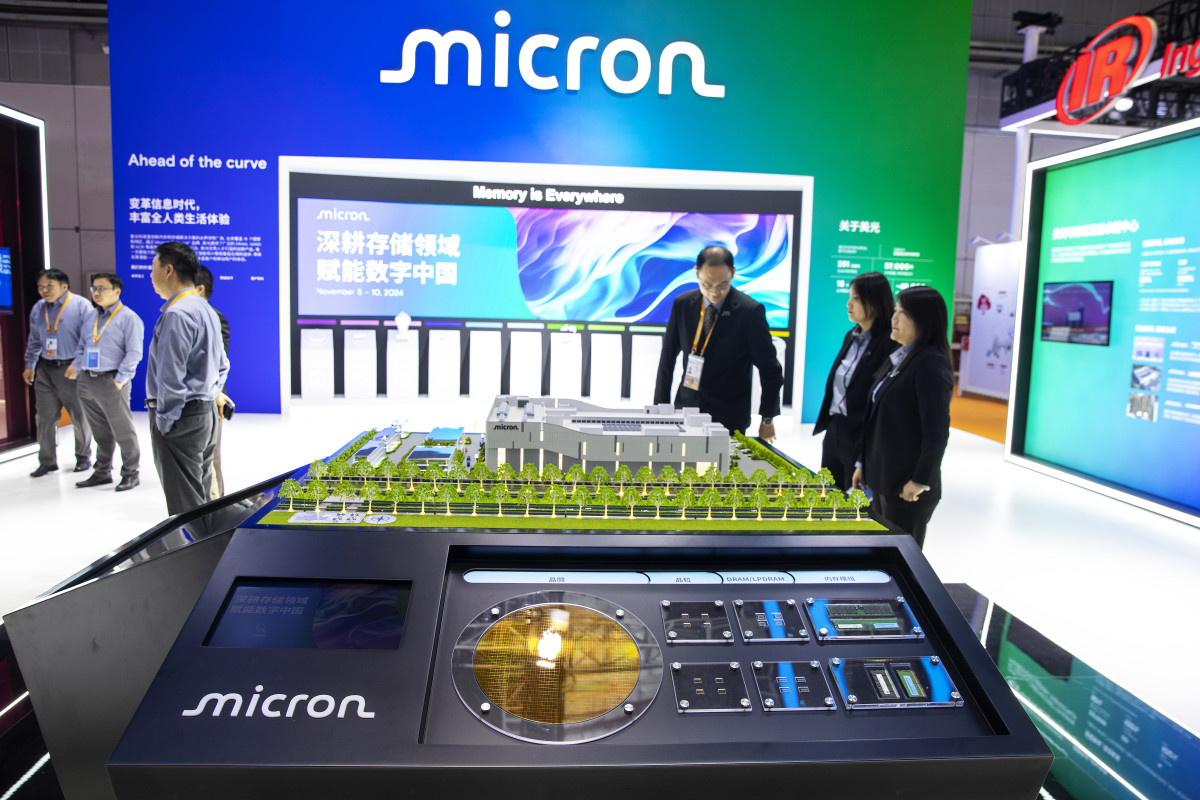 Piper Sandler’s bold Micron call reflects tight memory supply and pricing power that isn’t easing anytime soon
Micron’s memory supply is already spoken for
Piper Sandler’s bullish reset on Micron’s stock is rooted in a supply picture that’s already spoken for.
More Tech Stocks:
- Morgan Stanley sets jaw-dropping Micron price target after event
- Nvidia’s China chip problem isn’t what most investors think
- Quantum Computing makes $110 million move nobody saw coming
- Morgan Stanley drops eye-popping Broadcom price target
- Apple analyst sets bold stock target for 2026
The firm emphasized that Micron’s memory output for 2026 is sold out, and fulfilling that capacity isn’t a matter of simply flipping a switch or two.
Piper Sandler analysts Harsh Kumar and Josh Dunn wrote that,
That remarkable imbalance is accompanied by a stark engineering reality.
For fresh memory supply to come online, it entails additional clean room space and incredibly complex node transitions.
Picture it as expanding a Formula 1 factory while simultaneously redesigning the car.
In addition to hiring new workers, you also need robust, ultra-sterile facilities and must re-engineer virtually every component to tighter tolerances.
Related: Top analyst drops eye-popping price target on ASML stock
So none of these things is quick or cheap.
Consequently, we’re seeing customers lock in multi-year agreements for key products, including LPDDR and HBM, thereby cementing Micron’s pricing power.
Moreover, even with Micron looking to bring approximately 20% more supply online in 2026, demand is still running ahead at an incredible pace.
High-value memory changes the pricing game
Historically, memory has been mostly a volume game.
Related: Nvidia CEO makes clear break from playbook
That effectively meant you needed to accept the brutal cycle of shipping more bits along with boom-and-bust pricing.
AI is obliterating that pattern.
Prices for high-bandwidth memory (HBM), low-power double data rate (LPDDR), and other premium components are less influenced by gigabyte shipments and more closely tied to performance, power, and supply chain tightness.
- HBM is a mix-shift monster: TrendForce reports that HBM sells for multiple times conventional DRAM and about 5 times DDR5.
- The TAM is exploding: Micron has pegged its 2025 HBM total addressable market at an eye-popping $35 billion, with TrendForce flagging 5%–10% HBM price bumps being negotiated for 2025 due to capacity constraints.
- HBM isn’t like old-school DRAM: Micron notes that HBM3E consumes roughly 3 times the silicon compared to a typical DDR5 in producing the same bits, with that trade ratio to rise even more.
- LPDDR is becoming a data-center product: Micron believes that the low-power DRAM in AI servers can cut memory power by over two-thirds compared to DDR5, while hoping to generate multi-billions in sales from high-capacity DDR5 products.
The bottom line for Micron shareholders
Micron stock has run hot, and from a technical standpoint, the tape still looks mostly in charge.
MU stock is trading nearly 12% above its 10-day Simple Moving Average (SMA) ($303), 36% above the 50-day ($250), and roughly 66% over the 100-day ($205).
On the flipside, its valuation tells a more nuanced story.
On trailing numbers, Micron is trading at a considerably richer multiple versus its peers.
Seeking Alpha data shows that Micron stock is trading at 30-times non-GAAP earnings compared to the sector median at 25-times, sailing above its 5-year average of 16.58.
Also, it’s trading at 9-timessales compared to 3.42 for the group (and 4.03 over five years), signaling investors are already paying up for the cycle.
However, on a forward basis, that tension eases up.
For instance, its forward non-GAAP P/E is 10.66 versus 25.90, which means that earnings power will potentially catch up.
A big portion of Micron’s bull case hinges on HBM pricing and mix remaining stable, allowing earnings to catch up over time.