
Updated at 8:56 AM EDT
U.S. consumer inflation eased modestly last month, data indicated Wednesday, suggesting little early impact on prices from President Donald Trump’s tariff threats, which won’t be worked into the economy until later this spring.
The Commerce Department said its headline Consumer Price Index for the month of February was pegged at an annual rate of 2.8%, down from the 3% pace recorded in January and just inside Wall Street’s 2.9% forecast.
On a monthly basis, price pressures rose by 0.2%, slowing from the January advance of 0.5%, which was the highest since 2023. The slower monthly figure came even as domestic gasoline prices increased 1.6%.
Egg prices, however, surged an astonishing 58.8% from last year and were up 10.4% from January levels, as the impact of avian flu on the culling of domestic flocks continues to deepen.
So-called core inflation, which strips out volatile components like food and energy, slowed to an annual rate of 3.1%, besting Wall Street’s 3.2% forecast and January’s 3.3% pace.
The monthly core reading of 0.2% was also inside Wall Street forecasts and the final January reading of 0.4%.
Related: Fed chairman has blunt 9-word response to recession talk
“Today’s inflation report brings some much-needed relief for equity markets, averting immediate concerns around stagflation and giving the Fed space to cut policy rates in the coming months if economic data continue to deteriorate,” said Seema Shah, chief global strategist at Principal Asset Management.
However, it’s worth remembering that this may be the calm CPI report before the storm,” she added. “Not only does the Fed need to wait for tariff policy clarity, but once tariff implementation arrives, it is likely to bring at least some price increases, with the inflation picture potentially getting uglier as the months go on.”
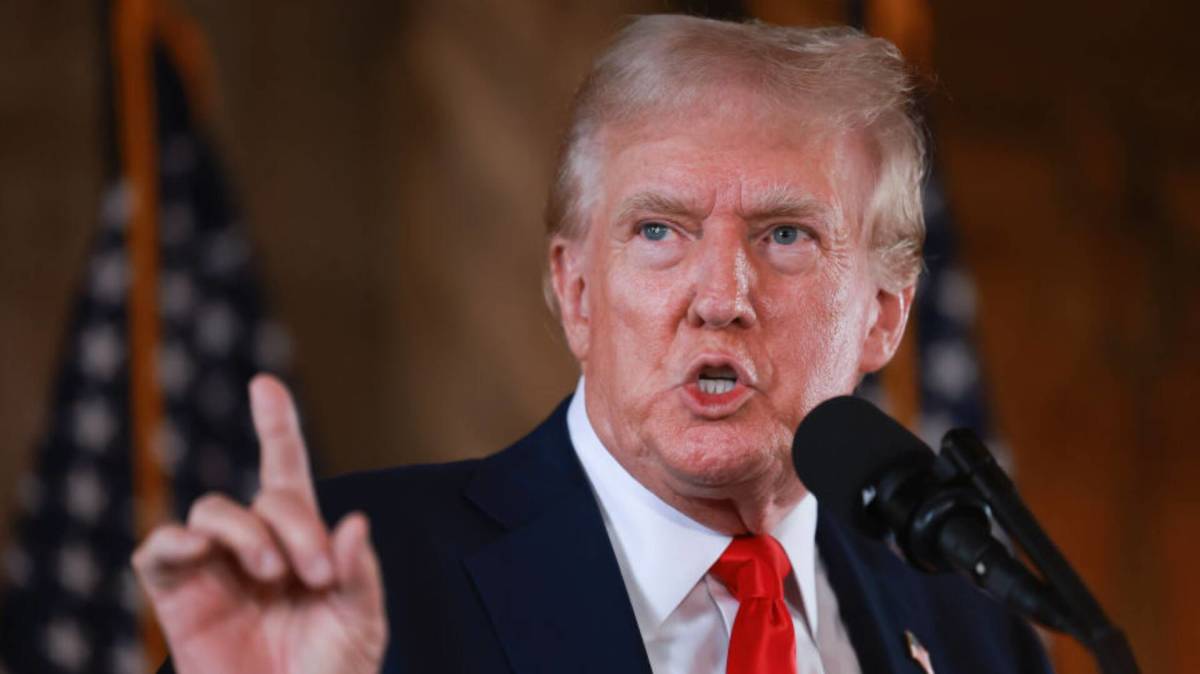 President Donald Trump has said he ‘doesn’t see’ recession risks from his tariff policies but says levies could increase over the coming months.
Stocks react to inflation surprise
U.S. stocks extended gains following the data release.
Benchmark 10-year Treasury note yields edged 1 basis points to 4.322% following the data release, while 2-year notes were pegged at 3.935%.
The U.S. dollar index, which tracks the greenback against a basket of six global currencies, was marked 0.33% higher at 103.621.
Related: Treasury secretary sends strong message on recession risk
Meanwhile, the CME Group’s FedWatch tool is pricing in little chance of a Federal Reserve rate cut when the central bank decides on interest rates on March 19. It pegs the odds of a quarter-point reduction in June at around 53.5%.
Last week, Fed Chairman Jerome Powell echoed the market’s concern about “uncertainty” tied to tariff and economic policies, but he noted that solid labor markets and easing inflation likely mean the central bank remains in “no hurry” to change its key policy rate.
More Economic Analysis:
- U.S. consumers are wilting under renewed stagflation risks
- Jobs reports provide critical look at economy, could roil markets
- Fed inflation gauge indicates big changes in key economic driver
His remarks come, however, amid a host of growth-forecast downgrades from top Wall Street banks. Goldman Sachs lowered its 2025 GDP forecast to 1.7% to reflect what it called “new tariff assumptions” for the world’s biggest economy.
“While our previous tariff assumptions implied a peak hit to year-on-year GDP growth of -0.3 percentage [point], our new assumptions imply a peak hit of -0.8 percentage point. In the risk scenario, this would grow to -1.3 percentage points,” the bank said.
The Atlanta Fed’s GDPNow tracker, meanwhile, pegs the current-quarter contraction at around 2.4%. It will be populated with new data starting March 17.
Related: Veteran fund manager unveils eye-popping S&P 500 forecast