
Global investors are exiting U.S. stocks at a record pace amid the ongoing uncertainty tied to President Donald Trump’s tariff and budget-cutting policies and the prospect of a trade war among the world’s biggest economies.
Bank of America’s closely tracked Fund Managers Survey, which polls investors controlling around $477 billion in global assets, showed the biggest decline on record in holdings of U.S. stocks, to a net 23% underweight position, and the lowest overall allocation in at least two years.
The investors are also taking money out of riskier trades, while holding the largest allocations of cash since the pandemic, citing trade war risks and the specter of stagflation in the world’s biggest economy.
“Our broadest measure of [Fund Manager Survey] sentiment, based on cash levels, equity allocation, global growth expectations hit a seven-month low,” the survey, published Tuesday, noted.
“This month’s decline is the largest since March 2022, and the seventh-largest in the past 24 years, only surpassed by extreme bear sentiment observed around major market shocks,” the report added.
“Still, [sentiment in the survey is] nowhere near extreme bear as [it] has retrenched from the uber-bull level of December to a more neutral level in March,” the survey said.
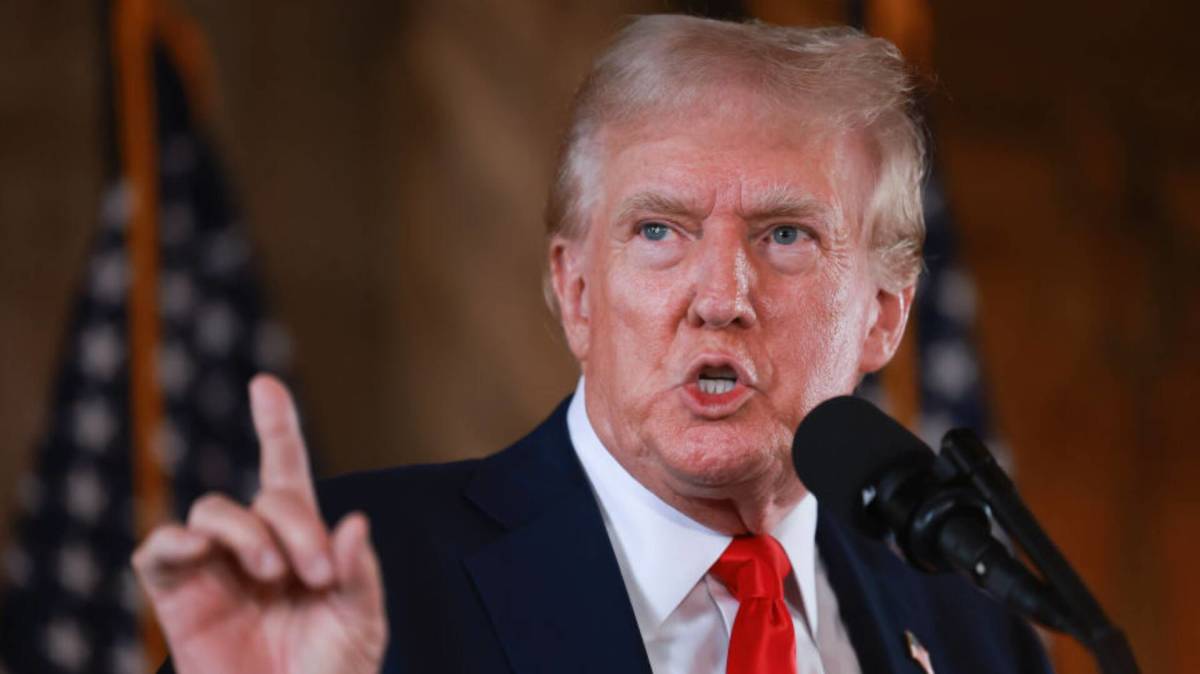 Uncertainty tied to President Trump’s economic agenda has triggered one of the fastest stock market corrections on record.
The S&P 500’s slump into correction territory last week, defined as a 10% retreat from a recent high, was one of the fastest such moves on record. Most analysts tied the slump to Trump’s erratic tariff and trade policies and ongoing effort to slash the federal workforce with massive job and spending cuts.
Europe’s Stoxx 600 index, meanwhile, is up nearly 9% so far this year, with allocations to the regional benchmark hitting the highest levels since July 2021.
Uncertainty weighs on investors’ confidence
And despite back-to-back rallies on Friday and Monday, the benchmark remains down 3.3% for the year and around 100 points south of its Election Day peak.
“The lack of clarity on tariffs also makes it difficult to assess their potential impact on inflation and economic growth,” said Jason Turnquist, chief technical strategist at LPL Financial.
Related: Wall Street analyst overhauls S&P 500 price target as markets gyrate
“Some strategists aren’t waiting to find out and recently cut U.S. growth and earnings forecasts,” he added. “We believe the risk of further downgrades remains on the table until there is more transparency on trade policy.”
LSEG data, published Friday, showed analysts were expecting profit for the companies in the S&P 500 to grow around 10.6% in 2025, down from the 14% forecast that held at the start of the year.
“Outside of tariffs, signs of a slowing economy and concerns over spending on artificial intelligence have further weighed on risk appetite and the American exceptionalism theme,” Turnquist argued.
Jean Boivin, who heads the BlackRock Investment Institute, said the recent market volatility is being worsened by policy uncertainty that’s taking investors out of previously “crowded” positions.
More volatility ahead for stocks?
“For example, last week saw a rapid move away from popular trades, like the tech-heavy momentum equity style factor that had some of its sharpest declines since the pandemic,” he said. “Both could drive more volatility in the near term.”
CBOE Group’s VIX index, which hit a year-to-date high last week, was marked at $20.84 in early Tuesday trading, a level that suggests daily swings of around 1.3%, or 74 points, for the S&P 500.
“But over time, deleveraging will have run its course and uncertainty will likely ease as we get more policy implementation details, such as the White House’s full tariff plan due in April,” Boivin said. “U.S. stocks could face more near-term pressure, but we stay overweight on our tactical horizon.”
More Economic Analysis:
- Retail sales add new complication to Fed rate cut forecasts
- CPI inflation surprise resets tariff talk
- Does Friday’s big rally mean the worst is over?
Lisa Shalett, chief investment officer for the Global Investment Office at Morgan Stanley Wealth Management, says, however, that the “pace and sequencing of policy reform appear to have structurally impaired confidence” in the broader market.
“Meanwhile, consensus first-quarter S&P 500 earnings forecasts have fallen, partially undermining the ‘value’ created by the recent correction,” she said.
“While earnings outlooks remain in the soft-landing base-case camp, stagflation potential has risen, typically a poor scenario for stocks and bonds,” Shalett added.
Related: Veteran fund manager unveils eye-popping S&P 500 forecast