
“If you’re not growing, you’re dying” has long been a saying in retail.
It means that complacency can kill your business. That can take a lot of forms.
In many cases, it shows up when a successful retailer assumes that what works today will work tomorrow. We’ve seen lots of examples where a successful retailer captures a trend but can’t find the next big thing.
💵💰Don’t miss the move: Subscribe to TheStreet’s free daily newsletter 💰💵
Some chains, like Gap, True Religion and Forever 21, captured the zeitgeist for a moment but were unable to evolve with the market. Building a business around trendy products is incredibly challenging, and that’s why both True Religion and Forever 21 faced bankruptcy with only the jeans company surviving.
Related: Iconic retail brand closing stores nationwide for good (locations revealed)
Broader chains, however, must also evolve to survive. Target, for example, has been a hot retailer that can do no wrong, and it has also been facing boycotts and other negative customer reactions.
Staying on top requires making tough choices, and one of those might mean successful retailers close stores.
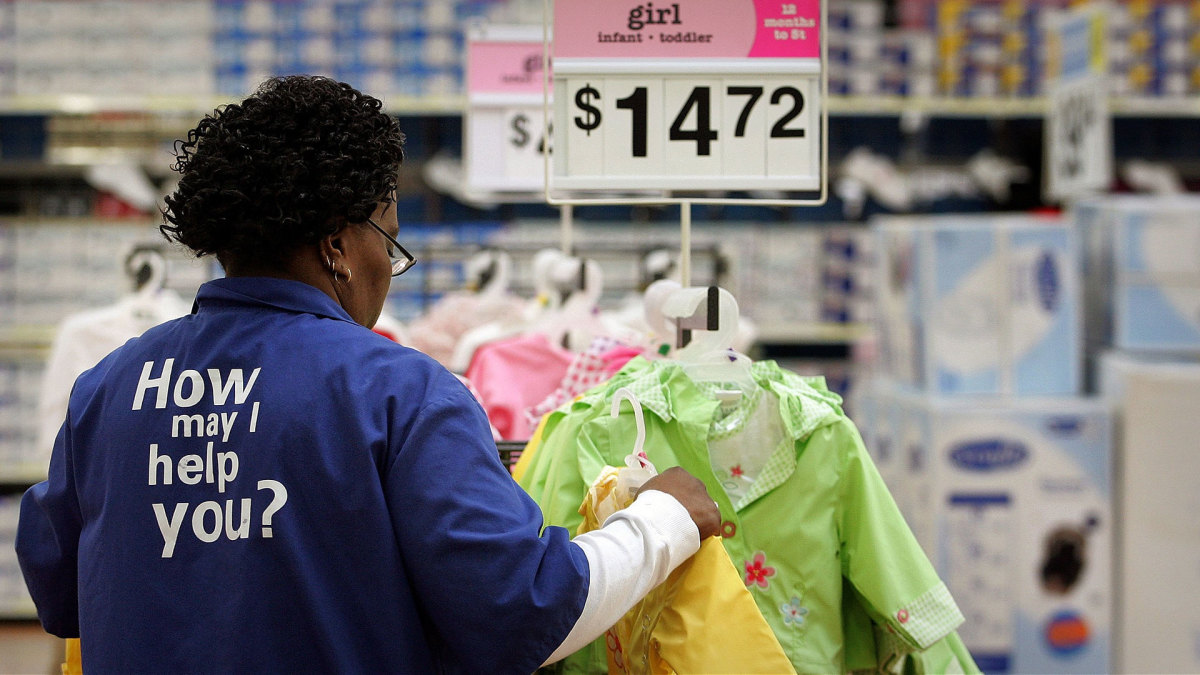 Walmart has made the tough decision to close select locations.
Image source: Tim Boyle/Getty Images
Walmart closing multiple stores
Closing locations isn’t always a sign of failure. Sometimes, it’s just good management.
Starbucks, for example, closes a few hundred stores every year or two. In most cases, that’s due to population shifts and similar changes.
If an office building near one of the coffee-bar giant’s shops closes, the foot traffic might drop too low to justify keeping the location open. Sometimes, moving the store to a nearby location makes more economic sense.
More Retail:
- AT&T quietly issues stern warning to customers
- Sam’s Club makes a big change to a beloved membership perk
- GameStop announces risky move amid store closures
Carefully managing your store base, even when you’re a market leader, is simply a necessary part of business.
Walmart (WMT) does not often close stores, but it does make the hard choices when needed.
Here’s the list of Walmart stores that will be closing:
- Dunwoody, Ga. – Ashford Dunwoody Road
- Marietta, Ga. – Walmart Neighborhood Market on Roswell Road
- Towson, Md. – 1238 Putty Hill Ave.
- Columbus, Ohio – 3579 S. High St.
- Milwaukee – 7025 W. Main St.
- Aurora, Colo. – 10400 E Colfax Ave.
- San Diego – 2121 Imperial Avenue
- El Cajon, Calif. – 605 Fletcher Parkway
- West Covina, Calif. – 2753 E. Eastland Center Dr.
- Fremont, Calif. – 40580 Albrae Street
- Granite Bay, Calif. – 4080 Douglas Boulevard
Walmart closed all 51 Walmart Health locations in 2024. The retailer has also trimmed its grocery chain while it has begun to expand its Sam’s Club warehouse club chain.
Walmart has posted strong results
Walmart Chief Executive Doug McMillon did not comment on the 2025 store closures. It closed a similar number of locations in 2024.
McMillon did say that the company has performed well.
“We finished the year with another quarter of strong results. Our associates are doing a great job serving our customers and members,” he commented during Walmart’s fiscal-fourth-quarter earnings call.
“For the quarter, we had sales growth of 5.2% and adjusted operating income was up 9.4% in constant currency. We continue to gain market share across countries and income levels.”
Walmart’s transaction counts and unit volumes across the world frew.
“As we look at our results for the quarter and the year, we’re pleased to see, first, a healthy [revenue] line,” he added. “We’re strengthening our ability to serve people how they want to be served in the moment. That’s what’s driving our growth.”
Related: Lululemon CEO sounds alarm on unexpected customer behavior
McMillion sees the formula as fairly simple.
“Our prices are low and we’re becoming more convenient. Customers are shopping with us more often and buying more items,” he added.
He also made clear that the chain has significant room to evolve.
“Second, we’re growing profit faster than sales, and we have runway to scale our higher-margin businesses like membership, marketplace, and advertising,” he said. “We’re mixing ourselves up while simultaneously investing in lower prices and associate wages.”