
Some may think the rising popularity of birria tacos is causing people to love burritos less than they used to. Chipotle’s challenges may go far beyond that, however.
The fast-casual chain recently announced an upcoming expansion to Latin America, opening its first-ever location in Mexico. At the time, the company expressed confidence that this latest international expansion would spur growth in its business.
💵💰 Don’t miss the move: Subscribe to TheStreet’s free daily newsletter 💵💰
Some people were not as sure about Chipotle’s assumption, explaining why they believe its expansion to Mexico will never work.
Related: Chipotle fans skeptical of its latest restaurant move
When a well-known company makes a big announcement, there are always people who will raise doubts, despite not being business owners themselves. But in a recent turn of events, netizens’ assumptions might not be far off.
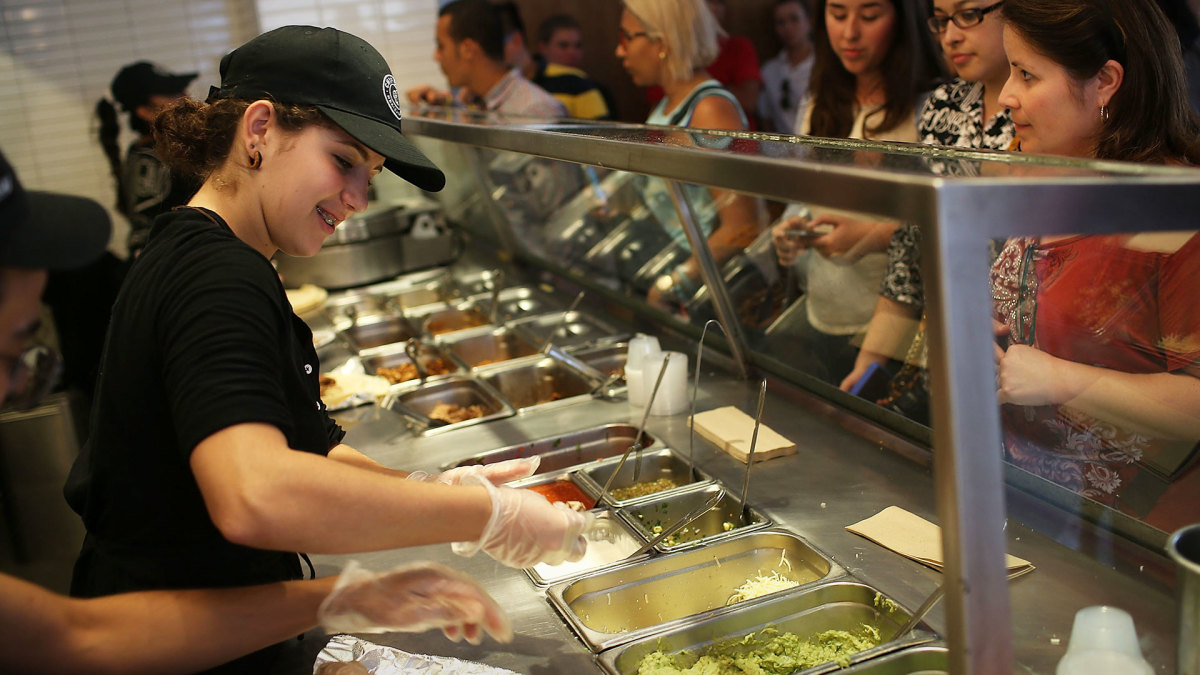 Chipotle reports first-quarter earnings for 2025.
Image source: Joe Raedle/Getty Images
Chipotle CEO flags an alarming consumer behavior that could be detrimental
During a conference call in early February, Chipotle (CMG) CEO Scott Boatwright stated that consumers were concerned about the state of the economy and inflation, which was causing them to reduce their spending.
However, he eased consumers’ concerns by stating that the company was not worried about the new tariffs’ effects on its primary ingredients, despite the potential cost increase, as it intended to absorb them.
“We are fortunate to have such an extraordinary economic model at Chipotle that we can withstand those types of inflationary pressures and not have to pass those costs off to the consumer,” said Boatwright. “And that’s our intent this year. Let’s hold pricing constant because we don’t know if the tariffs are transitory, if they’re going to be permanent, and how sticky they’ll be in the new administration,” he added.
Related: Chipotle makes pricing pledge to customers
Two months later, Boatwright’s tone was not as positive during this latest earnings call.
Consumer behavior has trickled down to Chipotle’s business, causing slowdowns in consumer spending and declines in the frequency of restaurant visits, which have had financial repercussions for the company.
“We could see this in our visitation study, where saving money because of concerns around the economy was the overwhelming reason consumers were reducing the frequency of restaurant visits. This drove a slowdown in our underlying transaction trends,” said Boatwright.
Chipotle stock falls after revealing a concerning finding
Chipotle’s earnings results for the first quarter of 2025 were underwhelming and troublesome for the company, amid such a crucial international expansion project on the horizon.
The company’s same-store sales fell 0.4% during the quarter, marking the first decline since the pandemic in 2020, and restaurant transactions were down 2.3% year over year.
Although total revenues were up by 6.4% to around $2.9 billion compared to last year, it still didn’t meet analysts’ average expectations of $3.1 billion.
The weaker-than-expected earnings have declined over 19% year to date, causing Chipotle’s stock to fall 2% during extended trading hours on April 23.
More Food News:
- Burger King menu adds whopper of a Whopper offer
- Hard seltzer brand tries to recapture magic with new product line
- Whataburger finally brings back beloved menu item
Nonetheless, Chipotle doesn’t expect tariffs to affect growth until the second half of the year, despite its dependence on imports from Australia, Mexico, and China.
“I am confident that we have a strong plan to return to positive transaction comps by the second half of the year, and during these uncertain times, we will continue to invest in the things that make Chipotle a special brand — our people, culinary, value proposition, innovation, and growth,” said Boatwright.
However, Chipotle lowered its sales forecast for fiscal 2025 from same-store sales growth in the low- to mid-single-digit range to growth in the low-single-digit range.
The company also projects high inflation in the second quarter due to tariffs, which will continuously add 0.5% to sales costs. Yet, these estimates don’t include any impact from the postponed 25% tariffs on Mexico and Canada.
Related: Veteran fund manager unveils eye-popping S&P 500 forecast