
My mom and I wear matching Cartier Love bracelets.
It’s kind of our thing — and it means more than just jewelry.
Anyone who owns one knows it’s not just a bracelet. It’s an experience. At the boutique, you’re offered a glass of Cartier-branded champagne (or Pellegrino for us sober girlies), which instantly sets the tone — elegant, intimate, and deeply personal.
Related: Burberry plans major layoffs in desperate reset for luxury brand
From that first sip to the moment the bracelet is locked onto your wrist, it feels less like a purchase and more like a rite of passage.
💵💰Don’t miss the move: Subscribe to TheStreet’s free daily newsletter💰💵
Cartier — and its sister brand Van Cleef & Arpels — has mastered that emotional connection. Their pieces represent more than luxury. They carry meaning.
Which is why it’s no surprise that their parent company just reported strong year-end results.
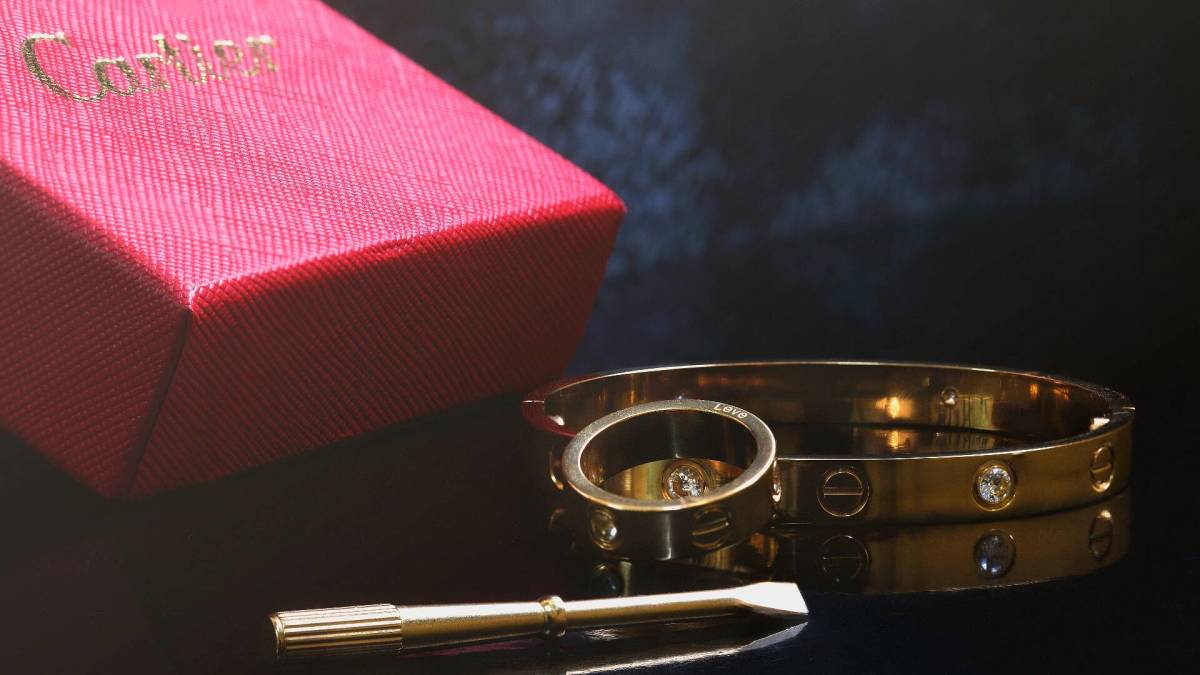 Richemont ends strong, driven by Cartier and Van Cleef.
Image source: Shutterstock
Cartier and Van Cleef announce surprising results
According to the company’s latest press release, Richemont ( (CFRHF) ) ended the year on a high note.
In the fourth quarter, group sales rose 7% at constant exchange rates, driven by an 11% increase from its powerhouse Jewellery Maisons, including Cartier and Van Cleef & Arpels.
That segment brought in more than €3.7 billion (~$4.1 billion) in Q4 sales, reinforcing Richemont’s dominance in ultra-luxury. The jewelry business continues to thrive, even as demand cools elsewhere.
Related: Major jewelry player pulls the plug on distressed brand
While competitors like Kering and Burberry are scaling back, Richemont is doubling down — opening boutiques, expanding manufacturing, and adding new names like Vhernier to its portfolio.
Not every luxury brand is growing right now, especially with tariff uncertainty and shifting consumer demand.
But, Richemont is finding a way.
Richemont’s long-term luxury strategy is paying off
Richemont’s results reflect more than just smart timing. They are the payoff of a long-term strategy focused on heritage, craftsmanship, and direct-to-consumer control.
Jewelry now makes up more than 70% of Richemont’s total business, and it’s only growing. The company also holds one of the strongest balance sheets in luxury, with €8.3 billion (~$9.27 billion) in net cash.
That kind of financial flexibility allows Richemont to keep investing, even when other brands are cutting back. It’s why the company could take a nearly €1 billion write-down on its former e-commerce business and still post a €2.75 billion (~$3.07 billion) annual profit.
With a refreshed leadership team, a booming jewelry division, and a global footprint that’s more balanced than most, Richemont isn’t just surviving this market.
It’s quietly leading it.
If these results say anything, it’s clear that my mom and I aren’t the only ones locking something special onto our wrists.
Related: Veteran fund manager unveils eye-popping S&P 500 forecast