
U.S. President Donald Trump just delayed his plan to impose a 50% tariff on goods imported from the European Union, citing productive discussions with European Commission President Ursula von der Leyen.
On April 9, Trump imposed 20% tariffs on the EU as part of his sweeping “reciprocal tariffs,” before slashing the rate down to 10% for 90 days. Last week, he suggested a “straight 50% tariff” on the EU beginning on June 1.
💵💰Don’t miss the move: Subscribe to TheStreet’s free daily newsletter💰💵
Markets responded quickly. The S&P 500 gained 2.05% on May 27, and the tech-heavy Nasdaq Composite jumped 2.47%.
However, many investors remain concerned about inflation, slow earnings, and global economic uncertainties despite the recent market rally.
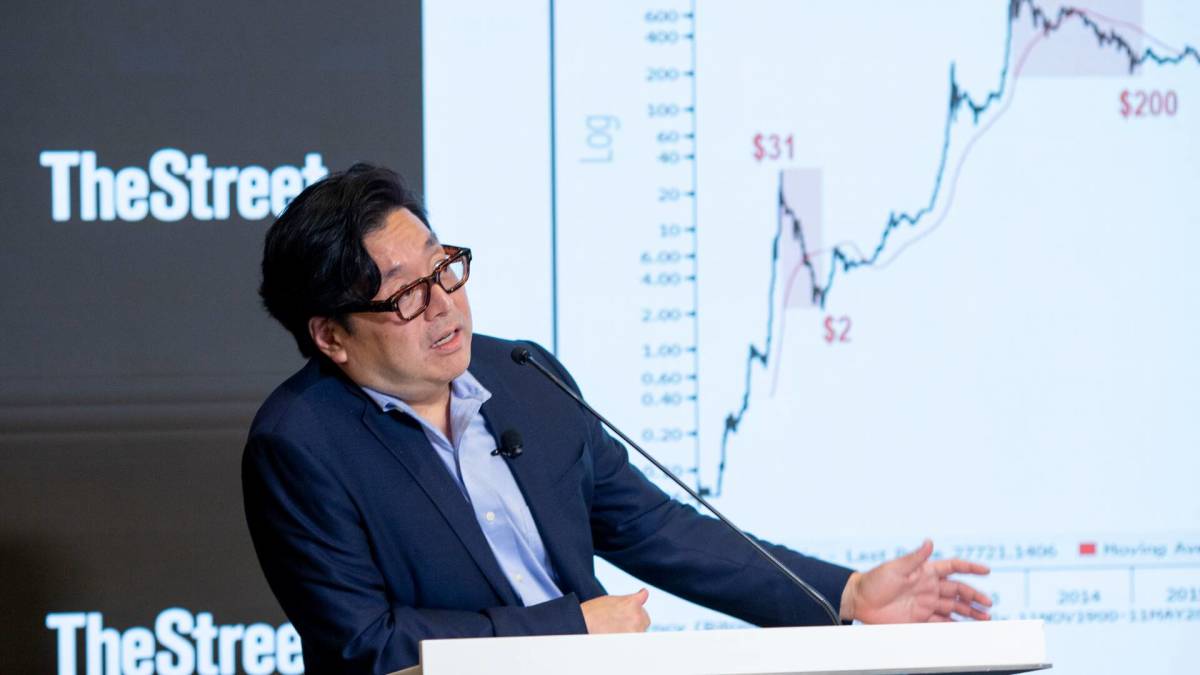 Tom Lee, chief investment officer of Fundstrat Capital, calls the current rebound one of the “most hated” rallies.
Credit: Abby Nicolas
Uncertainty lingers despite strong stock market gains
The broader stock market has staged a powerful comeback since Trump paused his reciprocal tariff plans on April 9. The S&P 500 has climbed nearly 19% over that period, including a rare nine-session winning streak.
But despite the rally, the forces that dragged stocks lower earlier this year, such as tariff fears and sticky inflation, haven’t gone away.
Related: Warren Buffett sends strong message on stock market drop
Adding to the uncertainty is the Federal Reserve’s more cautious stance. The Fed cut interest rates last September, November, and December, but has since paused, citing inflation risks tied to Trump’s trade agenda.
In April, the Consumer Price Index showed inflation running at 2.3%, nearly unchanged from 2.4% last September and still above the Fed’s 2% target.
The rate cut pause has disappointed investors looking for policy tailwinds. Lower rates typically encourage business investment and reduce borrowing costs, both of which can drive earnings growth and boost equity prices.
At the same time, the explosive growth in AI spending—which helped lift tech stocks in 2023 and early 2024—may be hitting a plateau.
In January, Chinese firm Deepseek stunned the industry by launching Deepseek-R1, an OpenAI rival, for just $6 million. Unlike Western models that rely on Nvidia’s expensive advanced GPUs, Deepseek’s model was built using cheaper chips, raising the possibility that generative AI innovation could increasingly be done with less spending.
Combined with broader macroeconomic concerns, this shift could prompt major AI spenders like Amazon and Google to rethink their data-center plans.
Tom Lee: This is the “most hated” rally
Despite the mounting macro headwinds, some veteran market watchers believe the rally still has legs.
Tom Lee, chief investment officer of Fundstrat Capital, calls the current rebound one of the “most hated” rallies, echoing patterns seen after previous market bottoms.
Related: Analysts issue rare warning on Nvidia stock before key earnings
“This remains one of the most hated stock market rallies. It seems like investors are looking for reasons for stocks to fall rather than for stocks to rise,” he said in a recent video update.
“Part of this [skepticism] is understandable. We had a black swan event on post-tariff liberation day… We had a 20% fall in stocks in a very short period of time.”
Lee noted that in past cycles, such as after the COVID low in March 2020 and the market bottom in October 2022, many fund managers dismissed the initial rallies as temporary bear market bounces.
“But here’s the reality. Investors flip bullish as soon as you make an all-time high… they’ll fight the rally until you make a new all-time high,” Lee said, “then they turn around and become bullish.”
The S&P 500 is now just about 3% below its all-time high. According to Lee, that’s close enough to trigger a sentiment shift, especially with large investors still underweight U.S. equities.
“In the latest Bank of America fund manager survey, the U.S. stock market is the most consensus underweight, Lee said. “That’s a contrarian signal to me because when they’re all underweight U.S., that means that you’ve priced in a lot of bad news.”
Lee also pointed to Bitcoin, which recently surged to a new all-time high above $111,000. He believes the move is a “leading indicator” for the S&P 500 index because Bitcoin peaked about a month before the S&P did and they’re both being driven by the same increased global liquidity.
Lee reminded investors that the past few weeks have reinforced a timeless lesson.
“It really paid off to not take too many dramatic actions,” he said, noting how instinct often pushes investors to react emotionally during volatile periods.
More Experts
- Fed official sends strong message about interest-rate cuts
- Billionaire fund manager sends surprising message on trade deficit
- Hedge-fund manager sees U.S. becoming Greece
He pointed to the “10 best days” rule: there are only a handful of the market’s best trading days in a year, and missing out can severely reduce long-term returns.
“Since 2015, the S&P’s returned 12% a year. But if you miss the 10 best days, you’ve actually had 10% performance or 2200 basis points of underperformance. So, please remember not to time the market,” Lee said.
Related: Veteran fund manager unveils eye-popping S&P 500 forecast