
Jim Chapman, newly appointed township supervisor of Green Charter Township in Western Michigan, quickly realized that his responsibilities extended beyond simple governance. His town, a small rural community, had faced economic decline for decades.
Many young residents left searching for better opportunities, leaving behind an aging population with limited prospects.
But in the summer of 2022, Chapman learned of a potential game-changing investment — a major international electric vehicle battery manufacturer planned to build a factory in town.
💵💰Don’t miss the move: Subscribe to TheStreet’s free daily newsletter💰💵
With a price tag of $2.4 billion and the promise of more than 2,000 well-paying jobs, Chapman saw the project as the kind of economic revival the town desperately needed.
Related: Shark Tank’s Kevin O’Leary makes bold prediction on U.S. economy
As plans advanced, Chapman discovered that the company behind the factory was Gotion, an American subsidiary of a Chinese electric vehicle battery manufacturer. The company had grown rapidly, benefiting from China’s push into the EV market and strategic expansions into the U.S.
By 2023, Chapman had facilitated infrastructure improvements, and Gotion secured state subsidies to make the project viable.
Initially, he believed concerns about the company’s origins were secondary to the economic benefits. He remained committed to bringing manufacturing back to the U.S., seeing it as aligned with broader American economic goals.
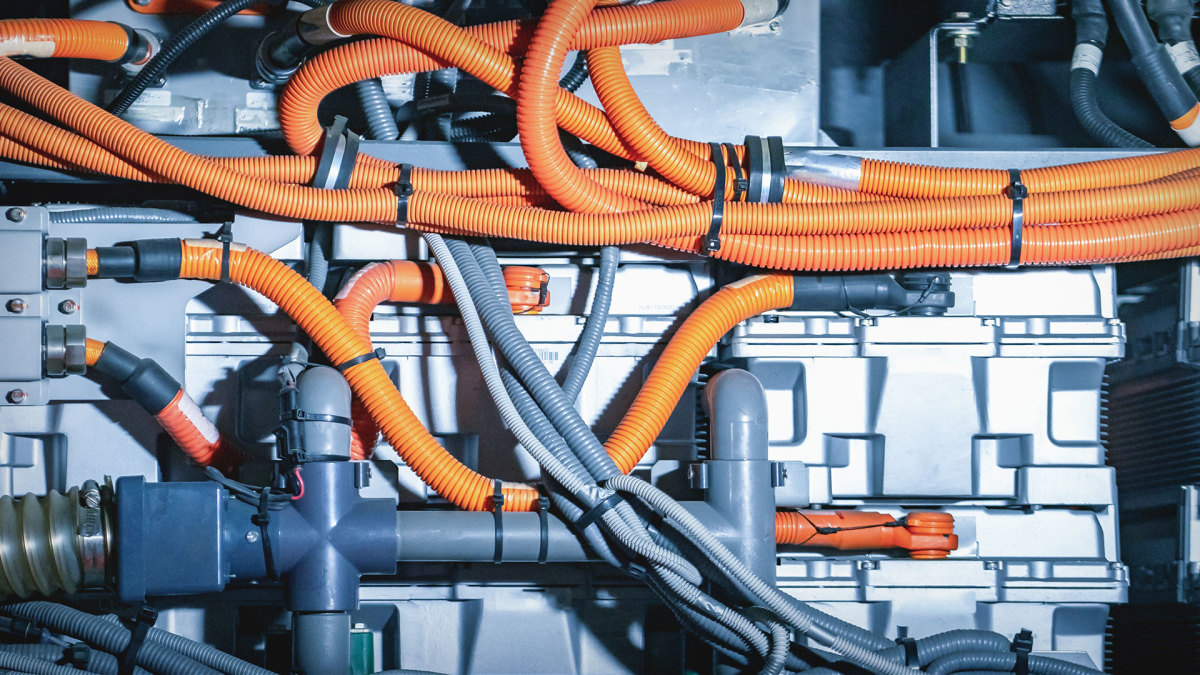 A close-up photo of an electric vehicle battery is seen. Gotion, an American subsidiary of a Chinese EV battery manufacturer, ran into an intense political backlash when it tried to build a factory in the U.S.
Getty Images
Chinese EV battery factory stirs controversy, opposition in U.S.
Opposition emerged when residents learned of the plan through grassroots efforts.
Local realtor Lori Brock received an anonymous warning, prompting her and many others to attend township meetings. Crowds packed the venue, and for four hours, townspeople vented their frustration, accusing officials of pushing the project without transparency.
Environmental concerns dominated the discourse — citizens worried about water consumption and potential contamination risks. Skeptical of Gotion’s assurances, the community feared the factory would permanently alter their way of life.
“I listened to four hours of straight public comment ridiculing him (Chapman), just screaming at the whole board, telling them how unethical they were and horrible people and how they were a disgrace,” Brock told NPR in an intriguing, lengthy Planet Money report. “I mean, four hours of it, just irate people.”
More on the U.S. economy:
- Dave Ramsey sounds alarm for Americans on Social Security
- Scott Galloway warns Americans on 401(k), US economy threat
- Shark Tank’s Kevin O’Leary has message on Social Security, 401(k)s
Residents also questioned whether the promised jobs would resemble the union positions that once defined Michigan’s automotive industry. They doubted whether local workers would truly benefit from the factory’s presence.
As debates intensified, Chapman’s vision of economic renewal transformed into a political battleground.
What seemingly began as a hopeful opportunity to restore prosperity to Green Charter Township became an emblem of the tensions between globalization and small-town values, exposing deeper concerns about the industries communities want shaping their futures.
Related: Dave Ramsey sends strong statement on Costco
Gotion’s connections to China becomes major concern, ‘No Go’ movement emerges
A major issue in the heated debate was Gotion’s connection to China. Many residents saw China as a geopolitical adversary and questioned why the U.S. should subsidize a Chinese-owned company.
The fear that Gotion could be a Trojan horse for the Chinese Communist Party (CCP) fueled outrage, with concerns about potential infiltration of a local cybersecurity program.
Gotion’s articles of incorporation in China contained standard party activity agreements, but company representatives insisted its U.S. operations were independent.
Opponents, known as the No Go movement, accused Chapman and his board of corruption, NPR reported.
As tensions mounted, the No Go movement coalesced around a strategy — recalling Chapman and his board members from office. By the fall of 2023, their efforts materialized into a recall election, aiming to take control of the local government and stop the factory’s construction.
Their campaign was highly organized, featuring door-to-door canvassing, phone banking, and even political advertisements. With support from prominent Republican politicians, No Go activists gained traction.
In early 2024, Green Charter Township held its recall vote, resulting in Chapman and his entire board being ousted. The newly elected No Go politicians swiftly moved to block the factory. In response, Gotion sued the township, leaving the project in limbo.
Chapman still hopes the plant will open and believes the factory would bring much-needed economic growth, according to NPR, while Brock maintains that manufacturing belongs in the U.S. — just not this factory in this town.
Related: Scott Galloway sends bold statement on Social Security, US economy
