
With the AI boom happening all around us and technology such as autonomous vehicles and functional robots becoming a reality, living in 2025 may feel like we’ve stumbled into a sci-fi novel.
Technology is exciting, but can also be scary when it comes on too fast — especially when we’re repeatedly told it will take our jobs away.
💵💰Don’t miss the move: Subscribe to TheStreet’s free daily newsletter💰💵
This is why talking about AI in common conversation might earn you a look of discomfort or a coworker brushing you off, saying they’re “tired of hearing about it.”
But while everyday people grapple with the reality of this change, experts in the space continue to forecast what’s to come — and some of it is so big it’s challenging to wrap your head around.
Related: Elon Musk, SpaceX have an exploding rocket ship problem
Another often-discussed futuristic sector in the past decade is space travel. While NASA is best known in the space, new players have emerged in recent years.
Perhaps the best known is Elon Musk’s SpaceX, founded in 2002 with the intent of decreasing the cost of space launches and establishing a colony on Mars.
Amazon’s Jeff Bezos is another billionaire who’s invested heavily in space travel with his company Blue Origin, which also aims to “build a road to space for the benefit of earth.”
Now Ark Invest’s Cathie Wood has released a new model that predicts where SpaceX is going — and it provides yet another peek into the future of humanity.
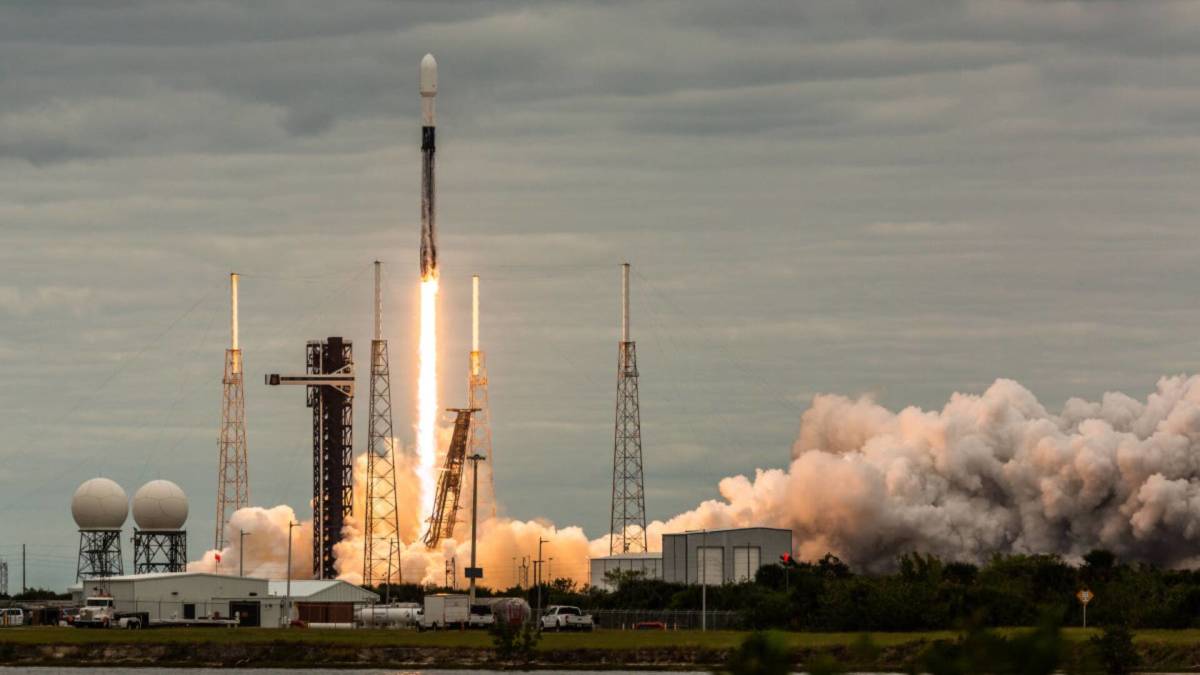 Ark Invest revealed a new valuation for SpaceX.
Image source: NurPhoto/Getty Images
Ark’s new valuation for SpaceX
On June 11, Ark Invest’s official X account tweeted a link to its new valuation for Elon Musk’s ambitious space company.
More Economic Analysis:
- Hedge-fund manager sees U.S. becoming Greece
- A critical industry is slamming the economy
- Reports may show whether the economy is toughing out the tariffs
The model estimates SpaceX’s value could grow from $350 billion today to $2.5 trillion by 2030. According to the valuation, these gains will be driven mainly by Starlink and Starshield.
Ark also forecasts that SpaceX could hit $1 billion in Mars assets by 2030 and possibly $1 trillion by 2040. Combined with Musk’s other companies, Ark forecasts a total of $10 trillion in value by the end of the decade.
Related: Elon Musk’s SpaceX plans raise major red flags for regulators
Wood also tweeted her thanks to her Ark team, saying, “Introducing our #SpaceX model, I am grateful to our exceptional Autonomous Technology and Robotics Team and @wintonARK for their first principles research, in collaboration with @aarontburnett and @VladSaigau, modeling the way that @elonmusk and team will get us to Mars.”
SpaceX is facing some roadblocks
While Ark’s model sketches out an impressive future for Musk’s space company, it’s safe to say that in the here and now, it’s still working through some problems.
SpaceX held test flights in both January and March 2025 with high hopes, but both rockets exploded in mid-air, causing flights to be grounded to avoid damage from falling debris.
SpaceX was also the subject of a civil penalties suit from The Federal Aviation Administration (FAA), which was filed in September 2024. The allegations claim the space company failed to follow its license requirements during two launches in 2023, in accordance with statutorily-set civil penalty guidelines.
Musk, as usual, remains chipper in the face of adversity, tweeting on X after the March explosion, “Today was a minor setback. Progress is measured by time. The next ship will be ready in 4 to 6 weeks.”
Related: Space stocks soar as Elon Musk and Donald Trump argue