
The world has gotten a bit crazy in 2025.
An ongoing global trade war has sparked worries over worldwide economic growth, and now, Israel and Iran are locked in a battle with missiles flying back and forth, threatening global oil supplies.
The potential for a major energy crisis to develop because of the Iran and Israel conflict has caused Brent Crude and West Texas Intermediate oil prices to surge, and in turn, that’s created an entirely new threat to the economy.
💵💰Don’t miss the move: Subscribe to TheStreet’s free daily newsletter💰💵
The potential for the battle in the Middle East to spread, potentially shutting off oil seaborne transports through the Strait of Hormuz, and possibly removing Iranian oil from the global market, has lifted Brent crude and WTI crude per barrel prices by 18% to $79 and 21% to $75 this month.
The situation has captured the attention of Citigroup, JPMorgan, and Goldman Sachs’ oil analysts, leading them to reset their oil price targets.
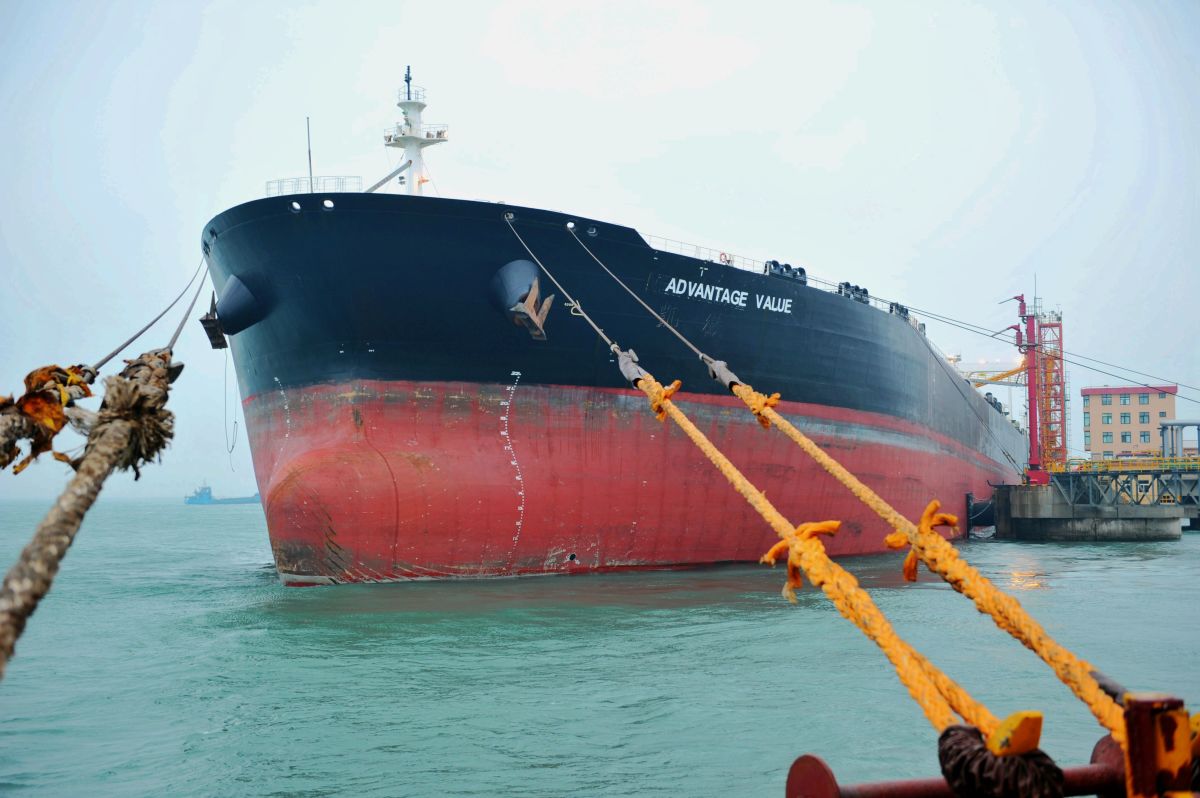 The Middle East conflict has led Citi analysts to update their crude oil price target.
Global trade and geopolitical risks could send economies reeling
President Donald Trump has announced a string of harsher-than-expected tariffs this year to rekindle US manufacturing.
The moves, which include 25% tariffs on Mexico, Canada, and autos, plus a 30% tariff on China and a 10% baseline tariff on all imports, have forced economists to rethink their global projections for economic growth this year.
Related: Forget tariffs, Fed interest rate cuts may hinge on another problem
For instance, earlier this month, the World Bank reduced its worldwide gross domestic product, or GDP, forecasting 2.3% from 2.7% previously, citing tariff uncertainty.
Contributing significantly to the reduced outlook is a major downgrade of U.S. growth to 1.4% from 2.3%. The World Bank lowered its U.S. forecast to 1.6% in 2026, down from 2%.
The Federal Reserve also anticipates the slowing growth in the US because of tariffs’ bite.
The Fed updated its closely watched Summary of Economic Projections on June 18. It expects unemployment to increase to 4.5% from 4.2%, and projects that Personal Consumption Expenditures (PCE) inflation will climb to 3% this year, up from expectations in March for 2.7% inflation.
Fed officials expect U.S GDP growth to be just 1.4% in 2025, down from 1.7% in March, and well below the 2.5% GDP growth the US economy delivered in 2024.
In China, the World Bank expects that slowing activity due to higher tariffs will reduce GDP to 4.5% in 2025, down from 5% in 2024. In 2026, it expects GDP to fall further to 4%.
The economic situation could get even more uncertain if Israel and Iran’s conflict continues to prop up crude oil prices. Oil prices can significantly impact inflation, directly and indirectly, further crimping consumer and business spending.
We’re already seeing concerning signs that higher oil prices are translating into higher prices at the pump for gasoline.
“WTI crude oil $77/bbl, the national average price of gasoline is now $3.21 per gallon, and could by next week climb to its highest ever while President Trump has been in office ($3.25/gal) due to Middle East tensions,” wrote GasBuddy’s Patrick De Haan on X.
Analysts unveil oil price forecasts amid Israel, Iran war
Roughly 18 million to 19 million barrels of oil flow through the Strait of Hormuz daily, representing 20% of global oil consumption, including crude, condensates, and fuel. Its proximity to Iran means it could become an oil chokepoint if Iran acts to block it.
The possibility of that happening is “under serious consideration,” said Esmail Kosari, an Iranian parliament member and IRGC general, on June 15.
More Economic Analysis:
- Federal Reserve prepares strong message on long-term interest rates
- Massive city workers union approves strike
- Analyst makes bold call on stocks, bonds, and gold
Iran’s oil production and its ability to export oil to its largest consumer, China, may also be significantly impaired. Iran is OPEC’s third-largest member, producing about 3.3 million barrels per day.
Citi estimates that if the conflict disrupts 3 million bpd for multiple months, crude oil prices could reach $90 per barrel, up from $75 now, and the low-to-mid $60s before Israel attacked Iran over its nuclear development program.
JPMorgan’s analysts believe that shutting the Strait of Hormuz could catapult crude oil prices to an eye-popping $120 to $130 per barrel.
Goldman Sachs, meanwhile, believes the conflict creates a risk premium of about $10 per barrel.
In one scenario, Goldman Sachs’ analysts say that damage to Iran’s export infrastructure that reduces Iran’s supply by 1.75 million bpd “before gradually recovering,” with OPEC+ production offsetting roughly half of the reduction, would lead to Brent crude oil peaking “just over $90/bbl.”
Goldman Sachs, however, expects that the increase would prove temporary, with prices declining “back to the $60s in 2026 as Iran supply recovers.”
However, the situation would be worse if the Strait of Hormuz were blocked for an extended period.
“While an interruption of trade through the Strait of Hormuz, through which nearly 1/5 of global oil production flows, appears much less likely, there is focus from investors and policymakers on this risk, because core OPEC+ producers may be unable to deploy spare capacity in this extreme tail scenario. Based on our prior analysis, we estimate that oil prices may exceed $100/bbl in an extreme tail scenario of an extended disruption.”