
2025 has been anything but boring for the stock market.
Deepseek AI’s scare kicked off the year, rattling faith in the “Magnificent Seven” and the broader tech space.
💵💰Don’t miss the move: Subscribe to TheStreet’s free daily newsletter💰💵
Then came President Trump’s “Liberation Day” tariffs on April 2, triggering the worst pullback since the Covid crash.
Subsequently, S&P 500 nosedived 4.6% in the first quarter (Q1), its worst quarterly performance since late 2022.
Volatility’s still running hot, CEOs are continuing to stoke stagflation fears, and Middle East flare-ups have added another unwelcome dynamic.
With these headwinds, the market’s biggest players haven’t seemed invincible lately.
There have been some big surprises, but maybe none bigger than what just happened to one of last year’s hottest stocks.
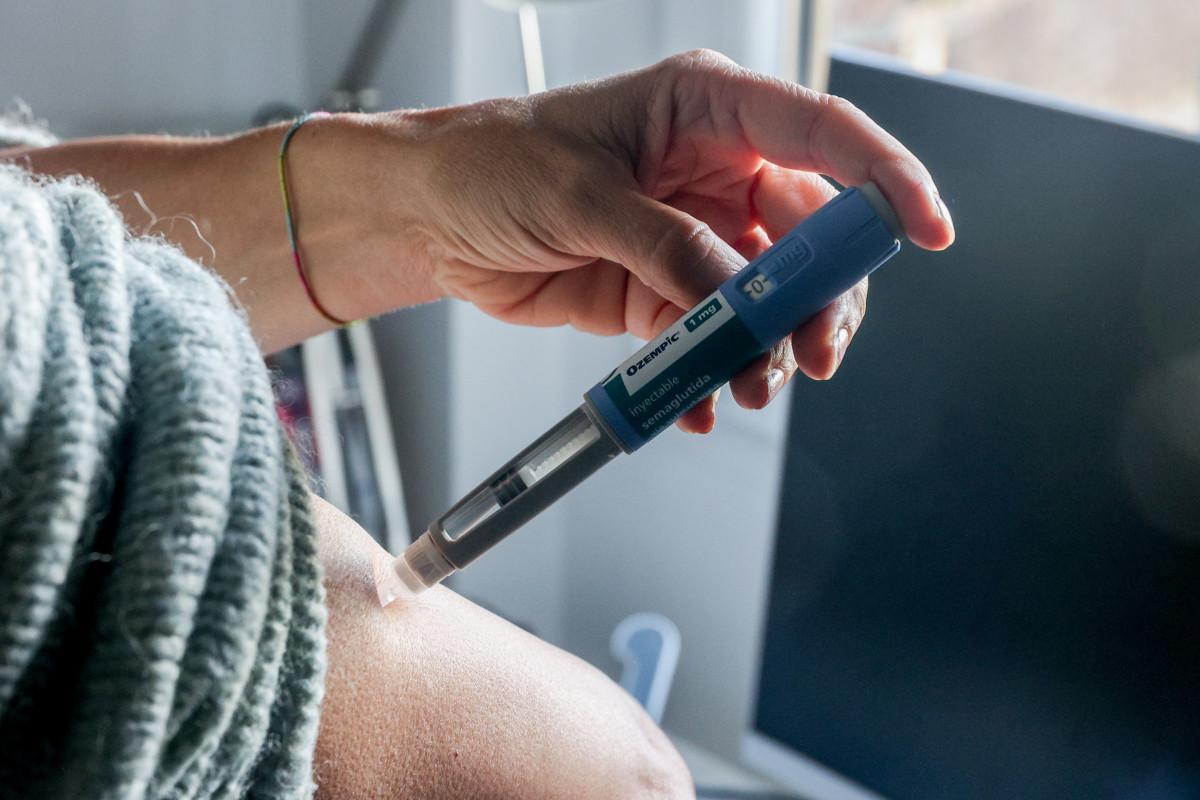 Leading weight loss drug stock tanks following the end of a key partnership
Europa Press News/Getty Images
The rise of weight loss drugs
Arguably, one of the hottest trends, alongside AI, has been weight-loss stocks.
Related: Surprising decision sends weight-loss drug stock reeling
Since Danish pharma giant Novo Nordisk’s (NVO) type 2 diabetes drug Ozempic (semaglutide) got approved in late 2017, it has built a massive user base before people caught on to its weight-loss benefits.
A few years later, in June 2021, the FDA gave Wegovy (a higher-dose formula) the green light for weight management, turning GLP-1 drugs into pharma’s new money spinners.
Since then, the weight-loss market has exploded.
For clarity, the GLP-1 receptor is like a lock found on certain cells that responds to a natural hormone (GLP-1) released once you eat. When a GLP-1 drug (the “key”) binds to this receptor, it dampens appetite signals in your brain.
In the U.S., the market has doubled in size from 2022 to 2024, swelling to a whopping $33.8 billion.
Wegovy made $8.1 billion last year and another $2.65 billion to kick off 2025.
Ozempic? Even a bigger haul with $16.8 billion in 2024 and $5 billion in Q1 this year.
Also, Eli Lilly’s weight-loss drug Tirzepatide (Zepbound/Mounjaro) pulled in over $6 billion in Q1 2025 sales.
Over the long term, analysts predict the broader obesity-drug market will surge to roughly $150 billion annually by the early 2030s.
More On Weight Loss:
- New health care policy changes will soon affect weight-loss drugs
- A Hard No on Eli Lilly After Latest in Weight-Loss Drug War
- Ozempic, diet drugs hit a huge government roadblock
Goldman Sachs forecasts that the obesity industry alone will be worth $95 billion annually by the end of the current decade.
Novo Nordisk cuts ties with Hims & Hers over Wegovy concerns
Novo Nordisk pulled the plug on its partnership with Hims & Hers (HIMS) , citing concerns over distributing its blockbuster weight-loss drug Wegovy.
Related: Can Weight Watchers be saved? As the company files for bankruptcy, we take a closer look
The Danish pharma powerhouse didn’t waste much time pulling out, having worked just a month with Him & Hers.
Novo Nordisk feels that Hims & Hers crossed the line by selling compounded drugs under the whole ‘personalization’ pitch, raising red flags over safety and legal usage.
Dave Moore, Executive Vice President, US Operations of Novo Nordisk, said that,
“We will collaborate with telehealth companies that prioritize patient safety in providing direct access to Wegovy. If companies engage in illegal compounding practices that threaten the health of Americans, we will take appropriate action.”
Following the news, Him & Hers stock lost 35% of its value, changing hands for roughly $42. Novo Nordisk stock also lost close to 6% of its value.
Recent developments have shown that Novo Nordisk and Eli Lilly are all-in on protecting their turf.
They continue pouring billions into production to avoid shortages and keep prices tight. Hence, when Hims & Hers started pushing out compounded GLP-1s to customers, they viewed it as a threat.
Hims & Hers saw an opening when the FDA flagged a global semaglutide shortage.
That effectively opened the door for compounders, with Hims wasting no time, teaming up with them in May last year to offer its own version of the drug while it stayed on the shortage list.
This led to a media frenzy and a robust increase in platform visits and subscribers to Hims’ platform.
Its subscriptions jumped 45% to 2.2 million, with its share price climbing from $10 at the start of 2024 to over $60 by February of this year.
However, in February, the FDA pulled semaglutide off its shortage list, which essentially made compounded versions a no-go.
Hims’ stock took a nosedive from over $60 to under $30 within a few days. But it didn’t stay down for long.
By April, Hims added tirzepatide to its lineup, gained traction from Medicare’s refusal to cover obesity medications, and made headlines thereafter with a Wegovy deal with Novo.
Related: Weight-loss drug news sends Eli Lilly stock soaring
It will be interesting to see how Hims & Hers stock returns from this setback.
Truth be told, it has built a colossal, loyal base of 2.4 million users who turn to it for everything from hair loss to mental health.
Even with the GLP-1 shakeup, its incredible cross-sell power and triple-digit top-line growth rates show the core business is on fire. Also, with big goals for 2030, they’re not stopping with potential partnerships with other GLP-1 makers looming.
Over the past nine months, its stock has gained over 293%, and 96% in the past three months alone.
Related: Analyst sends blunt 8-word message ahead of trade deal deadline