
My brother is an avid Pepsi fan. He just hates Coca-Cola. For him, those two drinks are like parallel universes.
For many consumers, on the other hand, Pepsi and Coca-Cola are interchangeable.
I used to think that Nutella and Eurocream (European hazelnut spread) are more or less the same, but when I could afford Nutella more often, I realized they are not even similar. Sometimes, I worry that I became kind of snobby, because of that. I even prefer an empty crepe instead of one with any other nut-based spread.
💵💰Don’t miss the move: Subscribe to TheStreet’s free daily newsletter💰💵
I guess the tastes are widely different, as we all know. That’s why being in the food and beverage industry is so challenging. How to answer all those preferences and satisfy every taste and demand?
How simple it would be if taste was the only parameter, but alas, it’s far from it. There are also the quality of ingredients, current market trends, product sustainability, and so much more. On top of it, the product has to be profitable for the company.
Taking all this into account, it’s no surprise that many, even very popular, consumer products end up discontinued. A simple shift in consumer preferences, turning toward healthier alternatives, for example, could lead to less profitability, forcing companies to end production of a certain product.
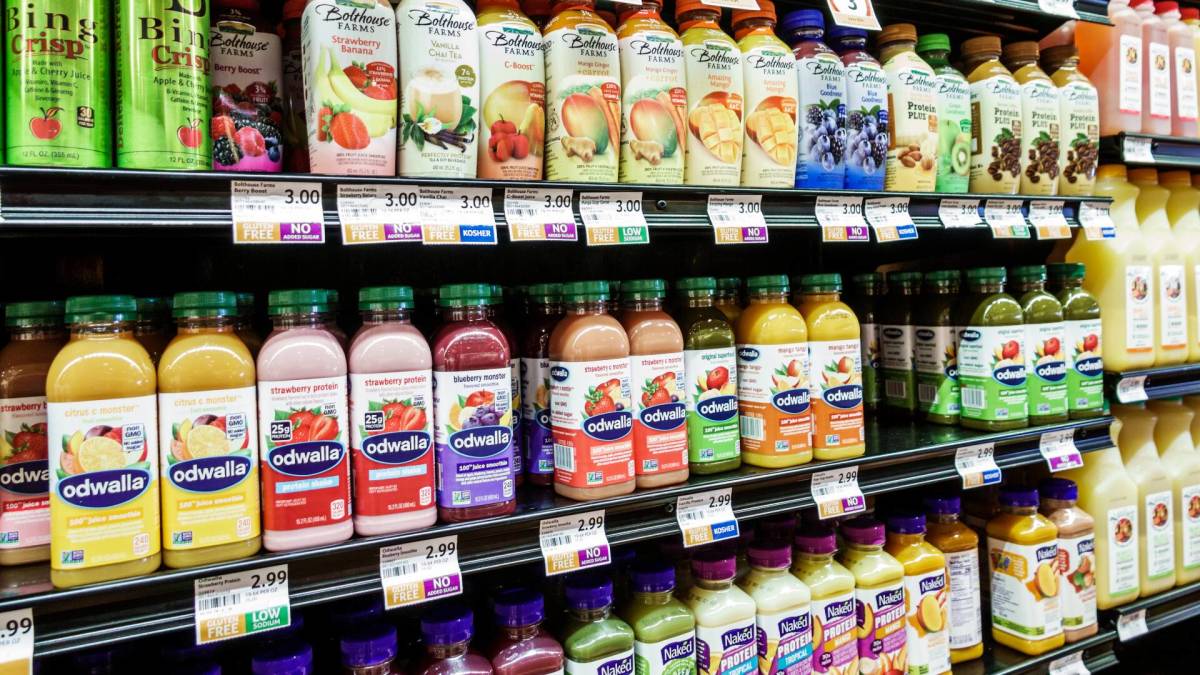 In 2020, Coca-Cola discontinued Odwalla, a popular juice and smoothie brand
Image source: Getty images
Coca Cola’s discontinued popular college drink has a wild history
When one product ends up removed from shelves, chances are, it will upset at least a few people who loved it. The more popular the product, the bigger the response.
In 2020, Coca-Cola discontinued Odwalla, a popular juice and smoothie brand. Some sources argue that Covid had its role in this, because Odwalla was a popular drink among certain crowds — college and school students.
Related: Coca-Cola has genius plan to win back lost customers
When the pandemic struck, many colleges and schools closed their doors, which might have been a contributing factor to the decision to discontinue the product.
Odawalal’s history is more interesting and complex than being just one of Coca-Cola’s hundreds of brands. It was developed back in the 1980s when a group of jazzers from Chicago started selling orange juice out of a van to support their careers.
Over time, the business expanded to include more fruit juice, smoothies, soy milk, bottled water, organic beverages, and even several types of energy bars.
In 1996, Odwalla had a major setback as it was responsible for the fatal outbreak of E. coli O157:H7 and was found criminally liable, paying one of the highest penalties in food poisoning cases in the U.S.
Changing its safety practices, Odwalla quickly regained profitability, and even by the end of 1998, its revenue surpassed pre-crisis numbers.
In 2001, Odwalla was acquired by the Coca-Cola Company for $181 million, becoming a wholly owned subsidiary. Nineteen years later, Coca-Cola discontinued the business and sold it to Full Sail Ip Partners in 2021.
Odwalla is back on the shelves under new leadership
In 2024, a family-owned Mexico-based juice maker Grupo Jumex inked a licensing deal with Full Sail IP, and revived Odwalla in January 2025.
Jumex is going slow with the relaunch as it balances between offering a nostalgic taste for consumers who loved Odwalla’s flavors and changing it to adapt to the current market trends. It has removed vitamins that were previously added to some of the products, placing a transparent list of real fruit and natural ingredients.
Related: Iconic 1980s soda brand back on shelves with a surprising twist
The company is using electro pasteurization, which is more expensive but preserves more of the juices’ nutrients, according to Carlos Maraxo, country manager with Jumex USA.
In a recent Food for Thought podcast, Maraxo explained that the brand is adapting to today’s customer needs by offering a handful of high-quality ingredients and focusing on flavor.
To provide users with a more premium experience, Jumex is offering Odwalla juices in Tetra Prisma cartons and smoothies in glass bottles instead of plastic.
Jumex plans to innovate and expand its portfolio, but currently is careful about launching too many products at once. Three signature smoothies already in the market include mango, strawberry-banana, and berries, and three 100% juice options: a blend of orange guava and ginger, green juice made with pineapple, apple, and nopal (tender cactus); and a not-from-concentrate orange juice.
“The U.S. is the most competitive market in the world. Obviously, it’s going to be a challenge,” Madrazo said. “We’re taking this one step at a time. I don’t want to minimize the complexity of relaunching it.”
The idea is to bring the brand “back to its former glory days.”
Related: Veteran fund manager unveils eye-popping S&P 500 forecast