
From baby strollers to clothes dryers to lumber, American shoppers are acutely aware that tariffs are the highest they’ve been in 90 years.
But they’re not just paying for it at the cash register.
💵💰Don’t miss the move: Subscribe to TheStreet’s free daily newsletter💰💵
President Donald Trump’s seesawing tariffs and their rip-roaring trade wars (O Canada!) are keeping interest rates high, according to many economists and market watchers.
Related: Fed chair sends strong message on tariffs to Senate panel
This means mortgage rates, auto financing, student loans, credit cards, and other forms of borrowing money cost more.
So when will the economy perk up for consumers?
Torsten Slok is a partner and chief economist at Apollo Global Management.
He outlines his take on the rest of 2025 in the note “Mid-Year Outlook: At the Crossroads of Stagflation…”.
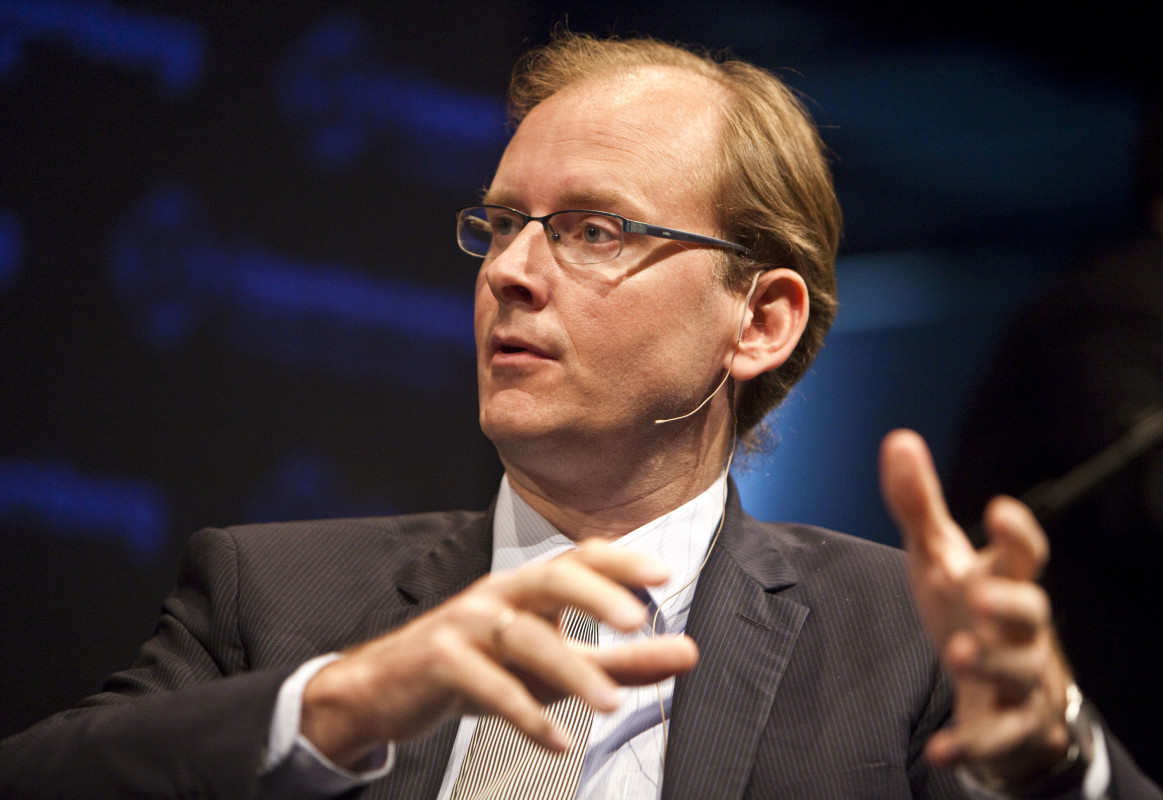 Apollo Global Management Chief Economist Torsten Slok offers a challenging outlook for interest rates, tariffs, and recession odds.
Image source: Bloomberg/Getty Images
Fed officials send mixed reactions on 2025 rate cut forecasts
Federal Reserve Board Chair Jerome Powell defended keeping the Federal Funds Rate steady in June per the Fed’s dual mandate: prudent monetary policy regulating the money supply that keeps inflation and unemployment relatively low and GDP happily growing along.
Powell described the economy as solid, but said a “wait-and-see” forecast is needed until the full impact of the expected tariff prices passes through inflation and employment numbers over the next three months.
The Federal Open Meeting Committee controls the Federal Funds Rate, which banks charge each other overnight to borrow money.
The funds rate is tied to the cost of borrowing money for consumers, investors, and businesses.
The Federal Open Meeting Committee said June 18 it would keep the Federal Funds Rate at 4.25% to 4.50%.
Related: Fed official makes surprising interest rate cut prediction
Both Fed and market watchers were forecasting the next probable rate cut could appear at the September FOMC meeting.
Then Fed Governors Christopher Waller and Michelle Bowman separately said that a funds rate cut could come as early as the Fed’s July 29-30 meeting if the tariff inflation proved to be short-term and jobs numbers held up.
Federal Reserve Bank of Minneapolis President and CEO Neel Kashkari, who is a member of the FOMC this year, said he is retaining his position of two .25 percent funds rate cuts this year, with the first possibly coming in September, depending on the data shown.
More Federal Reserve:
- Fed interest rate cut decision resets forecasts for the rest of this year
- Federal Reserve prepares strong message on long-term interest rates
- Fed official revamps interest-rate cut forecast for this year
And former Fed Governor Daniel Tarullo told CNBC June 27 he wouldn’t cut rates at this point, as “both sides of the mandate are performing reasonably well.”
Meanwhile, President Trump repeated the same day that he wanted the Fed to cut the fund rate down to 1% when it meets in late July.
Slok sends sobering message about interest rate cuts
Slok’s note offers a stern outlook for interest rates, tariffs, and recession odds:
- While below initial expectations, this is still the highest level of tariffs the U.S. has had in nearly nine decades and, if maintained, will have substantial impact on the U.S. and global economies.
- Tariff hikes are typically stagflationary shocks — they simultaneously increase the probability of an economic slowdown while putting upward pressure on prices. In our view, the current tariff regime increases the chance of a U.S. recession to 25% over the next 12 months.
- As a result, we continue to expect interest rates higher for longer. As of this writing, we see the Federal Reserve cutting rates only once in 2025, with a year-end fed funds-rate target range of 4.00% to 4.25%. We believe that Fed Chairman Jerome Powell will likely take a conservative approach to easing policy to safeguard against fears of runaway inflation.
- Economic data have mirrored the volatility in the markets and trade policy. Soft indicators (e.g., confidence surveys) have fluctuated in tandem with news of on-again, off-again tariffs, while hard data (i.e., employment and inflation) have shown more resilience. This discrepancy has added to uncertainty and continues to fog the economic outlook.
Related: Fed official revamps interest-rate cut forecast for rest of this year