
Be honest: Have you ever tried to get through the airport security checkpoint with something that you knew might flag an officer’s attention?
Maybe it was a tube of toothpaste that was just slightly over the 3.4-ounce limit. Or some aerosol sunscreen or a package of GU Energy Gel.
Maybe you got through, or maybe your items were confiscated.
But no one wants to sweat their summer travel. So on June 24, 3025, just a couple of weeks ahead of the July 4th holiday — which is expected to break records for air travel — the Transportation Security Administration (TSA) is issuing a new batch of reminders.
More on air travel:
- TSA says this cell phone is banned from all US planes
- TSA says these common children’s toys may not be allowed on planes
- TSA eyes major change for air travelers
First food. Yes you can bring food through airport security. But there are rules, and misunderstanding them can cost you time, money, and might even force that officer to snag your snacks.
Whether you’re packing a sandwich for a long flight or bringing homemade treats to friends and family, knowing what’s allowed in your carry-on is key to avoiding a hold-up at the checkpoint.
According to the TSA’s official “What Can I Bring?” tool, solid foods like fruit, sandwiches, chips, cookies, and most baked goods are allowed in both carry-on and checked baggage. However, liquid or gel-based items fall under the 3-1-1 rule and are much more restricted.
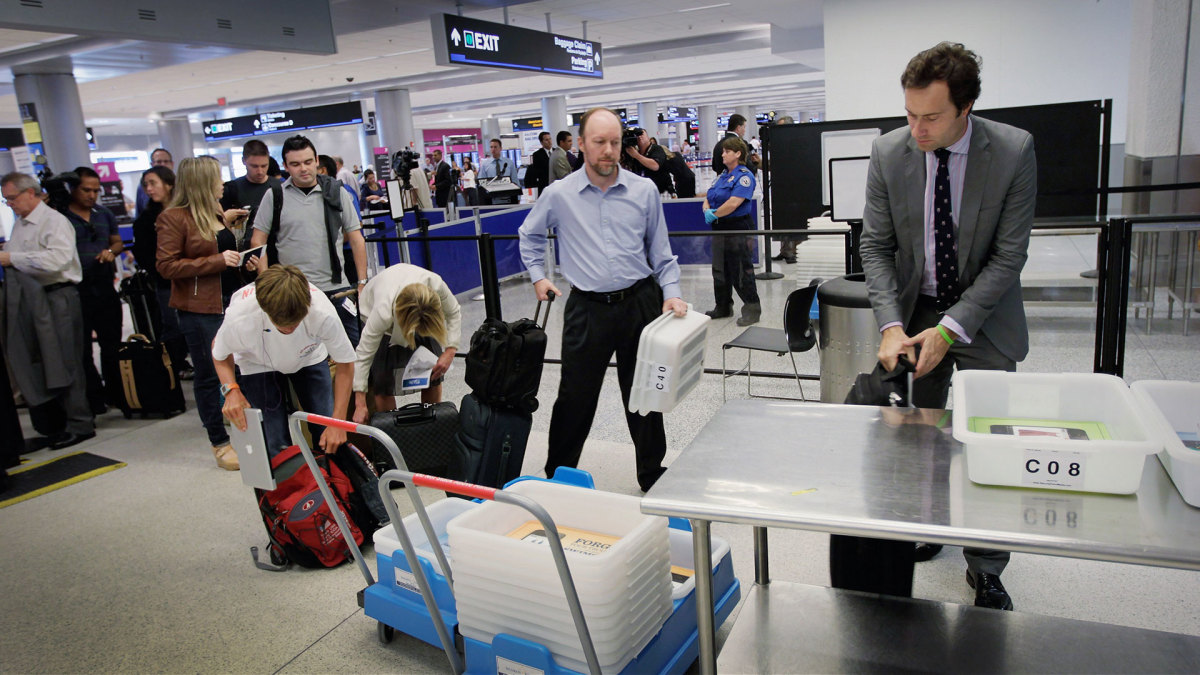 The TSA is preparing for the busiest part of the summer travel season.
Image source: Joe Raedle/Getty Images
TSA security exceptions for food and beverages
Anything spreadable or pourable — such as hummus, peanut butter, yogurt, salad dressing, salsa, or soup — must be in a container no larger than 3.4 ounces (100 milliliters) and fit within a single quart-sized plastic bag. Larger quantities need to be packed in your checked bag — or they’ll be taken at security.
Even soft cheeses like brie, dips, and certain sauces are considered liquids under the TSA’s definition: If you can spill it, spray it, spread it, pump it, or pour it — it’s a liquid or gel.
TSA officers often recommend that travelers separate food items from the rest of their carry-on luggage. While not a strict requirement, it helps keep lines moving.
Related: TSA warns passengers to avoid this popular airport convenience
“Food items often trigger alarms in the X-ray machine,” TSA spokesperson Lisa Farbstein said in a recent agency briefing. “Separating them helps streamline screening.”
Using resealable plastic bags or clear containers helps officers quickly identify items and reduces the chances of your bag needing manual inspection.
This isn’t the first time TSA procedures have quietly changed or been clarified.
Recently, TheStreet reported that TSA updated its rules around REAL ID requirements, giving travelers a little more time before the new ID enforcement goes into effect.
The TSA also quietly cracked down on a popular travel essential, highlighting how fast-evolving guidelines can catch passengers off guard.
TSA makes some exceptions to the 3.4-ounce rule for passengers traveling with infants or those with medical conditions. According to the agency, baby formula, breast milk, juice, and baby food are allowed in “reasonable quantities” and don’t need to fit in a quart-sized bag. But they must be declared and will undergo additional screening.
Related: TSA quietly cracks down on popular travel essential
The same applies to medically necessary liquids, gels, and ice packs. TSA provides detailed guidance for travelers with medical needs, encouraging them to notify officers and label or separate such items when possible.
When does the TSA require you to check food?
During holidays, travelers often bring home-cooked items like pies, casseroles, and sauces. TSA reminds passengers that while solid baked goods are generally allowed in carry-ons, anything resembling a liquid — jams, or even some types of cheese, sauces — must comply with the 3-1-1 rule or be checked.
If you’re unsure whether your item is considered a solid or a gel, the safest move is to pack it in your checked luggage. That way, you avoid the disappointment of having to toss an expensive snack or a thoughtful homemade gift before your flight.
With long lines and record-breaking travel volumes expected this summer, a little advance planning can go a long way. And knowing the rules around food might just help you avoid being that person holding up the line.
To double-check a specific item, use the TSA’s searchable “What Can I Bring?” list or ask directly via @AskTSA on X for near-instant answers.
Related: Forget Real IDs, the TSA has another airport security measure