
Hold on to your wallets.
Tariff-fueled inflation is coming your way.
💵💰Don’t miss the move: Subscribe to TheStreet’s free daily newsletter💰💵
It may already be here, depending on what June economic indicators show as early as this week.
Related: Top economist sends sobering tariff, interest rate forecast
There’s great debate among economists as to what the impact President Donald Trump’s tariffs — currently the highest in the last 90 years — will have on the overall economy and for how long.
This is causing a huge case of national agita over high interest rates on mortgages, student loans, credit cards, and other consumer and investment services.
Morgan Stanley Chief U.S. Economist Michael T. Gapen released an updated forecast in a note to analysts that some Federal Reserve Board watchers may find disappointing.
President Trump certainly will.
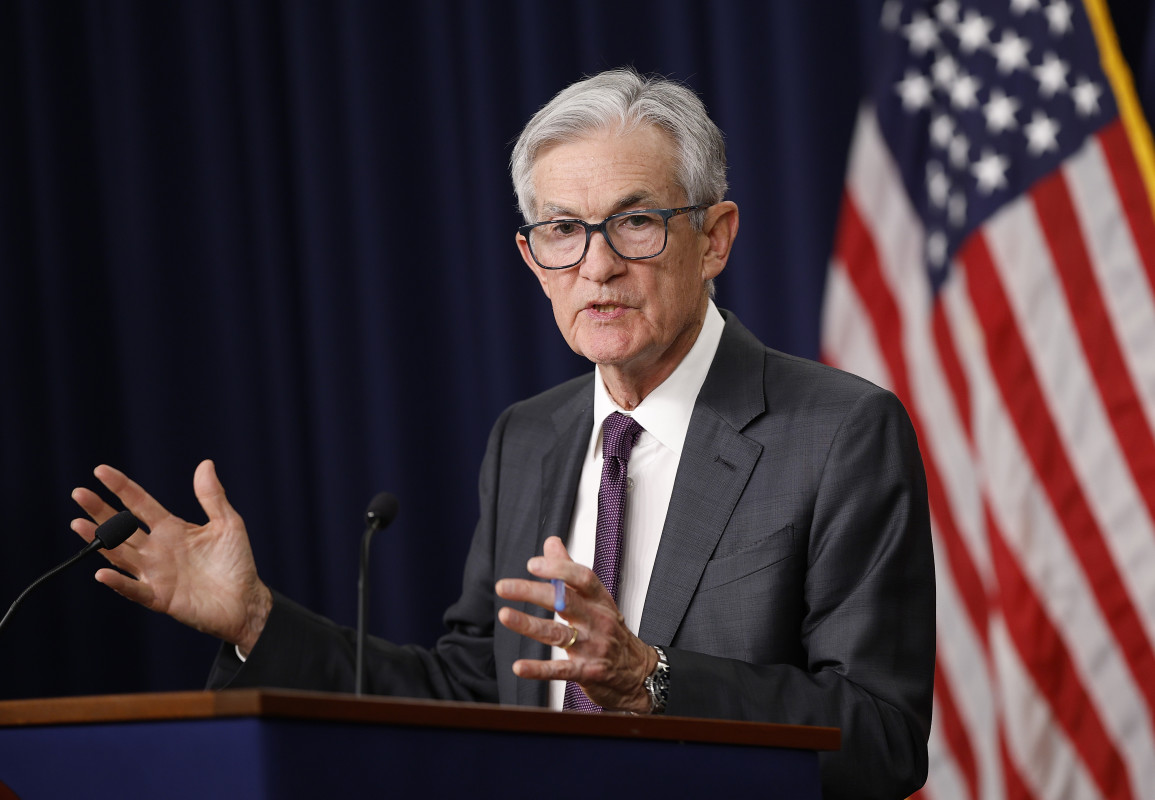 Federal Reserve Board Chair Jerome Powell defended the Federal Open Meeting Committee’s universal decision to hold the Federal Funds Rate steady at 4.25% – 4.50% in June.
Image source: Kevin Dietsch/Getty Images
Next Fed rate cuts up for debate internally and externally
Fed Chair Jerome Powell defended the Federal Open Meeting Committee’s universal decision to hold the Federal Funds Rate steady at 4.25% – 4.50% in June.
The FOMC’s “wait and see” approach to the funds rate was in keeping, Powell said, with the Fed’s dual mandate of prudent monetary policy.
This requires the central bank to regulate the U.S. money supply by keeping inflation in check and the labor market stable.
But that’s a difficult balance because low inflation can lead to higher unemployment rates and low unemployment rates lead to inflation higher that the Fed’s preferred 2% annually.
Oh, and at the same time, GDP has to be happy and healthy.
Related: Fed official makes surprising interest rate cut prediction
The funds rate is tied to the cost of borrowing money for consumers, investors, and businesses. For example, mortgage rates, currently hovering at 6.8%, are the highest of this century.
The last funds rate cut was in December 2024. Since Trump took office in January 2025 and kept his campaign promise to impose tariffs on U.S. trading partners, heads from Main Street to Wall Street have been spinning as the components of trade wars zig and zag.
President Trump, meanwhile, has aimed a steady deluge of vitriolic criticism at Powell that expanded June 30 to include the entire Fed board. Trump is demanding the independent Fed cut rates down to 1%.
“If they were doing their job properly, our Country would be saving Trillions of Dollars in Interest Cost,’’ the president wrote in his Truth Social account. “The Board just sits there and watches so they are equally to blame.”
Both Fed and market watchers were forecasting the next probable rate cut could appear at the September FOMC meeting.
Then Fed Governors Christopher Waller and Michelle Bowman, both Trump appointees, separately said that a funds rate cut could come as early as the Fed’s July 29-30 meeting if the tariff inflation proved to be short-term and jobs numbers held up.
More Federal Reserve:
- Fed interest rate cut decision resets forecasts for the rest of this year
- Federal Reserve prepares strong message on long-term interest rates
- Fed official revamps interest-rate cut forecast for this year
Other economists, including Powell during testimony on June 24-25 before both Houses of Congress, were not as aggressive. Waller has been named as one of the handful of possible successors to Powell.
The CME Group’s widely respected Fed Watch tool raised the likelihood of a .25 percent Federal Funds Rate cut to 21.2% in the FOMC July meeting.
Morgan Stanley’s Gapen provides his estimates
Gapen isn’t budging on his forecast from earlier this year. His note not only says it is unlikely that there will be a cut in July or September, but also predicts there won’t be a single rate cut for the rest of 2025.
Instead, Gapen is forecasting a very hawkish 2026 with seven rate cuts.
“First, we think the data flow will continue to be consistent with a cautious Fed. We expect firmer inflation prints showing more signs of a tariff push over the summer. And we see relatively solid upcoming employment reports, with slowing employment gains but no signs of crack that would put the Fed in a hurry,’’ the note said.
Second, Gapen’s note said that Bowman’s and Waller’s views on a July cut are not shared by other Fed officials, who are much more aligned with Powell.
The Fed’s Summary of Economic Projections (SEP) showed “there are seven policymakers who expect no cuts this year,” the note said.
“The majority seems willing to wait for data to give clarity about the balance of risks to the dual mandate,’’ Gapen’s note said.
What could cause a rate decrease this year?
“A meaningful deterioration in labor markets, with negative payrolls and a rising unemployment rate above 4.5%, in a context of a minor inflationary push from tariffs,’’ the note said.
Related: Fed official revamps interest-rate cut forecast for rest of this year
