
Fast-food begins with the word “fast” for a reason, so when an order takes longer than 30 minutes to place and receive, it can be incredibly frustrating when in a rush.
Travelers understand this frustration more than anyone, and if you grew up with a big family that did yearly long-distance road trips as a kid, pit stops were a must.
💵💰 Don’t miss the move: Subscribe to TheStreet’s free daily newsletter 💵💰
However, when a long road trip becomes even longer, one or more sibling fights will undoubtedly be in the books.
Love’s is an iconic travel center with convenience and gas stations, and for many American families, it’s the go-to travel stop.
Related: Nostalgic arcade restaurant chain unveils new spinoff concept
Love’s and Arby’s joined forces in 1999 to provide more dining options for travelers who stop at its convenience stores while on the road.
As of this year, Arby’s restaurants are available inside 112 Love’s stores, making it its third-largest food chain partnership.
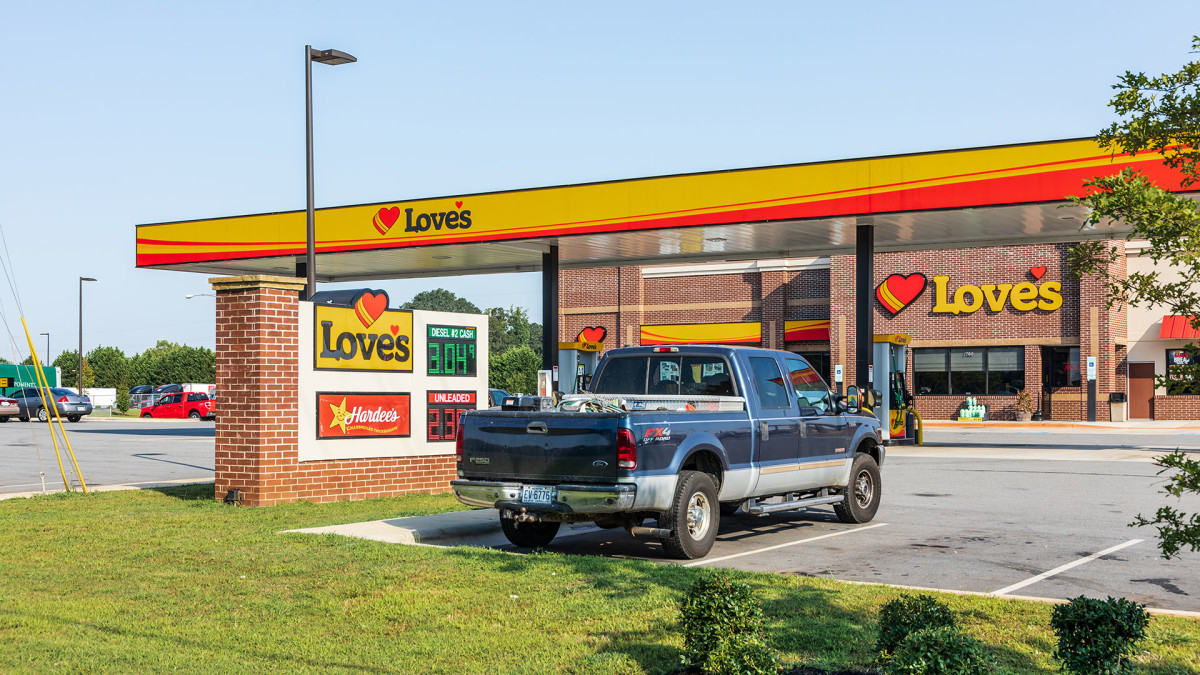 Love’s adds a technological innovation to fix a major fast-food problem.
Image Source: Shutterstock
Love’s introduces an innovative ordering solution
Love’s has partnered with Bite, bringing self-ordering kiosks to all its Arby’s locations to enhance efficiency and the overall dining experience.
This addition is part of a $1 billion investment the company launched in 2023 to remodel and update 200 stores by 2028.
The new kiosks aim to improve order accuracy by eliminating human error and reducing operational costs, since workers aren’t needed to take orders.
This addition is geared toward travelers who don’t have time to spare and are just looking for a quick meal to get back on the road as soon as possible.
The kiosks will also reduce language barriers, as orders can be taken in English and Spanish, and menu items will be displayed with images, making them more accessible to a broader audience.
Related: McDonald’s brings back experimental menu item 13 years later
Introducing self-ordering kiosks is a win for both brands. It makes ordering at Arby’s easier and encourages customers to shop around Love’s while their order is made, instead of waiting in line to place it.
“This technology doesn’t just improve the guest experience – it transforms our operations. By streamlining the ordering process, our team members can dedicate more time to food preparation, optimizing the customer experience and driving loyalty,” said Love’s VP of Food Service Joe Cotton in the press release. “It’s another way Love’s helps customers get back on the road quickly.”
McDonald’s fails with this controversial technology
Although this innovative addition sounds like a savvy investment, some disagree, as its implementation has been controversial in other companies.
McDonald’s (MCD) launched cashless self-ordering kiosks nationwide in 2015, aiming to improve operational speed and boost sales.
However, some consumers were dissatisfied, as the kiosks only accept card payments, lack human interaction, have technical issues, and are confusing, especially for older users.
More Retail News:
- Iconic fast-food burger chain announces late-night hours expansion
- Starbucks’ huge new rival opens first US stores
- McDonald’s social media hints at return of infamous menu item
Even employees disliked the kiosks, fearing their job security might be threatened, although the fast-food giant claimed no layoffs would result from their implementation.
Last year, McDonald’s launched cash kiosks at its company-owned locations to make them more inclusive.
However, the company’s systemwide sales, which include those made through the McDonald’s app, delivery services, and kiosks, still declined by 1% during the first quarter of 2025.
Nonetheless, Love’s plans to continue implementing self-ordering kiosks into more in-shop restaurants this year, but it hasn’t named any specific brands.
Related: Veteran fund manager unveils eye-popping S&P 500 forecast
