
Amazon’s (AMZN) work culture has undergone significant changes over the past few months.
In January, Amazon’s corporate workforce was ordered to return to working in offices five days a week. In an internal memo, Amazon CEO Andy Jassy told employees that the change was necessary to make “collaborating, brainstorming, and inventing” even “simpler and more effective.”
💵💰Don’t miss the move: Subscribe to TheStreet’s free daily newsletter 💰💵
He later said during an internal company meeting in March that bureaucracy needs to be removed from Amazon’s work culture, highlighting that the best leaders “get the most done with the least amount of resources required to do the job.”
Related: Amazon CEO gives hard-nosed message to employees
In his annual letter to shareholders, Jassy emphasized these ideas and said he wants Amazon to “operate like the world’s largest startup.” He believes one way to accomplish this is by increasing the speed at which tasks are completed.
Amid these goals, Amazon has increasingly introduced artificial intelligence and robotics into its workplace to speed up tasks.
Last month, Jassy sparked layoff fears by warning employees that Amazon’s increased reliance on AI to perform tasks will soon result in a smaller workforce.
“As we roll out more Generative AI and agents, it should change the way our work is done,” said Jassy. “We will need fewer people doing some of the jobs that are being done today, and more people doing other types of jobs. It’s hard to know exactly where this nets out over time, but in the next few years, we expect that this will reduce our total corporate workforce as we get efficiency gains from using AI extensively across the company.”
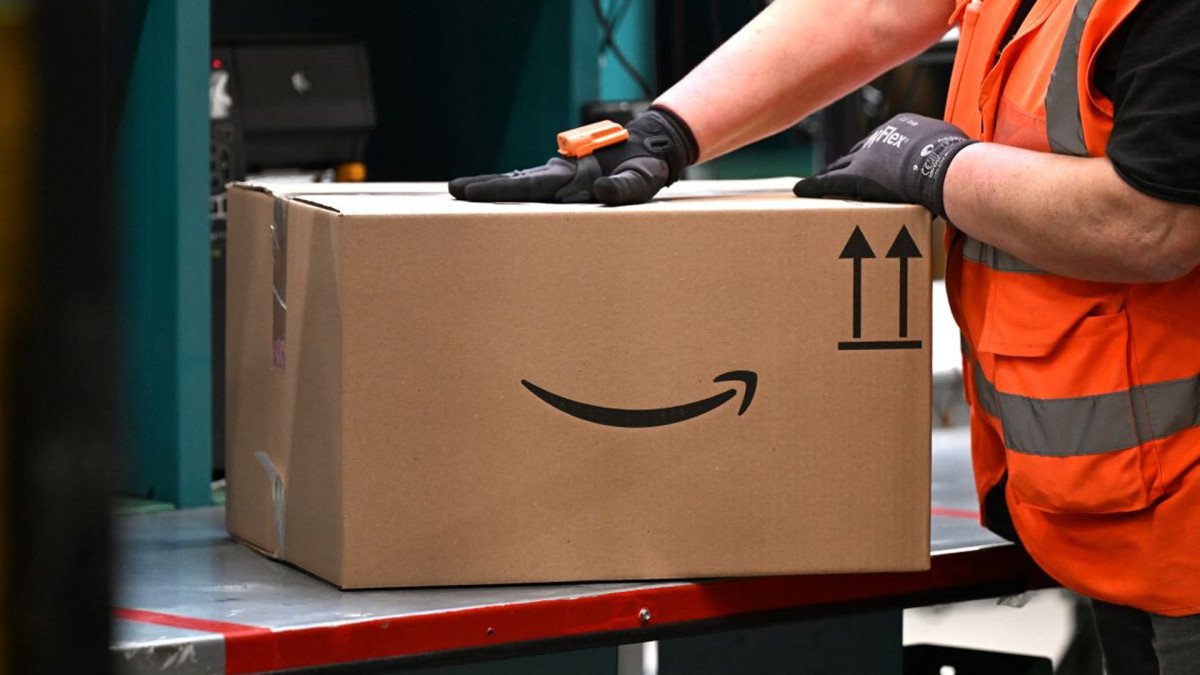 Amazon has increasingly relied on robots to assist with warehouse tasks.
Image source: Fassbender/AFP via Getty Images
Amazon warehouses undergo a controversial change
As AI further creeps into Amazon’s corporate workforce, robots are already taking over Amazon’s warehouses, almost outnumbering human workers, according to a new report from the Wall Street Journal.
Over the past few years, Amazon has been increasing its reliance on robots to assist in repetitive tasks such as picking items from shelves, packing orders, and moving inventory.
Currently, over 1 million robots are in Amazon warehouses, almost equal to the number of human workers in those locations. Robots have assisted roughly 75% of Amazon’s global deliveries, making tasks easier for human workers.
Related: Amazon gives employees a harsh ultimatum amid layoff fears
However, these robots appear to be replacing some human workers, as hiring has slowed down at the company’s warehouses. According to an analysis from the Journal, Amazon’s average number of employees per facility last year was about 670, the lowest average in the past 16 years.
Amazon is also increasingly using AI in its warehouses. Jassy said in a memo to employees last month that the technology is being used to “improve inventory placement, demand forecasting, and the efficiency our robots.”
Amazon Robotics Chief Technologist Tye Brady told the Journal in an interview that the company’s robots are designed to make jobs easier for workers, not replace them.
Amazon CEO reveals how workers feel about robots
In an interview with CNBC on June 30, Jassy stressed that using robots at Amazon’s warehouses creates a safer work environment for employees.
“Wherever we can, we use robotics in our fulfillment network to make things even more safe for our teammates,” said Jassy. “And what we’ve found, which has been so interesting in our fulfillment network, is that our teammates, they actually like working with the robots. They work in tandem together, and so, they get to work on things that human beings are better suited to do, and the robots get to work on things that maybe are repetitive and can save people from injury.”
More Labor:
- Amazon CEO warns employees of a harsh new reality
- IRS sends stern warning to employees after layoffs
- Google sends a harsh message to employees after layoffs
His comments come after a Senate committee investigation last year found that over the past seven years, Amazon workers were almost twice as likely to be injured on the job compared to workers at other warehouses in the industry.
The report also revealed that in 2023, Amazon warehouses recorded more than 30% more injuries than the industry average.
As Amazon bets big on robots, some Americans are suspicious about the technology.
According to a 2023 survey from Auterion, while 82% of Americans said they favor mobile robots for “high-risk jobs and mundane tasks,” a third said they are very concerned about the possibility of mobile robots replacing their jobs.
Related: Dell CEO’s harsh new policy for employees isn’t going as planned
