
Buying a car has not been an easy prospect in recent years. Semiconductor shortages during the pandemic and a shortage of vehicles drove prices sky-high and left customers competing for available vehicles. Some even sold for over the MSRP.
Things had been looking up for buyers, though, with dealers offering incentives again after major declines during the pandemic.
As inventories returned to normal levels, incentives hit 8% industrywide last December, coming close to the pre-pandemic norms of around 10%, before declining again in May to 6.8%, according to Cox Auto.
💵💰Don’t miss the move: Subscribe to TheStreet’s free daily newsletter 💰💵
New auto sales have also been up year-over-year in the first half of 2025, although sales are trending downward lately, with around 17.5 million units sold in March, 15.6 million in May, and an expected 15.3 million units sold in June.
Now the party is over, as tariff uncertainty is driving up prices across the board, but especially at the high and low ends of the market.
Cheaper vehicles under $30,000 are going to be hit the hardest, because most are largely assembled outside of the U.S. Manufacturers are, however, expected to defray some of that cost by pushing price hikes onto their more expensive models.
While tariffs are a problem for consumers who will now get stuck with higher costs for new cars, there’s another issue that’s going to affect buyers. They may have a hard time finding the vehicle model they want.
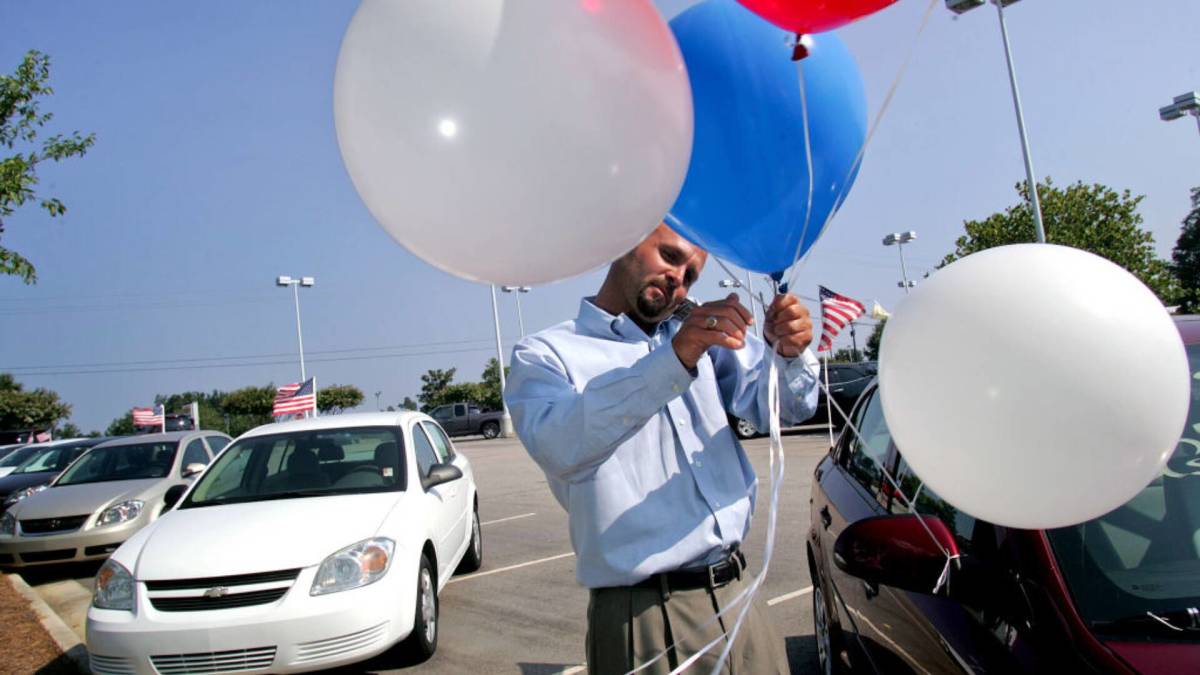 Finding the newest vehicle models is a challenge.
Image source: Bounds/Bloomberg via Getty Images
If you’re looking for a 2026 model, you may be out of luck
Tariffs will impact car buyers in another, more unexpected way beyond the increased cost of vehicles. It is also going to be much harder to find the latest vehicle models for sale on dealer lots.
Cox Auto Senior Economist Charlie Chesbrough highlighted the problem to Autoweek, explaining that there are very few of the latest vehicle models on dealer lots today.
In fact, only around 3% to 4% of all new vehicles that are available on dealer lots right now are the most recent 2026 models, while Chesbrough indicated that we normally see twice that number by this point in the year.
Related: New DOT rule could worsen trucker shortage, cause delivery delays
The reason for the small number of new vehicles: Automakers have been trying to import as many vehicles as possible to get ahead of the tariffs.
Companies have brought in a lot of the older 2025 models because those were the ones that were ready at the time, and have now slowed down importing of the newer vehicle models amid tariff uncertainty.
With dealers likely planning to sell 2025 models well into 2026, consumers eager for the latest technology are going to be in a tough spot.
Should you buy a vehicle now or wait until things settle down?
If you are hoping to buy a new car this year, the news that you’ll be stuck with outdated technology is yet another blow, as you’ll also be at risk of higher prices caused by tariffs.
Related: The dangerous trucking practice that puts everyone at risk
Of course, automakers may not raise prices immediately, and any price increases may not affect the current model year vehicles that car companies managed to import in anticipation of tariffs.
So the good news is that those who are OK with buying a 2025 model instead of the latest 2026 model may actually be able to choose from more inventory and even score a much better deal.
More Retail:
- Walmart CEO sounds alarm on a big problem for customers
- Target makes a change that might scare Walmart, Costco
- Top investor takes firm stance on troubled retail brand
- Walmart and Costco making major change affecting all customers
Ultimately, you’ll need to decide if having the latest model is worth the challenge of finding one — plus a potential price premium — or whether the 2025 version is good enough.
Related: Veteran fund manager unveils eye-popping S&P 500 forecast
