
Skyrocketing inflation in 2022 raised prices across all products and services, with food, housing, health care and utilities impacted the most. While the prices of homes increased, the cost of raw materials needed to build homes also rose due to global supply-chain bottlenecks.
Now, rising global geopolitical tensions and trade wards escalated by the Trump administration, are expected to raise the price of lumber and steel.
🏦 🏡 Don’t miss the move: SIGN UP for TheStreet’s FREE daily newsletter 🏦 🏡
Affordability remains the top barrier to homeownership among younger generations, and the rising cost to build homes will only exacerbate the lack of affordable housing options for first-time homebuyers.
Interestingly, Bank of America’s Who Builds the House 2025 Report found that home sizes are not keeping pace with the rise in cost of new construction.
Now, buyers find that they must budget for more expensive homes while needing to compromise on size.
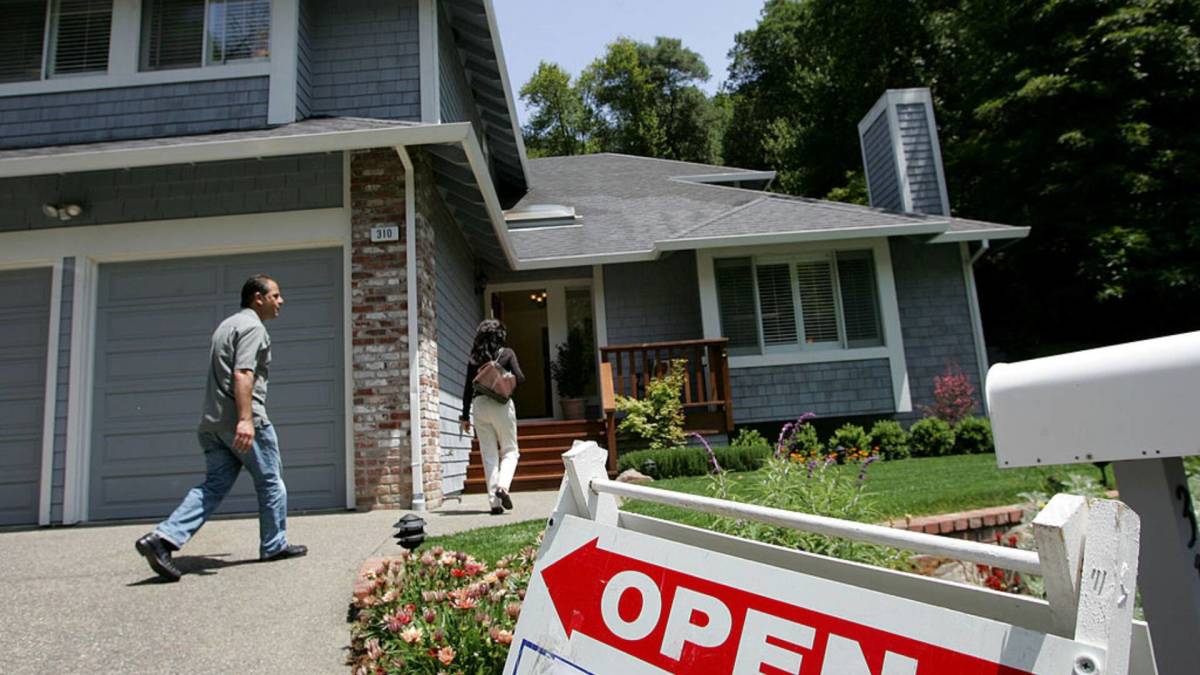 Rising home prices, high mortgage rates, and a general lack of affordability have weakened homebuyer demand over the past few years. Now, Bank of America notes that buyers are paying more for smaller homes.
Image source: Sullivan/Getty Images
Bank of America reports that the size of new homes is shrinking, despite rising costs for buyers
Though housing costs have risen over the past few decades, average home prices jumped significantly from $371,100 in Q2 2020 to $525,100 in Q4 2022 following the Covid-era housing boom and widespread inflation in 2022.
Prices have since dropped from their peak, but remain elevated relative to household income.
Building affordable housing options is a potential solution to energize the housing market by drawing young buyers back, but the inflated cost of materials like steel, lumber, and gypsum have raised the overall cost of building new homes.
According to Bank of America’s recently released Who Builds the House 2025 Report, new home prices are outpacing inflation, despite the average square footage shrinking.
More on homebuying:
- The White House will take surprising approach to curb mortgage rates
- Housing expert reveals surprising ways to reduce your mortgage rate
- Dave Ramsey predicts major mortgage rate changes are coming soon
- Warren Buffett’s Berkshire Hathaway sounds the alarm on the 2025 housing market
Highlights from the report note that homebuyers are getting less bang for the buck on new builds.
“We estimate the value of content in an average U.S. new single-family home was $102k in 2024. We estimate the bill of materials to build a house has increased at a 3.6% CAGR from $23K in 1982, consistently outpacing overall inflation over the last 40+ years.”
However, the increased value of well-maintained newly built homes may be enough to counteract the decline in size.
“Since 2013, value of content has increased at a 3.3% CAGR, with a 4.2% CAGR in material prices more than offsetting a (0.9%) CAGR decline in average home square footage. Over the last decade, the average size of a home in the U.S. has declined by 12%.”
Bank of America predicts tariffs will increase the cost of building a new home by 3% by the end of 2025
Some of the most significant factors increasing the cost of building materials are the tariffs levied against key trading partners by the Trump administration. The U.S. imports vital construction materials like lumber, steel, and gypsum from Canada and Mexico, but fluctuating tariffs have impacted projected homebuilding costs for 2025.
Although Canada and Mexico were exempt from the administration’s 10% reciprocal tariffs levied against most countries, the National Association of Homebuilders estimates that tariffs on Canadian lumber will increase from their current 14.5% level by the end of the year.
Related: Warren Buffett’s Berkshire Hathaway expects housing market price changes soon
“Year-to-date in 2025 homebuilders’ direct costs have been tracking flattish, but tariffs (both reciprocal and Section 232) could result in higher costs by the end of 2025.”
Bank of America estimates that tariffs will increase across the board on key aspects of homebuilding, driving up housing prices overall.
“We expect tariffs to increase prices for HVAC, plumbing, appliances, electrical components, and flooring. In addition, duties on Canadian lumber (accounts for 25% of lumber in the U.S.) are set to increase later this year. We estimate the current tariffs would increase the cost to build a house by roughly 3% ($3,000-$4,000 for a median new home), which equates to around 1% of the average selling price.”
Related: Veteran fund manager unveils eye-popping S&P 500 forecast