
Car buyers have benefited from car manufacturers relying on incentives to get customers through the door.
Consumer sentiment has fallen, but a sale is a sale, and people are taking advantage.
“People are buying cars because they think tariffs are coming,” one Mazda dealer said.
Related: Investment bank says tariffs are devastating these businesses
U.S. companies like Ford are in an especially advantageous position because they (usually) import fewer vehicles than their foreign competitors.
Nearly half of American drivers cite car expenses as the reason they can’t save any money, and the average American spends about 20% of their monthly income on auto loans, fuel, insurance, and maintenance.
Most financial experts cap the monthly income you should spend on a vehicle at 15%.
But according to a MarketWatch Guides survey, about 10% of drivers say they spend 30% of their monthly income on driving, while another 12% said they “found themselves living paycheck to paycheck due to the financial strain of their cars.”
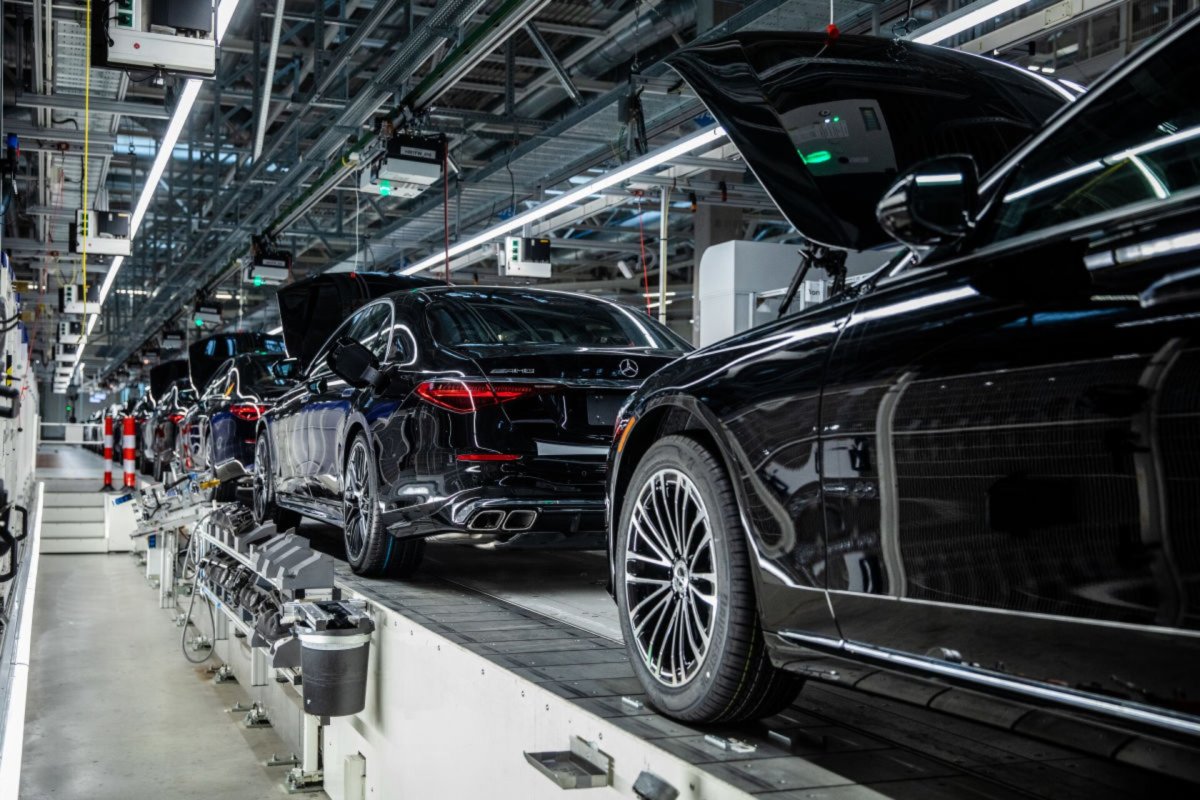 Mercedes pulled its guidance earlier this year due to tariffs.
Image source: picture alliance/Getty Images
Mercedes-Benz reports disappointing Q2 hurt by tariffs
On Monday, Mercedes-Benz said that in the second quarter, unit sales of cars and vans fell 9%, primarily due to tariffs.
The luxury German brand delivered 547,100 cars and fans between April and June. Mercedes’ Cars unit reported a 9% decline to 453,700 vehicles sold as support in the U.S and China both dried up.
North America deliveries fell 14%, while China deliveries declined 19%.
“Deliveries to dealerships were carefully calibrated to navigate new global tariff policies, impacting sales of Mercedes-Benz Cars in the U.S. and China in particular,” Mercedes said.
Related: Toyota makes a tariff move customers are going to hate
European sales were up 1%, while sales in Germany rose 7%.
Perhaps most concerning was the 18% drop in battery electric sales to 41,900 vehicles.
According to a Bernstein note last week viewed by Reuters, Mercedes expects tariffs to play a big part in its performance this quarter.
More automotive news:
- Detroit Big 3 benefit from auto tariffs now, but time is running out
- Popular Ford newcomer overtakes Jeep in a key area
- Toyota makes surprising move to beat Tesla in key market
Mercedes expects tariffs to shave less than 3% from its second-quarter profit margin. The company seemed relieved about a number that would have been worse without “some de-escalation of tensions between the U.S. and China, some tariff offsets, and timing because tariffs were only ramping up in April.”
What’s next for Mercedes-Benz and U.S. tariffs
U.S. tariffs forced Mercedes-Benz, and many other automakers both foreign and domestic, to pull their guidance for the year due to lack of visibility.
This is a smart move, given President Trump’s mercurial decision-making on tariffs. The current pause on non-automotive tariffs is set to end on Wednesday, July 9, but the 25% auto tariffs that have been in place since March never went away.
Mercedes operates two manufacturing plants in the U.S., one in Tuscaloosa and the other in Vance, Alabama. The plants produce four of its most popular models, the GLS and GLE SUVs, the GLE Coupe, and the new C-Class.
The Tuscaloosa plant was Mercedes’ first plant outside of Germany when it was completed in 1995.
Today, the 1,000-acre site has over 5 million square feet of manufacturing space, and its facilities employ more than 11,000 Alabamians.
Mercedes sold 324,500 passenger cars and 49,600 vans in the U.S. last year, representing 16.4% and 12.2% of sales, respectively.
Related: Car buyers should shop these brands for the best tariff deal