
It’s pretty hard to make sweeping generalizations about the retail industry.
Try as some analysts and customers might, it’s pretty hard to draw clear parallels between distinct retailers.
Related: Struggling mall retailer closing more stores amid alarming trend
To be sure, there are similarities between a handful of companies. And, sometimes, we might even be able to identify a few trends amongst these groups.
Take, for example, Walmart and Amazon.
Obviously, they’re two massive retail companies. And depending on how you measure, they are the biggest retailer and biggest online retailer in the world, respectively.
They’ve shared a few similarities over the years.
During Covid, they both saw massive growth, particularly in the e-commerce space as more folks shifted to online shopping. And both have been beefing up their logistical capabilities so they can make more deliveries faster across the U.S.
But it’s really hard to compare them as apples to apples, since both operate distinct business models.
Amazon runs a robust cloud services arm, which accounts for a bulk of its profit.
And Walmart runs a primarily brick-and-mortar model.
So it’s hard to draw too many comparisons between the two — or extract trends during an earnings report and extrapolate to the retail industry as a whole.
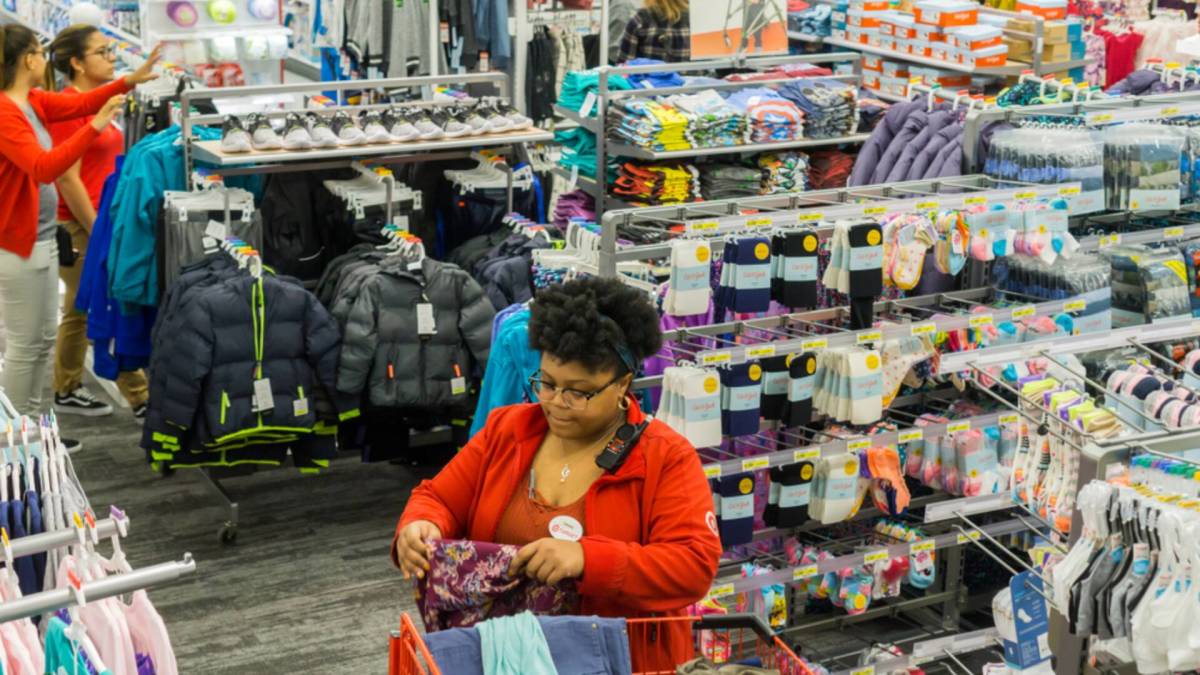 Target is working on a big back-to-school campaign.
Image source: Shutterstock
Target operates differently
One of the other large retailers in the U.S. is Target (TGT) .
The Minnesota-based big-box store is in a league of its own.
Like Walmart, it operates a primarily brick-and-mortar model. But it has a distinct business model that’s unique from anyone else.
More Retail:
- Lowe’s launches massive early answer to Amazon Prime Day
- Troubled mall chain weighs a sale amid worrying customer trend
- Home Depot makes clear statement amid boycott threats
It’s been slower to the online party; Target has been working on standing up a successful online shopping division propelled specifically by its paid membership program, Target Circle 360.
But the company was almost painstakingly careful about expanding its e-commerce capabilities. It didn’t roll out Target Circle 360 until 2024 — nearly two decades after Amazon Prime was launched and four years after Walmart+.
So it missed the initial online shopping enthusiasm that Covid brought. But it has still managed to capture a particularly loyal cohort of Target shoppers who prefer to visit their local Target above any other super-retailer.
Target tries to win back shoppers
It hasn’t been all smooth sailing for Target, though.
The company has found itself at the center of contentious boycotts over the past two years as customers claim it has been either too socially outspoken or not outspoken enough.
Related: Lowe’s launches massive early answer to Amazon Prime Day
Now, however, Target is attempting to rise above the noise and is focusing its efforts on an early back-to-school campaign, which is one of its most profitable shopping seasons.
The two campaigns are targeted at students and their parents.
The first campaign, dubbed “Hey Mom, I’m at Target,” is aimed at college kids who shop at the store before going off to university but still call home to ask their parents questions.
The second campaign, called “All of the Above,” is aimed at younger students and teachers. It’s supposed to showcase Target’s affordability and accessibility for students and professionals.
Target will also promote savings via its Target Circle 360 program.
The retailer is offering a student discount, which will get college students 20% off a purchase when they use their Target Circle 360 membership.