
After years of floundering, General Motors (GM) made the announcement official in December 2024.
GM spent more than $10 billion to develop its autonomous vehicle program after purchasing Cruise in 2016. But after years of promising the technology would open up trillions in new business opportunities, GM officially shut down Cruise late last year.
Related: Elon Musk’s robotaxi has a serious problem
“Cruise was well on its way to a robotaxi business — but when you look at the fact [that] you’re deploying a fleet, there’s a whole operations piece of doing that,” GM CEO Mary Barra said at the time.
GM said the robotaxi market was getting too crowded for its liking, plus, the return on investment in the near term wasn’t going to justify such heavy spending, even if the company still sees a trillion-dollar opportunity.
“You’ve got to really understand the cost of running a robotaxi fleet, which is fairly significant, and again, not our core business,” Barra said.
Previously, when the company was justifying its big spending on Cruise, GM estimated the program would generate $50 billion.
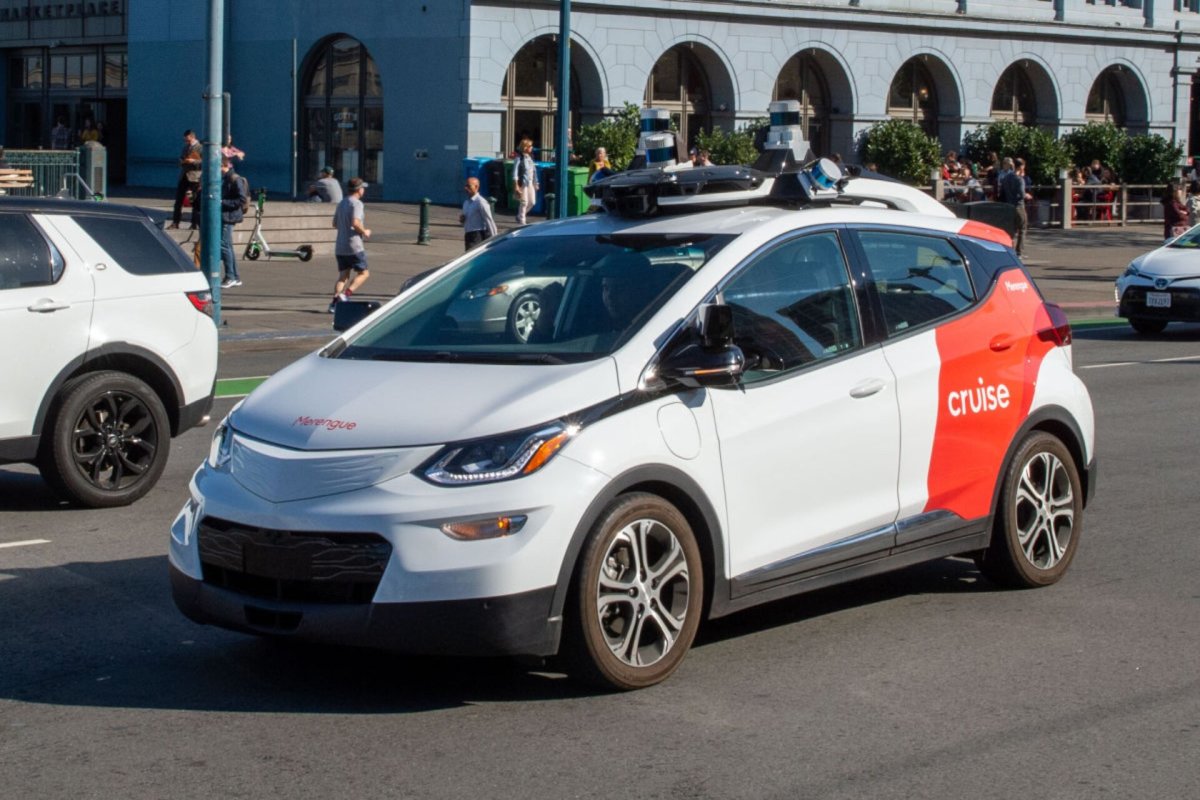 GM brought back the Cruise just weeks after shuttering the program.
Image source: picture alliance/Getty Images
GM revives Cruise robotaxis just months after shuttering program
A revenue stream that robust is tough to just give up on, especially when competitors are still plugging away at developing the technology.
So, if you see Cruise Bolt-branded cars on the road, you didn’t travel back in time; it’s just GM trying to get something from its $10 billion investment.
This week, General Motors confirmed to the Detroit Free Press that it is accelerating the development of its hands-free, eyes-off advanced driver assist system by “testing a limited number of Cruise Bolt vehicles on select highways in Michigan, Texas, and the San Francisco Bay Area.”
GM began the tests in Michigan and Texas in February and in San Francisco in April. The vehicles are being operated with safety drivers on board.
Related: Tesla has late start in a crucial race for its future
“The internal testing with trained drivers integrates autonomous technologies with Super Cruise for simulation purposes and does not involve public passengers,” GM’s statement said.
Unlike Tesla’s (TSLA) Robotaxi, Cruise relies on LiDAR (light detection and ranging), which uses lasers to gauge the distance of objects around the vehicle, along with standard AV tech like cameras, sensors, and GPS.
Since the December announcement, GM has said it will combine Cruise and GM technical teams.
More EV news
- Ford CEO Jim Farley has a scary message about China EVs
- EVs suffer surprising rejection in a crucial market
- Forget Tesla, Ford is eyeing even bigger EV rivals
The Society of Automobile Engineers considers GM Super Cruise, like Tesla Full Self Driving, Level 2 automation, meaning it requires full driver engagement. However, the system GM is currently working on would be considered Level 3.
Anything Level 3 and above is “autonomous.” This means that no humans need to be involved when the system activates features like lane assist and automatic braking.
The autonomous vehicle field is getting crowded
Cruise robotaxis are coming to a city street near you, whether you like it or not.
According to recent surveys, the majority of Americans are not very fond of autonomous 4,000-pound vehicles ambling down their streets.
“Consumers are skeptical of the full self-driving (FSD) technology that undergirds the robotaxi proposition, with 60% considering Tesla’s full self-driving ‘unsafe,’ 77% unwilling to utilize full self-driving technology, and a substantial share (48%) believing full self-driving should be illegal,” according to the May 2025 edition of the Electric Vehicle Intelligence Report (EVIR).
Earlier this month, Tesla did have a Level 3 breakthrough when a camera inside a Tesla captured a momentous event: the car driving itself from the factory to the new owner, who lived 30 minutes away.
Musk also tweeted about the accomplishment on June 27 before the video came out, saying, “There were no people in the car at all and no remote operators in control at any point. FULLY autonomous!”
“To the best of our knowledge, this is the first fully autonomous drive with no people in the car or remotely operating the car on a public highway,” he continued.
Related: EVs suffer surprising rejection in a crucial market