
Like many airlines, Southwest has been struggling lately.
Of course, the airline had a famous holiday meltdown in 2022, resulting in 16,900 canceled flights that left more than two million passengers stranded. That incident led to a $140 penalty from the Department of Transportation and set the airline on a turbulent path that left it scrambling to regain its footing.
Challenges with Boeing didn’t help Southwest either, as the carrier exclusively uses the Boeing 737, and safety concerns coupled with regulatory issues led to delayed delivery of planes that forced Southwest to decrease its flight capacity.
💵💰Don’t miss the move: Subscribe to TheStreet’s free daily newsletter 💰💵
Elliott Investment Management then entered the picture, reaching an 11% stake in Southwest and vocally criticizing leadership and demanding that the airline evolve. And, evolve it did, ending some of the policies that famously made it stand out from all the other airlines out there.
Customers have not been very happy with many of the changes that the airline has made, and one of the most shocking changes of all has drawn the most anger.
That change is the end of the famous “Bags Fly Free” policy, which allowed customers to bring two bags aboard the plane without having to pay extra for them.
For many, the Bags Fly Free policy defined the brand, so there have been open questions about why Southwest would make a change to one of its most distinguishing characteristics — and to a feature that many people cited as a key reason for choosing Southwest over other carriers.
Now, however, we may have the answer.
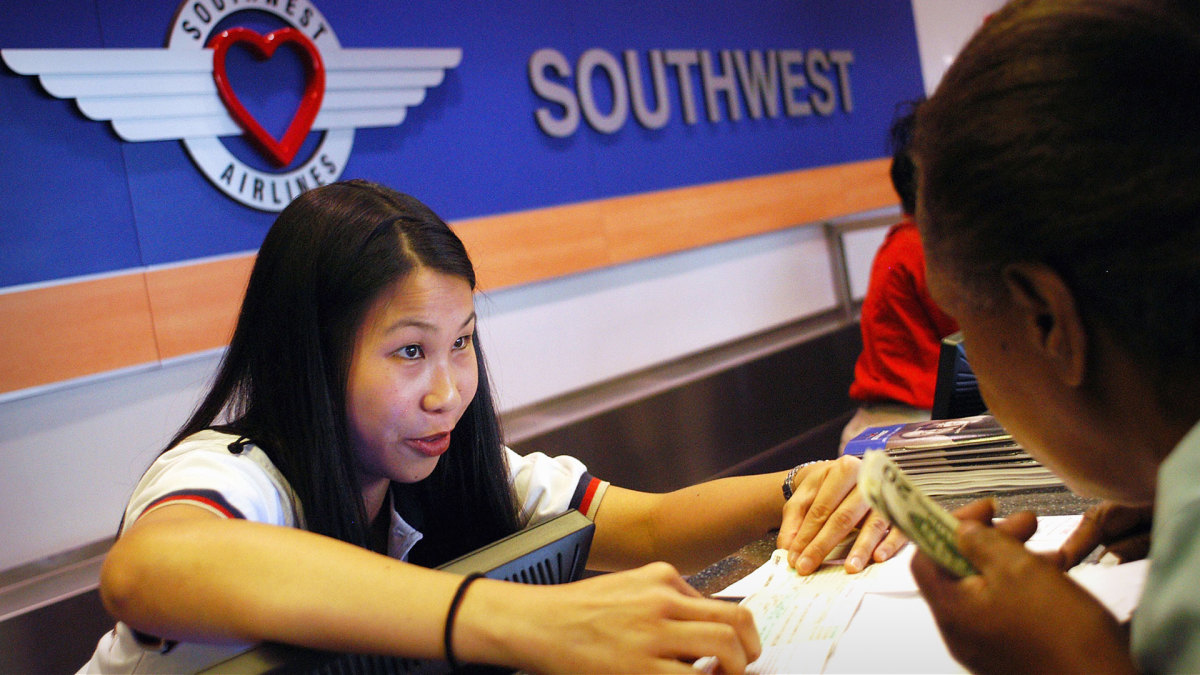 Southwest is making a fortune by charging you for checked bags.
Image source: William Thomas Cain/Getty Images
Southwest’s change to its bag policies is expected to bring in big bucks
So, why would the airline torch the goodwill that its famous Bags Fly Free policy had created for the airline? It’s very simple. There is far more money in charging baggage fees than many people realize.
In fact, in a recent report from the NY Times, it was revealed that Southwest expects to make a shocking sum from its new charges. Specifically, the airline expects to make $4 billion from both the new bag fee rules and the end of its open seating policy.
The bag fee change alone is going to account for a huge portion of this amount, with bag fees alone expected to provide the airline with an estimated $1.5 billion per year in extra revenue. That’s an amount big enough to leave anyone speechless.
Related: Southwest Airlines cancels hundreds of flights from July to Sept.
Southwest’s new fee for checked bags will be $35 for the first bag and $45 for the second checked bag. Bags that exceed weight and size limits will also be subject to additional fees on top of that amount.
Obviously, collecting these fees from millions of passengers is going to add up very quickly, and the airline has decided that the $1.5 billion or so that will come from the change is worth putting up with customer complaints.
Southwest CEO says it’s all about the customers
Despite the fact that the response to Southwest’s bag fee change has been almost universally negative, CEO Bob Jordan has attempted to frame the change in a positive light, suggesting that the airline was motivated by a desire to give customers more options.
Related: JetBlue airline cancels more winter flights, could lose slots
“If you don’t follow your customers, you look up one day and your products just aren’t attractive any longer,” Jordan said in an interview with The Times. “The move to bag fees is really about choice.”
More on travel:
- U.S. government issues serious warning for cruise passengers
- Delta Air Lines makes a baggage change that travelers will like
- United Airlines passenger incident triggers quick response
Of course, flyers now have the choice to either try to fit everything into a carry-on, to earn enough loyalty points to avoid the new fees, or to pay the airline extra money to do what they previously could do for free.
Frankly, that’s not really a choice any passenger will be too excited about. So, it remains to be seen whether that extra $1.5 billion in profits Southwest is chasing with this decision will be worth the damage to the brand
Related: Veteran fund manager unveils eye-popping S&P 500 forecast