
AMD divested its manufacturing unit in 2009 as GlobalFoundries.
It was a lifesaving move for both companies. GlobalFoundries found itself in the rough spot of playing catch-up with Intel’s and TSMC’s manufacturing processes.
The company has made some progress over the years. However, for its 14nm node, it turned to Samsung for licensing its manufacturing process.
The next jump was 12nm. But when the company worked on its 7nm node in 2018, it had to abandon the plan.
Related: Analysts reset Qualcomm stock price target, send warning
It wouldn’t have been able to manufacture enough chips for AMD without building additional fabs, and making chips for AMD was the main reason it was developing a 7nm node in the first place.
Constantly chasing the best tech was too expensive, and it wasn’t profitable to continue spending billions on research and development.
Fortunately for the company, plenty of other customers didn’t need the best manufacturing process, and making this difficult decision saved the company. Ultimately, GlobalFoundries focused on improving the manufacturing technologies it already had.
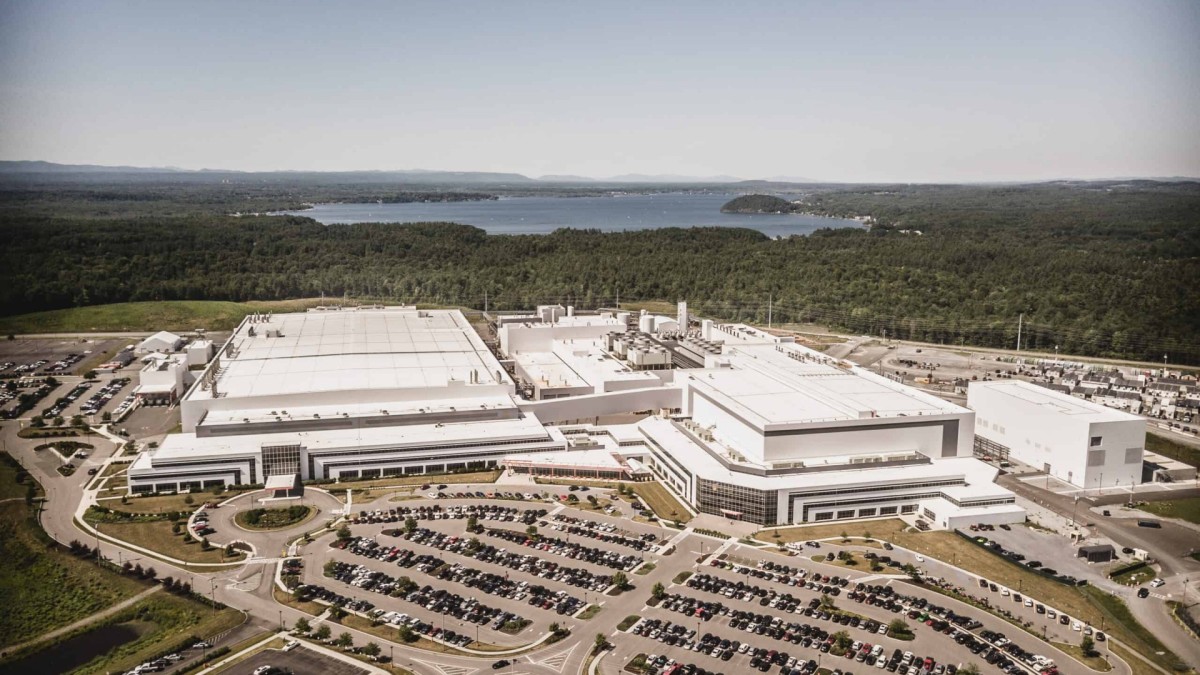 GlobalFoundries will invest $16 billion to expand manufacturing capabilities across its New York and Vermont facilities.
Image source: GlobalFoundries
GlobalFoundries’ Q1 2025 revenue stagnates at $1.585 billion
Since dropping the 7nm node plan, the company has developed a diverse portfolio of specialized nodes. It focused on tech used in automotive, the Internet of Things, communications infrastructure, and data centers.
GlobalFoundries’ GFS in May Q1 2025 reported revenue of $1.59 billion, just a 2% increase compared to Q1 2024. Stagnating revenue isn’t the only problem the company faces, as its profit margin fell from 25.4% to 22.4%.
The positive is that the company recovered from a net loss of $729 million in Q4 2024, reporting income of $211 million.
Related: Analysts raise Micron stock price target, send warning
The company provided guidance for Q2 2025:
- Net revenue in the range of $1.65 billion to $1.7 billion
- Gross margin of 24.1% ± 100bps
- Diluted earnings per share of $0.27 ± $0.06
On June 4, GlobalFoundries revealed a plan to invest $16 billion to expand semiconductor manufacturing and advanced packaging capabilities across its New York and Vermont facilities.
The company said its investment is a reaction to the artificial intelligence wave, which is increasing demand for semiconductors designed for power efficiency and high-bandwidth performance across data centers, communications infrastructure, and AI-enabled devices.
GlobalFoundries to acquire MIPS
GlobalFoundries might be able to grow revenue from the increased demand for its products, but that isn’t enough. There is always a threat that competitors from China could catch up and develop similar specialized manufacturing processes.
The best defense is more differentiation and even more specialization.
GlobalFoundries on July 8 confirmed a definitive agreement to acquire MIPS.
MIPS recently expanded its processor IP offerings based on the open RISC-V specification. In March, it launched its new line of Atlas chips for “physical AI platforms” such as industrial robots and autonomous cars, paired with Atlas Explorer, a virtual platform that enables performance optimization.
More Tech Stocks:
- Amazon tries to make AI great again (or maybe for the first time)
- Veteran portfolio manager raises eyebrows with latest Meta Platforms move
- Google plans major AI shift after Meta’s surprising $14 billion move
It is extremely valuable to be able to offer in-house designs for CPUs.
GlobalFoundries can’t get a license for x86 architecture; competitors rely on ARM. Yes, there is IBM’s PowerPC, but going for RISC-V was the best, if not the only, choice.
“This acquisition will be a powerful step forward to push the boundaries of efficiency and performance across a broad range of applications in automotive, industrial, and datacenter infrastructure,” stated Chief Operating Officer Niels Anderskouv.
It will be interesting to see if GlobalFoundries develops some stronger chips over time. Perhaps it will also bring back the 7nm node while it’s in the investing mood.
The company said that following the acquisition, MIPS will continue to operate as a standalone business within GlobalFoundries.
Related: Oracle CEO sends blunt 2-word message on its business