
Amazon is a hot place to be right now, with its yearly Prime Day event currently in full swing.
The retailer is leaning heavily on the big sale to drum up revenue for a customer base that’s feeling uneasy about unnecessary spending, thanks to an uncertain economic climate and the looming threat of increased costs from tariffs.
💵💰Don’t miss the move: Subscribe to TheStreet’s free daily newsletter💰💵
Amazon CEO Andy Jassy has seemed unruffled about the tariff threat, saying in interviews that Amazon has employed several strategies to prepare itself for the impact of tariffs.
“You can see different initiatives that we’ve taken within those priorities. We’ve done some forward buys of inventory where we’re the first-party seller,” he said.
Related: Amazon’s CEO shares warning on prices, item shortages
“Our third-party sellers have pulled forward a number of items so that they have inventory here as well. We’re encouraging that because we’re trying to keep prices as low as possible for customers.”
Amazon’s performance during Prime Day will provide information about customer behavior that many other retailers will look to as an example for what to expect as the year goes on.
However, while Amazon tries its best to appeal to its customers during the big Prime Day event, it’s facing a new threat after being accused of doing something that clearly does not have its customers’ best interests at heart.
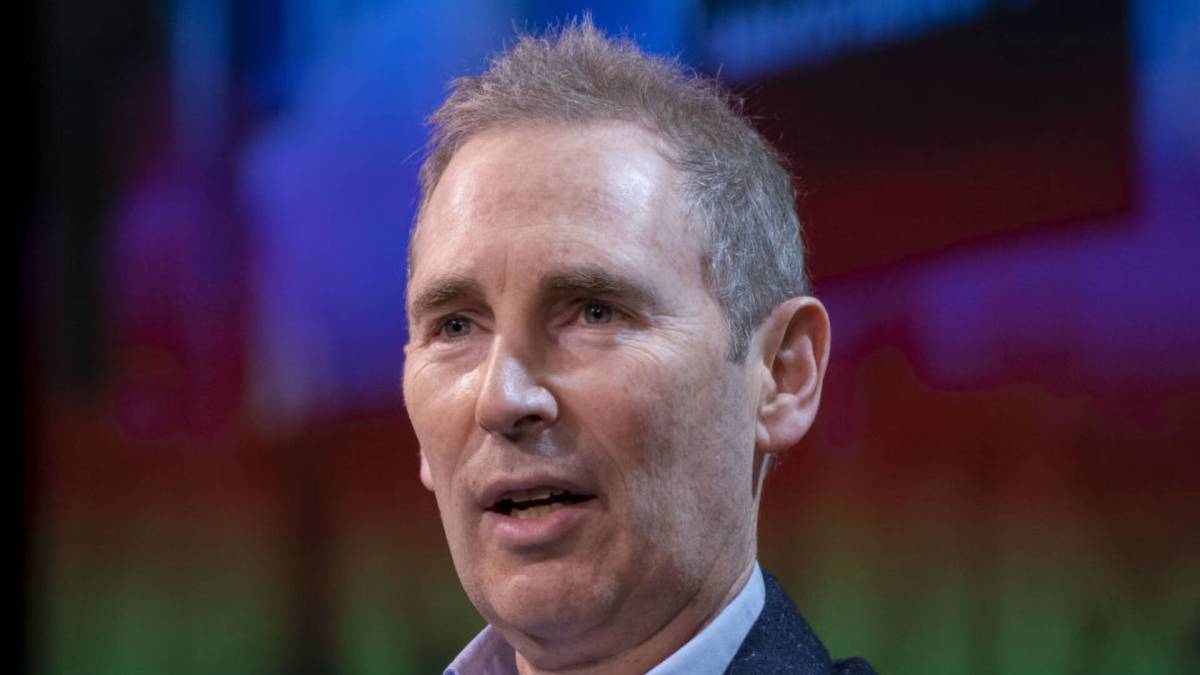 Amazon CEO Andy Jassy will not like these accusations.
Image source: Ryder/Bloomberg via Getty Images
Amazon accused of intentionally misleading its customers
On July 8, U.S. District Judge Robert Lasnik made an important ruling permitting millions of people to form a class action settlement that alleges Amazon uses Alexa to record owners’ conversations.
More Tech Stocks:
- Amazon tries to make AI great again (or maybe for the first time)
- Veteran portfolio manager raises eyebrows with latest Meta Platforms move
- Google plans major AI shift after Meta’s surprising $14 billion move
Those that use Alexa know that speaking the device’s “name” acts as a wake word, which means the device will listen and respond to the user.
However, the plantiffs allege that Alexa devices can begin recording even when the device has not heard a wake word, a process it calls “false wakes.”
“Plaintiffs assert that both the permanent storage of Alexa interactions and the false wakes are intentional design elements of the service, used to amass huge numbers of voice recordings that can be fed into algorithms and machine learning platforms for continuous improvement training,” the suit says.
Related: Amazon pulls the plug on a free service for customers
The original suit was filed in 2021, and Amazon denied the claims at that time, asking for the lawsuit to be thrown out.
Lasnik commented on his reasoning for the decision, saying, “The fact that millions of people were allegedly injured by the same conduct suggests that representative litigation is the only way to both adjudicate related claims and avoid overwhelming the courts.”
The plaintiffs also ask that Amazon destroy any existing recordings and related data, according to the lawsuit.
Amazon says Alexa doesn’t record
If Alexa devices only listen to you after you prompt them, you might be wondering how they can hear the prompt in the first place.
According to Amazon, that works because of a technology called keyword spotting. Per an official page on its site about how Alexa works, “Echo devices are designed by default to detect only the sound waves of your chosen wake word, and everything else is ignored.”
However, Amazon has made recent moves that have left many concerned about the truth of it all. On March 28, Amazon announced it would no longer offer the “Do Not Send Voice Recordings” feature on Echo devices.
What that means is that all of your voice recordings will be transmitted to Amazon’s cloud server indefinitely. If you don’t like that, your only option is so simply stop using Alexa devices, because you can’t turn the function off.
While this is not a confirmation that Alexa is doing anything devious, it’s also not exactly going to allay anyone’s privacy concerns.