
Some products have been around forever, but don’t resonate in the way they used to.
Children of the ’80s grew up eating canned food. We thought nothing of opening and heating up a can of Chef Boyardee.
Related: Adults-only retail chain closes half its stores, no bankruptcy
This was not a punishment. It was actually considered a treat.
We ate canned food because we did not have many options. There were frozen TV dinners that were both delicious and horrifying.
You heated these up in the toaster oven, because you probably weren’t old enough to be allowed to use the actual oven.
The most popular ones were fried chicken and a sort of meatball.
Until the microwave was invented, choice was just fairly limited. And even when the microwave did come about, options were more plentiful, but not necessarily better.
Anyone of a certain age has probably eaten a microwave lasagna that was molten hot in some places and disturbingly cold in others.
Canned food still exists, but in many cases, it’s just easier to cook fresh. That’s not true in all parts of the country, but in many places, the need for a brand like the recently bankrupt Del Monte has simply diminished.
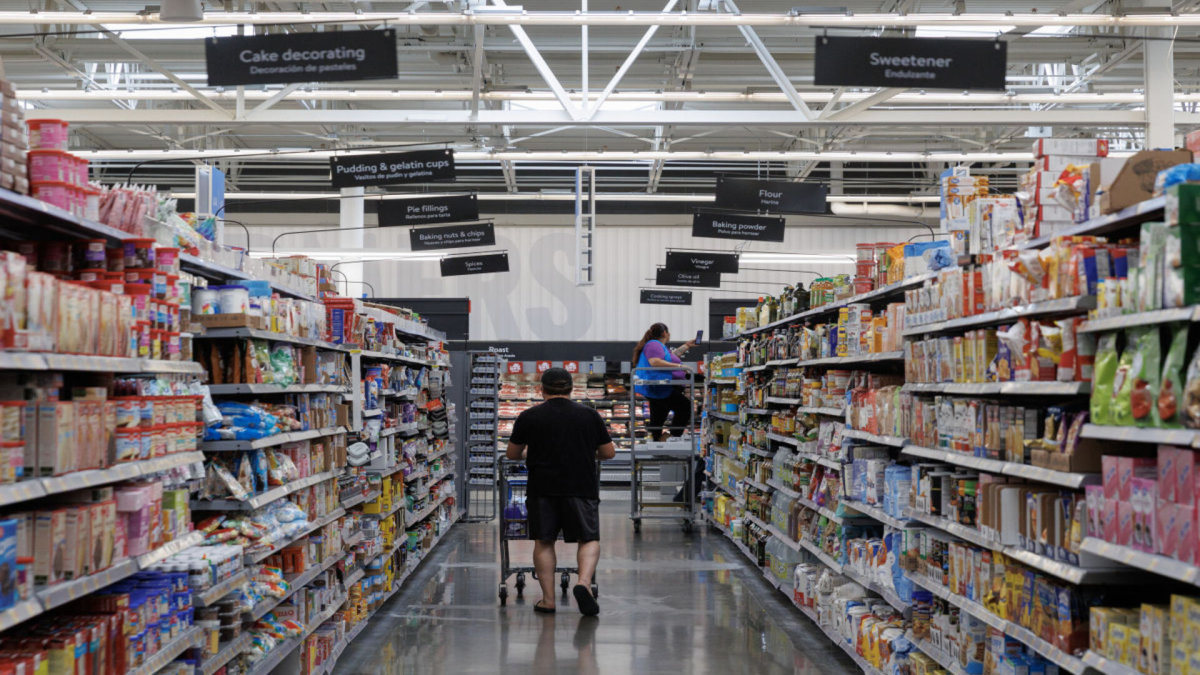 Consumer simply don’t need as many canned goods.
Image source: Bloomberg/Getty Images
Del Monte hit a wall
Creditsafe Head of Brand Ragini Bhalla and her team examined Del Monte’s financials and shared what happened before its Chapter 11 bankruptcy filing.
“Del Monte Foods’ Days Beyond Terms (DBT) payment history from the last 12 months reveals a pattern of mounting financial stress that culminated in its recent Chapter 11 bankruptcy filing,” according to the data.
The canned goods company maintained a relatively stable DBT for most of 2024 – hovering between 9 and 14. (For context, DBT indicates how late a company pays its bills.)
“But that stability didn’t last. A notable shift occurred at the start of 2025, with DBT rising again to 14 in January 2025 and 15 in February 2025, signaling emerging cash flow pressures,” Creditsafe reported.
While March 2025 saw its DBT drop to 4, potentially due to short-term payment prioritization or cash influx, this improvement was short-lived.
By April 2025, the company’s DBT spiked to 17 and then rose further to 21 in May 2025, placing it well above the industry average DBT of 11. This indicates that Del Monte increasingly struggled to meet its financial obligations.
Bankruptcy news:
- Iconic auto repair chain franchise files Chapter 11 bankruptcy
- Popular beer brand closes down and files Chapter 7 bankruptcy
- Popular vodka and gin brand files for Chapter 11 bankruptcy
“This late-stage spike in DBT is especially concerning, because sharp DBT increases just months before a bankruptcy filing often reflect worsening liquidity, supplier strain, and triaging of payables,” Bhalla shared.
Creditsafe data reveals that 18.62% of Del Monte’s bills were 61-90 days overdue in July 2024, an early sign of cash flow issues. By August 2024, late payments shifted into both early and severe delinquency buckets, with 23.82% of its bills falling 1-30 days late and 8.48% extending beyond 91+ days, suggesting the company was starting to juggle obligations.
Del Monte could not catch up
“The most telling data point comes in May 2025, when 4.83% were 31-60 days late and 21.00% of Del Monte’s bills were 61-90 days late. The steady migration of outstanding bills into older aging brackets over this 10-month period suggests worsening liquidity and limited ability to manage working capital, classic signs of distress that mirror pre-bankruptcy patterns,” Bhalla shared.
Del Monte Foods, the 139-year-old canned food giant, filed for Chapter 11 bankruptcy in July 2025, citing mounting macroeconomic pressures, shifting consumer preferences and unsustainable debt as key drivers, according to Creditsafe.
“The company has struggled to adapt as shoppers moved away from preservative-heavy canned goods toward fresher, private-label options, leading to surplus inventory and costly warehousing,” Bhalla added.
Tariffs on steel and aluminum further squeezed margins, while interest payments tied to its debt-laden acquisition by DMPL outpaced earnings.
Related: Walmart makes shocking claim, shares scary warning
“Despite recent closures of processing plants and warehouses in a bid to cut costs, Del Monte was left with liabilities estimated between $1 billion and $10 billion and as many as 25,000 creditors. The company secured $912.5 million in financing to maintain operations during the sale process,” Creditsafe shared.
The company plans to sell a majority of its assets as part of an agreement with its major lenders. It has secured $165 million in financing to fund ongoing operations until a sale takes place.