
Las Vegas Strip Casinos reported $21.8 billion in total revenue in 2024, which was a 6.8% increase compared with the year prior.
However, net income declined 40.4%, largely because of additional general and administrative expenses, including new union contracts with higher labor costs for many properties.
Things were looking up in the first quarter of 2025, though, with the Las Vegas Strip reporting $840 million in gross gaming revenue earlier this year, up 22.4% from the year prior.
💵💰Don’t miss the move: Subscribe to TheStreet’s free daily newsletter 💰💵
Unfortunately, the party may soon be over, thanks to a little-noticed provision in the One Big Beautiful Bill Act. The tax rule tucked away in the law could do substantial damage to the gaming and sports betting industries, including casinos along the Strip, if changes aren’t made.
In fact, some lawmakers who voted for the OBBBA are now panicking about its potential impact and have introduced a bill to repeal this part of the law, even though they voted for it just a few short days ago.
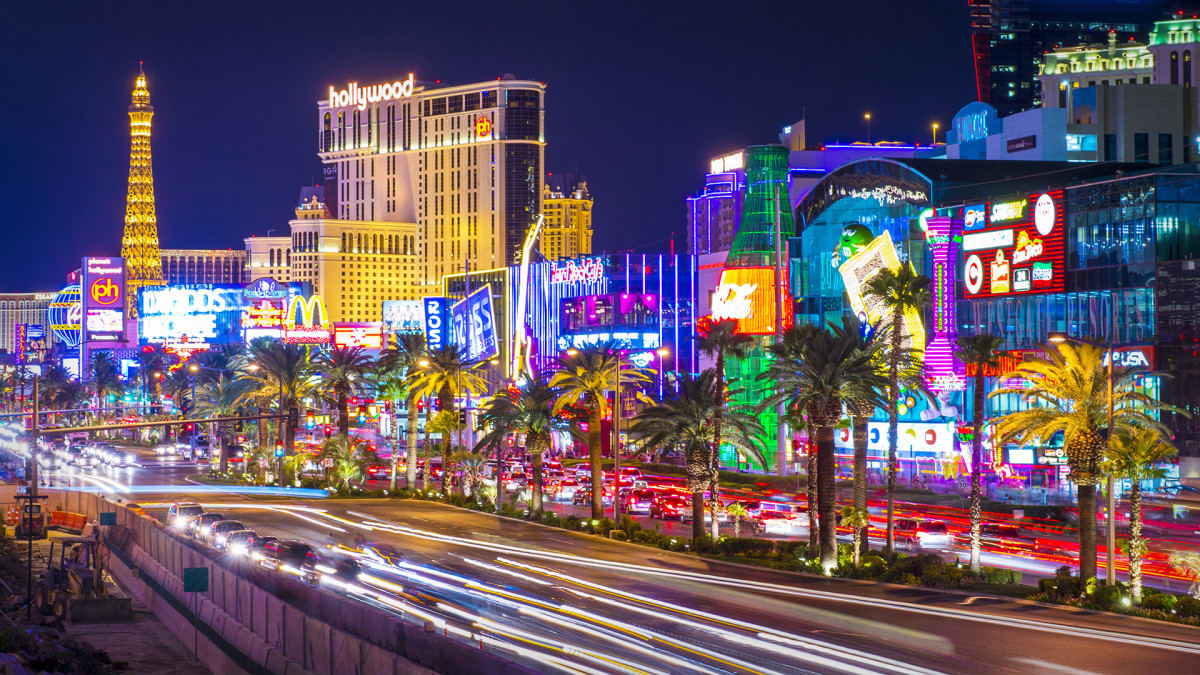 Will gamblers start staying home thanks to an unfavorable tax rule?
Image source: Shutterstock
One Big Beautiful Bill Act creates a big problem for gamblers — and Las Vegas Strip casinos
The big problem created by the One Big Beautiful Bill Act is a change to the way that gambling wins and losses are handled in the tax code.
Right now, gamblers can offset their gains with losses. So, if you lose $100,000 gambling but you get lucky and win a $110,000 jackpot, then you would only pay taxes on $10,000 in income, since you could deduct your $100K in losses from your $110K in wins.
Related: Southwest Airlines cancels hundreds of flights from July to Sept.
Under the One Big Beautiful Bill Act, however, gamblers will be able to deduct only 90% of their losses. This creates what lawmakers are now referring to as “phantom income.”
For example, say a gambler loses $20,000 on one trip to Vegas but makes $20,000 on another. The gambler will have to report the $20K in income, but can only deduct 90% of the $10K in losses, or $18K.
This would leave them paying taxes on $2,000 in income, despite having actually lost money gambling during the year.
Lawmakers have introduced a legislative fix, but will it pass?
Obviously, these tax rules are far less favorable for gamblers than the current rules, and they could hit the Las Vegas Strip especially hard, given that gaming is the primary draw of this popular tourist destination.
Lawmakers representing Nevada, unsurprisingly, aren’t very happy about it.
In fact, Representative Dina Titus, a Nevada Democrat, has already introduced the FAIR BET Act, which would, as Titus put it, “rightfully restore the full deduction for losses so gamblers don’t pay taxes on money they haven’t won.”
Related: JetBlue cancels all flights to major US airport, offers customer refunds
Titus is not the only one who signed onto the proposed law change. In fact, the bill now has bipartisan support, with Troy Nehls, a Texas Republican, co-sponsoring the FAIR BET Act.
“While I proudly voted for the One Big Beautiful Bill Act, which prevents the largest tax hike in American history, the Senate’s version contained a provision that I strongly disagree with,” Nehls said in a statement to Newsweek.
“The Senate, unfortunately, included a provision in their version of the legislation that reduced the allowable deduction to 90%, creating an overly punitive tax on gambling. This provision is unfair, which is exactly why I am a cosponsor of Rep. Dina Titus’ FAIR BET Act,” Nehls said.
Both professional and amateur gamblers would have their full tax deduction restored if the FAIR BET Act passed.
More on travel:
- U.S. government issues serious warning for cruise passengers
- Delta Air Lines makes a baggage change that travelers will like
- United Airlines passenger incident triggers quick response
The legislation is supported by The American Gaming Association, which said, “The American Gaming Association applauds Congresswoman Titus for introducing the FAIR BET Act. We are committed to working with Congresswoman Titus, other congressional leaders, and the Trump Administration to restore the long-standing tax treatment of gaming losses.”
It remains to be seen whether the new rule passes and goes into effect in 2026, but unless it does, Las Vegas casinos may be far less of a draw for gamblers.
Related: Veteran fund manager unveils eye-popping S&P 500 forecast