
Securing a mortgage loan and saving for a down payment are widely considered the most difficult steps of the homebuying process. While income, credit score, outstanding debts, and traditional assets are included in mortgage loan assessments, digital assets are not.
William Pulte, the Trump administration’s newly appointed director of the Federal Housing Finance Agency (FHFA), has revealed plans to integrate bitcoin and other cryptocurrencies into the mortgage loan application process.
🏦 🏡 Don’t miss the move: SIGN UP for TheStreet’s FREE daily newsletter 🏦 🏡
Fannie Mae and Freddie Mac have operated as Government Sponsored Enterprises (GSEs), and have been placed under a financial conservatorship with the federal government since the 2009 financial crisis.
President Donald Trump has declared his second term to be the most “crypto-friendly” administration in history. Although adding digital assets to the mortgage review process could make homeownership possible for more Americans, using an unstable digital asset as loan collateral would come with additional risk for lenders.
Originally placed under the control of the FHFA to regain financial stability, Fannie Mae and Freddie Mac may be exposed to heightened financial liability from cryptocurrency’s volatility.
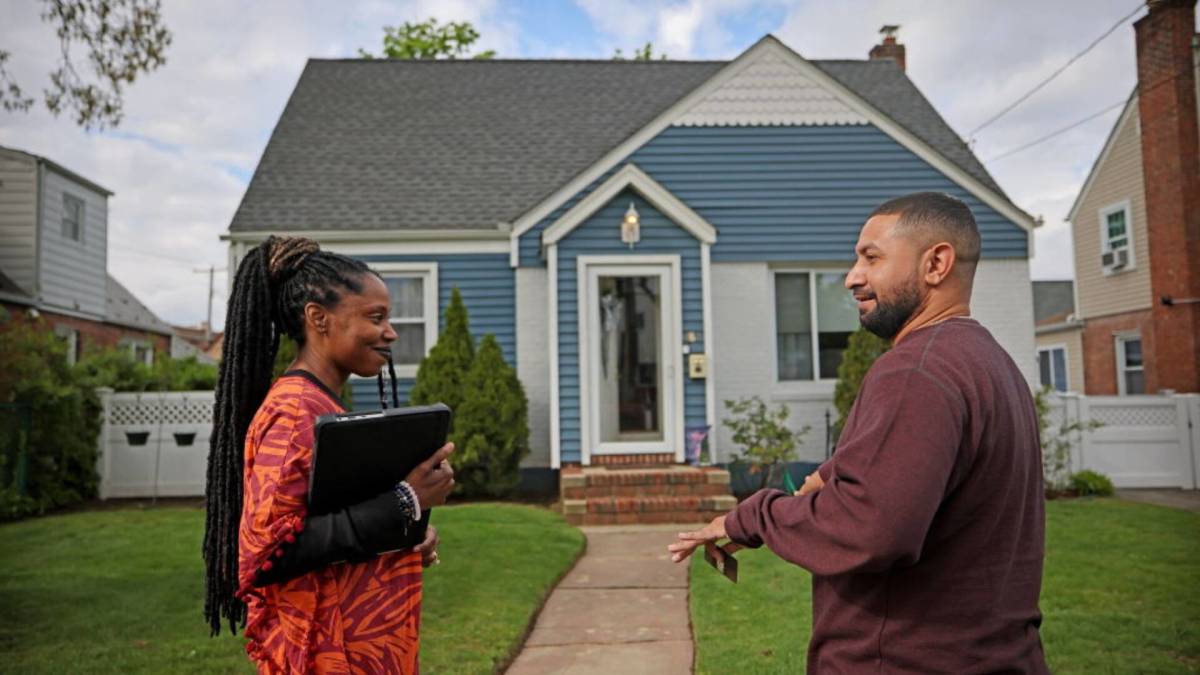 Rising home prices, high mortgage rates, and a general lack of affordability have put homeownership out of reach for many Americans. The White House has directed Fannie Mae and Freddie Mac to include cryptocurrency assets in mortgage loan assessments, but the change comes with added risk.
Image source: Getty Images
FHFA’s Pulte calls for Fannie Mae and Freddie Mac to submit proposal for crypto in mortgage assessments
To ensure that homebuyers will be able to make timely and consistent monthly mortgage payments, lenders vet mortgage loan applicants to asses their creditworthiness and overall financial health.
Traditional assets like bank accounts, CDs, stocks, bonds, mutual funds, retirement accounts, business equity, and other properties are used to analyze a borrower’s risk level and financial stability.
Newer digital assets, including cryptocurrencies like bitcoin, Ethereum, and Solana, haven’t been used when reviewing a homebuyer’s mortgage application, but that may be changing soon.
Last month, FHFA Director Pulte took to X (formerly known as Twitter) to direct Fannie Mae and Freddie Mac to submit proposals, “for consideration of cryptocurrency as an asset for reserves in their respective single-family mortgage loan risk assessments, without conversion of said cryptocurrency to U.S. dollars.”
More on homebuying:
- The White House will take surprising approach to curb mortgage rates
- Housing expert reveals surprising ways to reduce your mortgage rate
- Dave Ramsey predicts major mortgage rate changes are coming soon
- Warren Buffett’s Berkshire Hathaway sounds the alarm on the 2025 housing market
This order could potentially open up stagnant housing market to new potential buyers.
“If Fannie and Freddie are going to accept cryptocurrency as collateral, that’s a strong incentive for banks to shift their practices,” Realtor.com Chief Economist Danielle Hale told the Associated Press. “Because people who might otherwise have to sell cryptocurrency to qualify — and maybe that’s a deal-breaker for them now — under this new policy, they can qualify. It sort of expands the potential pool of eligible buyers.”
However, this update doesn’t come without risk to Fannie and Freddie, which currently manage nearly half of the $12 trillion housing mortgage loan market.
Using crypto as mortgage loan collateral could threaten stability of mortgage industry
Cryptocurrencies are often touted as deregulated financial assets, easily accessible to those outside of Wall Street and the traditional financial world. However, the deregulation that makes crypto stand out is also one of its greatest liabilities.
Critics of bitcoin note that digital assets are prone to unpredictable swings, losing up to 40% of their value in a matter of days. If cryptocurrency can be used as collateral in mortgage loan assessments, lenders could be at risk of exposure.
Related: Fannie Mae predicts crucial mortgage rate changes are coming soon
The National Association of Mortgage Underwriters (NAMU) highlights the growing fear that lax lending standards pushed by Pulte and the FHFA are reminiscent of the subprime mortgage crisis.
“Regulators and consumer advocates are worried that the inclusion of digital assets could open the door to a new wave of financial instability. The specter of the subprime mortgage crisis looms large for many, who see parallels in the push to broaden underwriting guidelines without a robust risk management framework in place.”
Adapting mortgage lending standards to include digital assets could be risky, establishing guardrails can help ease concerns for lenders and housing experts.
“Industry organizations have called for safeguards. Some suggest a haircut model, where only a percentage of the crypto’s market value would count toward a borrower’s reserves. Others advocate for including only stablecoins or asset-backed tokens to provide more predictability and liquidity.”
Related: Veteran fund manager unveils eye-popping S&P 500 forecast