
It wasn’t long ago that most of us considered a visit to the store somewhat of a social outing.
Whether it was a trip to the supermarket or big-box store in town, or a full-fledged visit to the nearest mall, most of us banked on the fact that we’d be interacting with other humans.
At least, that’s how it had been for centuries.
Shopping has been an inherently social business. Most stores are staffed with gregarious and sociable folks who are more than willing to help customers find what they need.
And a lot of shoppers prefer to do it with others; there’s a reason many of us look fondly back on birthday parties held at the mall or other massive shopping center.
From the fruit aisle to the furniture showroom floor, most of us are pretty used to interacting with other humans during the commercial experience.
But we’ve been on something of a slide away from social shopping for years now.
That’s not the end of the world.
Retail is a hard business; anyone who’s worked the floor of a department store or at the checkout at a big-box store can attest to that.
Still, most retailers depend on some semblance of a human presence in their stores.
But that presence has been steadily dwindling, much to many customers’ chagrin.
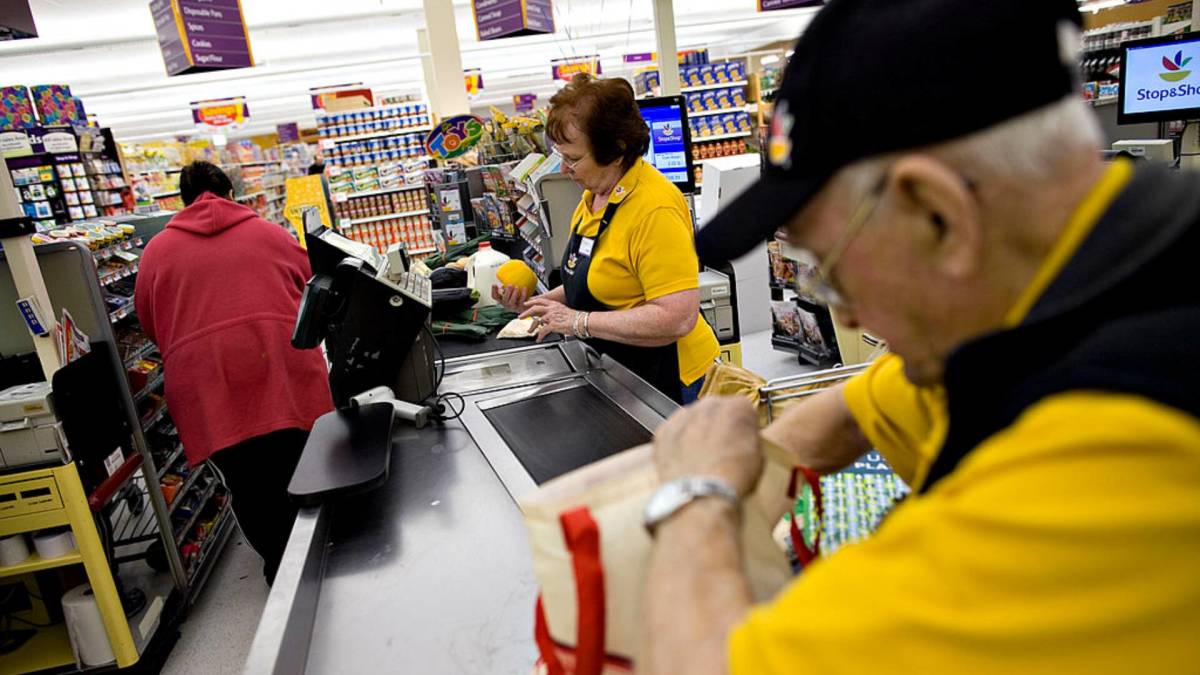 Self-checkouts have been replacing human cashiers and baggers.
Image source: Acker/Bloomberg via Getty Images
We’re shifting how we shop
The steady slide away from the human connection is not limited to retail.
Anybody who’s dealt with a bot on a phone call, an automated teller, or even a health care worker over a video call can attest to that.
The outsourcing of troubleshooting and people-facing duties to robots and technology was once hailed as a straightforward and sound business decision.
After all, it doesn’t make a lot of sense to pay a human to do a job a robot could do for free.
Those robots don’t require benefits, breaks, time off, or suffer from burnout the way humans do.
So everywhere we go, there’s been an up-cropping of automated assistance.
It certainly saves companies a lot of money. Big tech firms such as Amazon have begun to employ robots to fulfill mundane warehouse orders, freeing up their human employees to work on more nuanced issues.
But solutions like these are rarely that simple.
Self-checkout emerges as a savior
Retail has specifically eliminated customer-facing jobs like cashiers and baggers.
The reasoning behind this isn’t exactly straightforward.
For one, brick-and-mortar retailers have to compete with more streamlined, online competitors who have less overhead and fewer employees to pay.
This means cutting costs where they can, and for many physical retailers that must keep the lights on, reducing large staff numbers is often priority number one.
When Covid hit, this only exacerbated the issue.
Suddenly, very few people wanted to work in a confined, indoor space facing the public for hours every day.
Retail workers quit in droves, so many retailers lost employees.
And they were forced to get creative.
Many ramped up their self-checkout capabilities. These automated kiosks, which allow customers to scan and bag their own items (thereby eliminating the need for a cashier and bagger), had been around for years.
And largely, they had frustrated customers, who struggled to correctly scan barcodes and resented the idea of doing for free what was typically a paid job.
Automated tech backfires
To be fair, some customers appreciated the ease and convenience of self-checkout.
Introverted shoppers, folks making personal purchases, or people who just don’t want to wait in line tend to prefer the ease of a self-checkout kiosk.
But as they became more popular during Covid, when many more retailers relied almost exclusively on self checkout to keep things moving, plenty more customers began to take advantage of the system.
Theft, whether accidental or intentional, spiked with the use of self-checkouts.
For instance, Target in 2023 reported a roughly $500 million increase in loss due to shrink (the industry term for the disappearance of goods from theft and other causes).
It’s not all due to malicious intent — roughly one fifth of thefts happen accidentally.
Many customers report having great difficulty with self-checkout. It’s easy to imagine how a befuddled customer might be rushing to alleviate a long line of perturbed customers behind him or her and accidentally scan something incorrectly.
Self-checkout is a necessary evil
Retailers probably didn’t foresee millions of dollars in losses when they set out to install their first self-checkout counters.
But the fact is that fewer folks are entering retail as a line of work, which means a lot of these kiosks are here to stay.
Still, retailers that have faced the biggest challenges with the automated technology have curtailed customer privileges.
In 2024, Target began limiting customers using self-checkout to 10 items or fewer.
And Walmart has been tailoring its approach to self-checkout on a store-by-store basis.
One Walmart store in Missouri eliminated its self-checkout options entirely after a costly bout with theft since Covid.