
If rising prices and high interest rates are whacking your household budget, rest assured, you’re not alone.
American consumers are feeling the pinch of global trade wars expected by President Donald Trump’s tariffs, currently facing an Aug. 1 deadline.
💵💰Don’t miss the move: Subscribe to TheStreet’s free daily newsletter💰💵
It seems that some of that tariff inflation is already here. The June Consumer Price Index rose 2.7% from a year earlier, and wholesale inflation, as measured by the Producer Price Index, was softer than expected.
Related: June inflation numbers reset Fed interest rate cut expectations
That’s enough of a bump to give economists and market watchers evidence that the Federal Reserve will hold interest rates steady at its monetary policymaking meeting later this month.
JPMorgan Chase CEO Jamie Dimon and the company’s equity strategist have weighed in on what to expect on interest rates next.
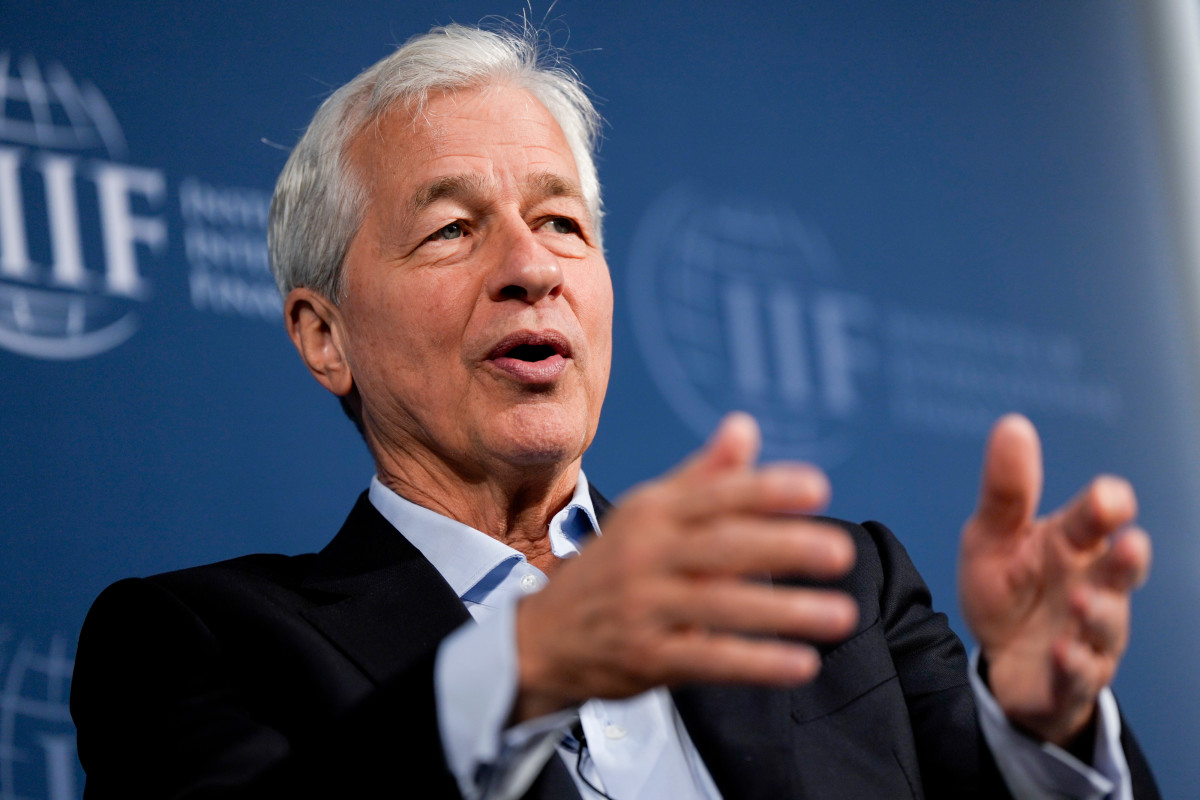 Jamie Dimon, chief executive officer of JPMorgan Chase & Co., says accurate economic forecasts are a “challenge.” Photographer: Kent Nishimura/Bloomberg via Getty Images
How the Federal Reserve manages inflation, interest rates
The Federal Reserve sets the nation’s monetary policy in accordance with its legal dual mandate of ensuring an inflation rate of 2% annually and stable employment with solid economic growth.
Lower interest rates can decrease unemployment, but increase inflation. Interest rates are the tool by which the Fed sets monetary policy to balance its goals of keeping the economy from slipping into recession or stagflation.
The Federal Open Meeting Committee, the Fed’s policymaking panel, last month voted unanimously to hold the Federal Funds Rate steady at 4.25% to 4.50%, despite describing the U.S. economy as “stable.”
The “wait-and-see” approach to holding the Federal Funds Rate steady will be on the FOMC agenda for review in late July.
The reason: expected inflation from the proposed tariffs – the highest in nine decades – creeping through the U.S. supply chain this summer and manifesting later this year.
Related: Trump deflects reports on firing Fed Chair Powell ‘soon’
A recent analysis by Goldman Sachs economists found that American consumers pay 40% of the tariff costs, with importers absorbing 40% and exporters paying 20% of the import taxes.
The benchmark Federal Funds Rate is what the Fed charges U.S. banks to borrow money overnight. It is tied to the overall cost of borrowing money.
Hence the high short-term interest rates on auto and student loans, plus credit cards and other forms of financing.
The 10-year Treasury Bond yield is the benchmark for longer-term interest rates like the 30-year fixed mortgage, currently hovering around 6.8%. Market expectations for how the Fed will set rates in the future influence long-term rates.
Trump has repeated demands for the Fed to lower rates, and taken to hurling his displeasure at Powell in the form of personal slurs and threats to fire him or replace him with a “shadow chair” who will lower rates.
On June 16, Trump denied reports he told GOP lawmakers on June 15 that he intended to fire Powell “soon.”
More Federal Reserve:
- Fed interest rate cut decision resets forecasts for the rest of this year
- Federal Reserve prepares strong message on long-term interest rates
- Fed official revamps interest-rate cut forecast for this year
And while much of Washington, sans the Democrats, is bending to the president’s whims, the chair of the independent Federal Reserve is one job that Trump can’t slash by DOGE or executive order. The Supreme Court reinforced this in a ruling this May.
“He does a terrible job,’’ the president told reporters in the Oval Office. “It does hurt people who want a mortgage or (to) buy a house.”
Trump would also like to see lower interest rates on the nation’s deficit to boost the impact of his tax reconciliation act (formerly known as the Big Beautiful Bill) that went into effect on July 4.
JPMorgan Chase updates interest rate forecast
The FOMC last cut rates by 0.25% in December 2024. Many economists say the next probable 2025 cut, if there is one, will be in September.
Elyse Ausenbaugh, Head of Investment Strategy at J.P. Morgan Wealth Management, said the latest CPI report “suggests inflation is getting closer to a place where the Fed could feel comfortable to deliver another cut, even as we wait for the tariff impact on prices to show up more broadly.’’
‘’We’re not quite there yet,’’ Ausenbaugh said, adding that the next FOMC meeting after July will be in September.
The good news?
“The inflation data details, combined with tepid jobs data and signs that consumers may be paring back their spending, is…starting to look more consistent with what we’ve been expecting – not headed towards a recession, but slowing,’’ Ausenbaugh said.
JPMorgan CEO Jamie Dimon said that accurate economic forecasts are a challenge because key shifts are apparent only in hindsight, citing tariffs and trade uncertainty, worsening geopolitical conditions, high fiscal deficits and elevated asset prices, Reuters reported June 15.
The bank remains measured when making projections, Dimon told Reuters, citing past crises that caught many off guard.
“Our forecasting of the future is very complex. You probably heard me say that sometimes it’s a complete waste of time. Most people cannot really pick inflection points,” he said.
The CME Group’s closely watched FedWatch Tool forecasts a 2.6% chance of an interest rate cut at July’s FOMC meeting.
Related: Fed official voices blunt 3-word message on Fed rate cuts