
Tesla’s (TSLA) has been steering the robotaxi narrative for the longest time, but recently a brand new player quietly slid into the frame.
Behind the scenes, one luxury EV maker just threw its hat into the race and is ready to challenge the status quo.
💵💰Don’t miss the move: Subscribe to TheStreet’s free daily newsletter💰💵
At this point, it’s not trying to out-Tesla Tesla, but instead aim for an entirely different lane.
As we see partnerships evolving quickly and rivals repositioning, the road ahead for autonomous driving has become a lot more crowded and a lot more interesting.
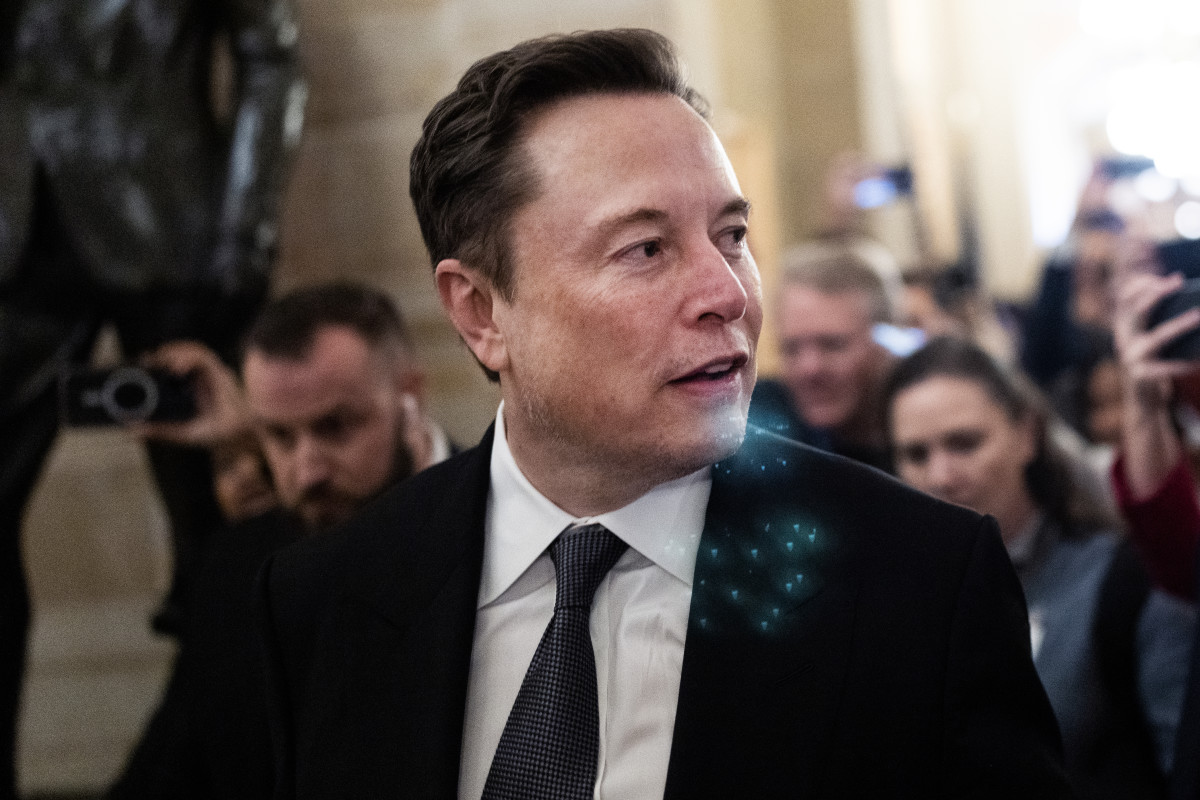 Lucid enters the robotaxi race, joining Tesla in the battle to shape autonomous mobility.
Image source: Tom Williams/Getty Images
The robotaxi race just got real
Robotaxis aren’t science fiction anymore, as they turn into arguably the fastest-growing bet in the tech space.
To put things in perspective, estimates suggest that the global market for autonomous ride services could explode from $4.4 billion this year to $125 billion by 2034.
That’s a massive 45% compound annual growth rate, led by cheaper sensors, smarter AI, and a major push to cut costs in urban transit.
Tesla finally entered the game in June with the quiet launch of its invite-only Robotaxi service in Austin.
The cars operate using Tesla’s robust camera-only Full Self-Driving system, avoiding the need for expensive Light Detection and Ranging (lidar) and instead relying solely on vision and machine learning.
Related: Google gets unexpected boost from ChatGPT
Musk believes that’s the edge Tesla needs in scaling a lot faster and cheaper than the competition.
But it’s still early days. We’ve already seen glitchy behavior, including phantom braking and navigation errors, which complicates the bullish thesis.
Google’s Waymo, on the other hand, is the veteran.
It recently crossed the 100 million driverless miles mark with zero humans behind the wheel. Its coverage in cities like Phoenix and Austin dwarfs Tesla’s footprint, giving it a massive data lead in improving its software.
China’s not sitting this out, either.
Pony.ai has already dished out its seventh-gen robotaxi and is testing in multiple countries.
WeRide, another robotaxi upstart, launched Southeast Asia’s first fully autonomous robobus in Singapore, aiming to expand swiftly.
And then there’s Uber, which is effectively becoming the nerve center of the robotaxi era.
In Atlanta, riders can now hail Waymo vehicles directly through Uber. Similarly, in Austin, Waymo’s 90-square-mile service also runs on Uber’s platform.
More News:
- Moody’s drops 2-word warning on housing market
- Rigetti shakes up quantum computing with bold advance
- JPMorgan reveals 9 stocks with major problems
By owning the rider interface and centralizing fleet access, Uber is positioning itself as the gatekeeper for robotaxi adoption.
Lucid takes its shot at Tesla in the robotaxi wars
Lucid (LCID) just made a massive foray into the robotaxi arena, and Wall Street’s starting to pay attention.
Luxury EV maker Lucid is teaming up with Uber and autonomous tech firm Nuro to roll out 20,000 Gravity SUVs on Uber’s network over the next six years.
Each of these cars will be equipped with Nuro’s Level 4 self-driving technology, signaling Lucid’s largest leap yet into AI-powered mobility.
Morgan Stanley’s Adam Jonas hailed that partnership as “strategic.”
Related: Cathie Wood drops $36 million on her favorite stock
Jonas says this isn’t your regular one-off announcement; it’s a clear sign that Lucid is looking to carve out a key position in the robotaxi race that’s been dominated by Tesla and Waymo.
According to Jonas, Lucid has mostly been an under-the-radar player in the self-driving conversation.
However, the Uber–Nuro deal could change that, helping the EV startup move beyond luxury retail and into recurring revenue streams.
The Gravity SUV, Lucid’s next blowout launch, now carries a lot more weight.
Jonas feels the vehicle should be treated as a platform, not just for electric driving, but for autonomy and smart mobility partnerships.
That makes the Uber deal a lot less about volume and more about signaling where Lucid is headed next.
Uber is shelling out big money, with a $300 million investment in Lucid. That’s not enough to solve the company’s cash burn troubles, but it helps in a big way. Also, it puts Uber in a much stronger position to shape Lucid’s roadmap.
For a company that’s been called a “Tesla-lite,” this is Lucid’s most ambitious pivot yet. Whether it pays off long-term is up for debate, but it’s clear that Lucid just pulled up a seat at the lucrative robotaxi table.