
PC gamers have had it rough for many years. The crypto boom skyrocketed GPU prices. And when the crypto craze finally died off, then came the AI wave.
Parents think Lego is expensive. Yet the strongest gaming cards with Nvidia chips sell for around $3,000.
💵💰Don’t miss the move: Subscribe to TheStreet’s free daily newsletter💰💵
That is preposterous. A gaming card shouldn’t cost as much as a used car.
Manufacturers are making cards with just 8GB of VRAM in 2025, just so that they have something to offer for a “reasonable” price. If you are gaming, you aren’t buying one of those.
Related: Unexpected chip deal may reshape the semiconductor market
According to the only publicly available sales data from one of Germany’s largest retailers, Mindfactory.de, the 16 GB version of the GeForce RTX 5060 Ti, is outselling the 8 GB version by more than 16 times, reported TechPowerUp.
What is AMD doing? The company isn’t even trying to compete with Nvidia in the high-end chip segment; it literally does not have top-tier cards.
It could be that lagging behind Nvidia was caused by a strong focus on saving its CPU unit and then focusing on fending off ARM.
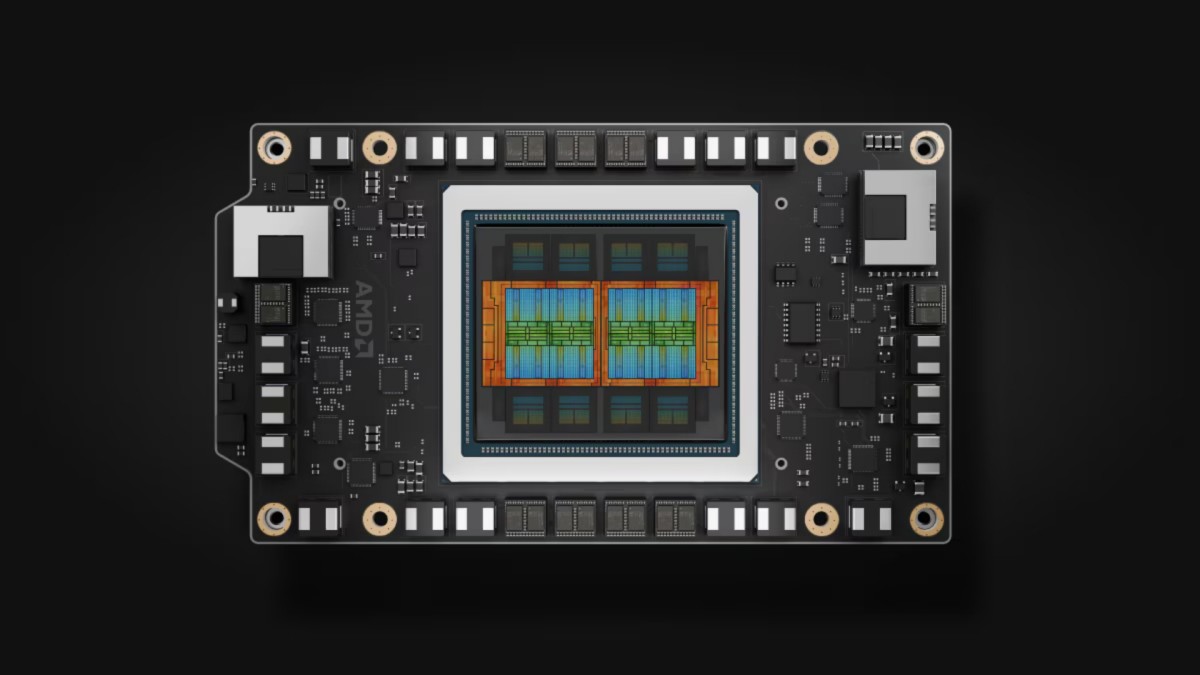 The AMD Instinct mi350x AI accelerator features eight chiplets.
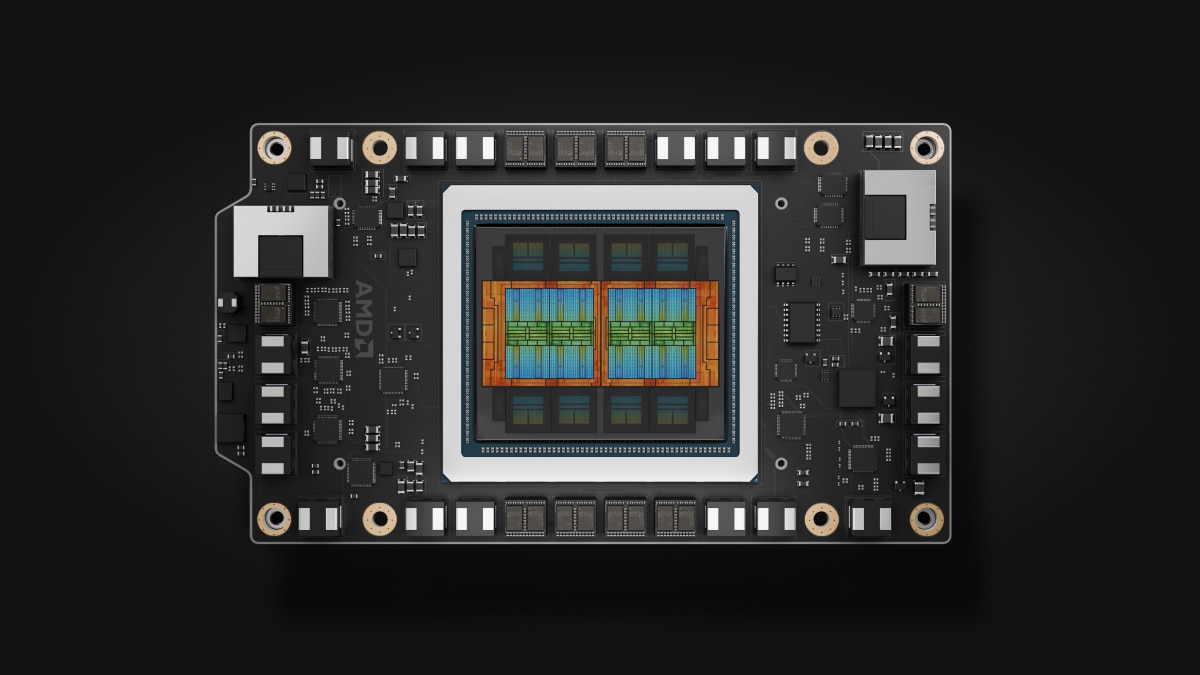
AMD’s AI work has some positive effects on gaming performance
AMD (AMD) has made massive progress on the CPU front, and while it can’t ever relax, the company seems to be slowly but surely shifting its priorities to the GPU front.
AMD has put a lot of effort into improving its software. In June, it acquired Brium, a hard-to-find team of compiler and AI software engineers with expertise in machine learning, AI inference, and performance optimization.
Yes, the focus is on artificial intelligence, but that market is unfortunately more important to the company than gaming. Nevertheless, some performance gains from the AI front should trickle down to the gaming one.
Related: Nvidia-backed stock sinks on unexpected deal
An example of that trickle-down effect is AMD FidelityFX Super Resolution (FSR). FSR allows graphics cards to upscale frames rendered in lower resolution to a higher one, and this method takes less time than rendering frames in higher resolution the normal way. Because of this, the end result is a higher frame rate in supported games.
The company’s newest line of Radeon RX 9000 series graphics cards offers FSR 4, which uses an AI-accelerated upscaling algorithm to deliver image quality improvements over FSR 3.1.
AMD addresses one of the key problems of chiplet design
In 2018, AMD launched the second generation of AMD EPYC processors based on the Zen 2 core architecture. It was the first processor to feature an innovative chiplet-based x86 CPU design.
Chiplet-based CPU design means that instead of building a big monolithic core, smaller “chiplets” are made. This creates a modular CPU design and makes it easier to construct more powerful chips by just adding more chiplets.
AMD uses this technique in its CNDA 4 architecture for its AMD Instinct GPUs and APUs. Unfortunately, AMD’s attempt to introduce a chiplet-based design into the RDNA 3 architecture, on which gaming chips are made, wasn’t as successful as it had hoped. RDNA 4 ended up being a monolithic design and stuck with only mid-tier cards.
More AI Stocks:
- Veteran fund manager raises eyebrows with latest Meta Platforms move
- Google plans major AI shift after Meta’s surprising $14 billion move
- Analysts revamp forecast for Nvidia-backed AI stock
Chiplet-based design for AI GPUs is much easier, as they have access to high-bandwidth memory (HBM). However, HBM is expensive, and it would raise the prices of the already overpriced GPUs.
Fortunately, AMD seems to be staying committed to using this chiplet-based approach, and it successfully patented locality-based data processing on July 8.
It is important to note that this patent works for any kind of processing cores; they can be, for example, CPU, GPU, neural processing core, digital signal processor cores, and so on.
Coreteks, a technology analysis, hardware reviews, and gaming trends YouTube channel, provided insight about this patent in its commentary: “This new patent addresses one of the key problems that a chiplets GPU for gaming would face, latency from memory accesses and the associated energy costs from moving data around.”
“If AMD cracks the GPU chiplets problem, they could leapfrog competitors like Nvidia and release a scalable GPU that could truly disrupt the market.”
Coreteks believes that AMD’s chiplet-based GPU is inevitable and that it could also feature 3D stack memory, assumptions that seem reasonable.
Anyone interested in the detailed explanation of the patent may want to watch this video.
Patents often get approved but never used, and this is sometimes done to prevent competitors from implementing the idea. This isn’t AMD’s only chiplet-related patent, and they probably know they have to make chiplets work, or they will never regain their market share.