
While initially expecting a banner year, airlines quickly saw international travel numbers drop off as many foreign visitors put off holidays to the U.S. amid the Trump administration’s politics and focus on anti-immigration.
Reykjavik-based airline Play recently announced that it will cancel all service to the U.S. by October 2025 while fellow Nordic low-cost airline Norse Atlantic Airways (NRSAF) will redirect planes slated for flights to connect Oslo and Berlin to Miami to routes between Scandinavian cities and Thailand.
Last spring, a top Air Canada (ACDVF) executive similarly classified reducing flights to Washington, Houston, and Miami as “the right move right now in this context.”
✈️Don’t miss the move: Subscribe to TheStreet’s free daily newsletter✈️
Volaris CEO says ‘immigration rhetoric’ is behind lower travel numbers
The latest airline to announce a similar dropoff in demand is the Mexican low-cost carrier Volaris (VLRS) . Surpassing flagship Aeromexico (GRPAQ) by total passenger numbers, Volaris is based in Mexico City and has hubs in major destinations such as Cancún, Monterrey, Guadalajara and Tijuana.
In a July 23 earnings call, chief executive Enrique Beltranena named tariffs and Trump’s “immigration rhetoric” as the main reasons behind a “hesitant” quarter; while the airline reported a net loss of $63 million USD in the second quarter, shares of Controladora Vuela Compania de Aviacion saw a small boost amid a display of strong ancillary revenue and a modest decrease in the cost of fuel.
Related: Another major airline just cut U.S. flights due to low demand
The airline’s parent company is listed on both the Mexico City and New York Stock exchanges. Volaris operating expenses rose to $715 million USD from $660 million in the same quarter last year while revenue per available seat mile fell by 12% to $7.80 despite a 9% increase in capacity.
Tariffs imposed by the Trump administration, meanwhile, further served to create a wider macroeconomic uncertainty that in turn seeped into both consumer spending power and the aviation industry. Fears of being caught up in Trump’s deportation campaign have also significantly reduced the number of Mexicans flying into the United States for tourism (the country is behind only Canada as the second-largest source of tourist dollars into the U.S.).
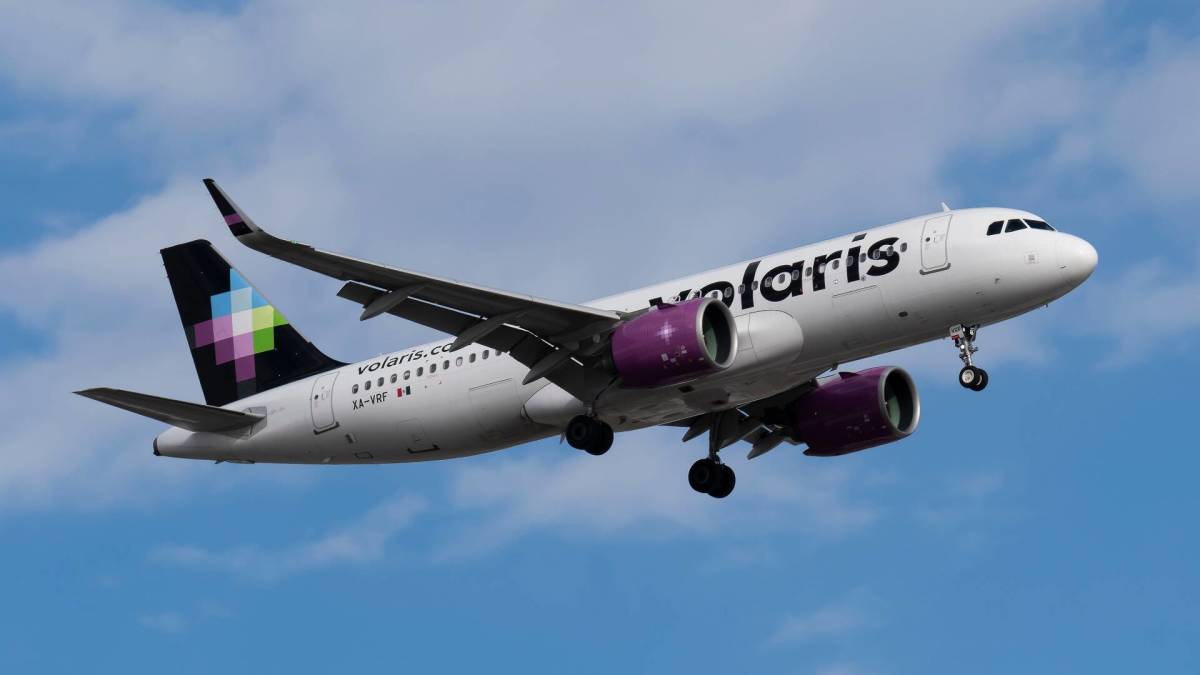 Volaris is the largest airline in Mexico by total passengers served.
Shutterstock
Capacity decisions to ‘remain anchored in customer demand and sustained profitability’
“Despite external geopolitical headwinds, our flexible business model and resilient cost structure enable us to moderate growth, remaining prudent and aligned with market trends,” Beltranena said. “Going forward, our capacity decisions will remain anchored in two guiding priorities – customer demand and sustained profitability, and we continue to see meaningful opportunities in our business model and our markets to generate long-term value.”
More Travel:
- United Airlines places big bet on new flights to trendy destination
- Government issues new travel advisory on popular beach destination
- Another country just issued a new visa requirement for visitors
The current U.S. administration has also exacerbated the trade war with Mexico by imposing flight restrictions on Mexican airlines coming into the U.S. and threatening a longstanding codeshare partnership with Delta Air Lines (DAL) and Aeroméxico over the Mexican government’s 2023 requirements moving U.S. airlines from the main Benito Juárez International Airport (MEX) in Mexico City to Felipe Ángeles International Airport (NLU) 30 miles outside of downtown.
Mexican President Claudia Sheinbaum responded by saying there was “no reason for such an action” and that collaboration on flight routes between the two countries was a better way forward for all involved.
Related: Airline brutally roasts CEO caught cheating at Coldplay concert
