
Stock market gains leave many on the sidelines who missed the move
Since President Trump paused most reciprocal tariffs on April 9, the stock market’s gains have been eye-popping.
Following a nausea-inspiring 19% drop from mid-February through early April, the S&P 500 has marched over 25% higher, setting new records in July. The gains likely have surprised many investors who were convinced that the economy was on the precipice of disaster, facing tariff-driven inflation and inevitable job losses.
Related: Analyst resets S&P 500 forecast for rest of 2025
The situation, however, has proven far better than feared. So far, tariffs’ impact on inflation has been muted, and the unemployment rate has stayed mostly flat. The potential for a better-than-hoped-for economy has left many on the sidelines, convinced that stocks will roll back to new lows.
According to billionaire fund manager Ken Fisher, the thinking that led investors to sell stocks during the downturn may be deeply flawed.
Fisher, the founder of Fisher Investments, a money manager with over $332 billion of assets under management, is worth a staggering $11.7 billion, good enough to rank 261st on Bloomberg’s Billionaires Index.
Fisher clearly knows a thing or two about making money in the market. This week, he explained, in one word, one of the biggest mistakes investors make in periods like this, while also offering a simple solution.
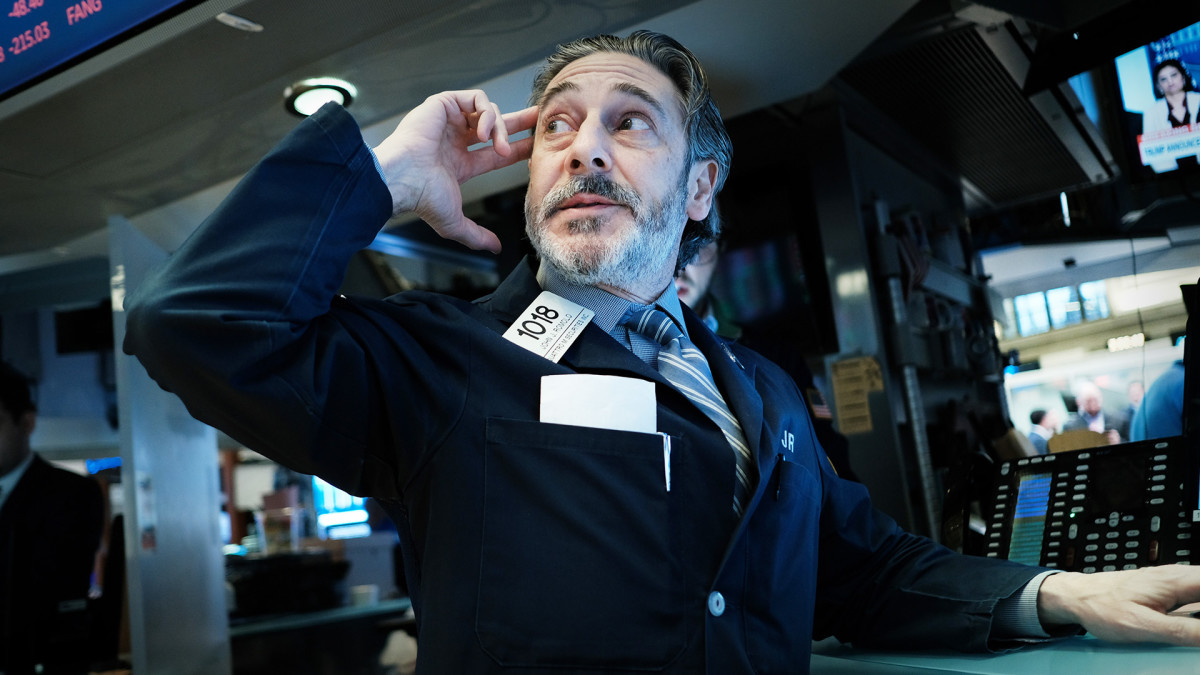 The S&P 500 has rallied 25% since April 9, leaving many investors on the sidelines. Billionaire Ken Fisher blames missed opportunities on ‘breakevenitis.’
Spencer Platt/Getty
Fisher Investments Ken Fisher sums up huge investor problem with blunt description
Fisher has been investing professionally since founding Fisher Investments in 1979, so he knows a thing or two because he’s seen a thing or two.
His long career includes navigating the inflation-fueled early 1980s, Black Monday in 1987, the Savings & Loan Crisis, the Internet boom (and bust!), the Great Recession, Covid, and 2022’s bear market.
Related: Morgan Stanley resets S&P 500 target for 2026
Through all those periods, he’s noted one big mistake many investors make that slows their path to financial freedom, something he described recently with one word on “X” as “Breakevenitis.”
It’s understandable to get nervous about portfolio values during market pullbacks, corrections, and bear markets. Retirement is expensive, and surging US debt creates a real risk that Social Security may not be able to keep pace with inflation in retirement, making the value of our investments in our retirement and personal accounts even more important.
However, market drawdowns are common. Pullbacks of about 5% happen on average once per year, while 10% corrections occur every few years, according to Capital Group. Even 20% of bear markets are relatively frequent if you consider a 40-year career, happening about every six years.
As a result, how investors react during these many sell-offs can significantly impact portfolio balances in your sixties, when retirement is knocking on the door.
Fisher explains why ‘breakevenitis’ is so dangerous to investors
Market sell-offs are usually driven by fear that is either false or overdone, according to Fisher.
In either case, investors tend to sell during the downturn or near the low to limit losses because the pain of loss significantly exceeds the good feelings that come with gains, something economic behaviorists like Daniel Kahneman and Richard Thaler have considered extensively.
Kahneman helped develop prospect theory, which popularized the concept of loss aversion. This theory states that people prefer small guaranteed outcomes over larger risky outcomes. Thaler’s work maintains that the risk of loss is twice as powerful as the pleasure of gains.
Related: The stock market is being led by a new group of winners
Given that backdrop, it’s not hard to understand why investors’ emotionally driven decision-making often results in illogical choices, and breakevenitis is a prime example.
Fisher describes it as the desire by investors who held through the downturn to sell their stocks once they return to flat, or breakeven. Fisher points out that rallies off downturns that return stocks to prior highs rarely roll over again and back to new lows.
Instead, they continue higher, leaving sellers hoping to be proven right disappointed and portfolio values impaired.
“People that get out looking for an all-clear signal later invariably miss the big gains,” wrote Fisher.
How to avoid breakevenitis and build a bigger portfolio
Emotions have an outsized impact on our decisions, and since the stock market has historically traded higher over time, decisions that result in selling can often damage portfolios the most.
Fisher thinks a simple solution can allow your portfolio to avoid falling victim to breakevenitis.
“Breakevenitis is a disease that affects people, and there’s a simple cure for it. Every time you get a correction and you’re tempted to get out… look at the history of the returns after correction and after bear markets. No matter which you’re in… the returns are bigger than any risk you could possibly have.”
For example, according to Sam Stovall of CFRA Research, the S&P 500 historically gains 38% in the first year of a new bull market and 12% in year two.
Fisher recommends that if you feel emotionally driven to sell, consider the money you could leave on the table when stocks find their footing.
While selling can protect you in the short term from losses, getting back in requires you to be right twice. You must get out before the downturn and back in on the upswing. It’s tough to do that, especially when emotions are running amok.
What does this mean for investors?
Stocks typically go higher and lower than you think possible. Because people don’t all act at once to buy or sell, when stocks are rising after a sharp sell-off, money trapped on the sidelines waiting for another dip often trickles back into stocks, helping to support stocks on pullbacks.
Of course, anything can happen, but Fisher’s point is that those invested in the stock market who stay the course do better than those who react emotionally, succumbing to things like ‘breakevenitis.’
If you’re investing in individual stocks, all bets are off. Stocks can, and often have, gone to zero. However, suppose you’re investing in a diversified fund or index. In that case, the odds are that a stock market recovery following a sell-off can create an opportunity for greater growth, suggesting that investors who hold pat, or dollar-cost average into the sell-off, outperform.
Related: Legendary fund manager has blunt message on ‘Big Beautiful Bill’
