
Many of us have been faced with a confusing problem while online shopping.
You navigate to your favorite online site, on the hunt for something specific.
Related: Costco makes huge tech investment to rival Amazon, Walmart online
Your desired item looks like it’s in stock, but a closer inspection has you guessing as to its authenticity.
Maybe it ships from an unknown seller you’ve never encountered before. Perhaps its shipping estimate is lengthy, or other reviews indicate it’s a likely counterfeit.
Then you’re faced with a dilemma.
You can either take the chance and buy this item, hoping that the real deal shows up at your doorstep. Or you sacrifice the sale and give up your search — or look for it elsewhere.
This is a nightmare scenario for online retailers.
Both large and small retailers work tirelessly to earn customer trust. But without the face-to-face experience that a physical store might offer, online shoppers tend to be more wary about what they’re buying.
This hesitance leads to skepticism, so unless customers are certain that what they’re buying will not only show up — but be entirely authentic — online retailers may not make sales.
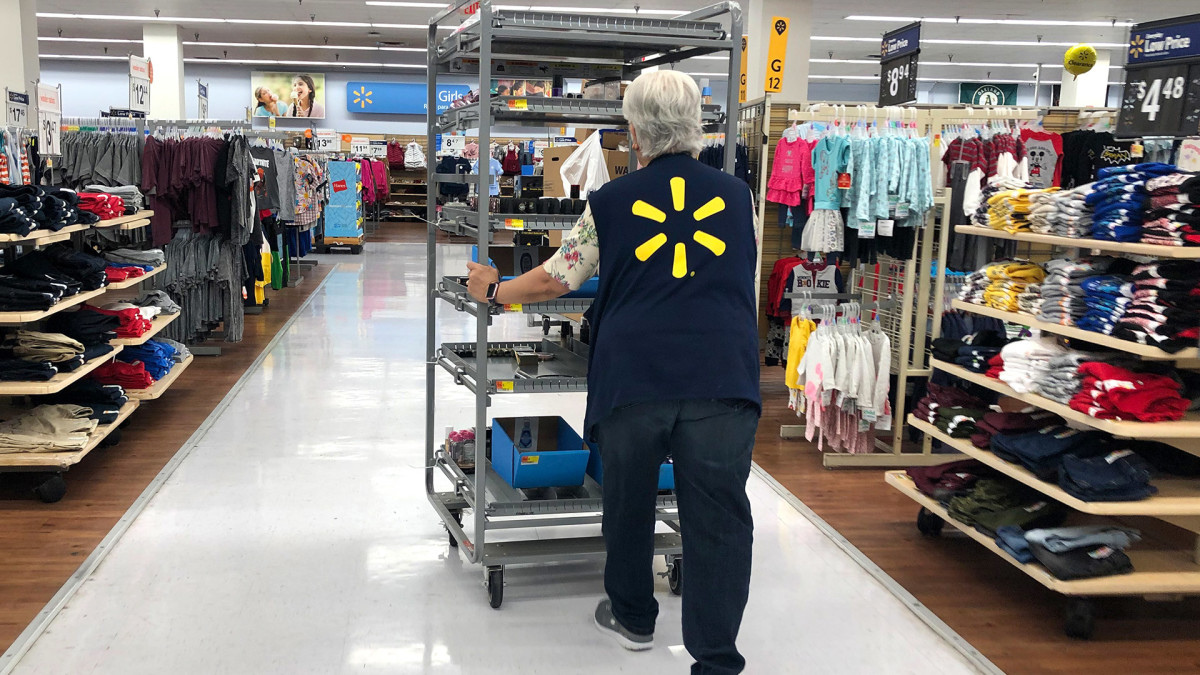 Walmart must work hard to earn customer trust online.
Image source: Getty Images
Fraud hurts customers, sellers like Amazon and Walmart
Scams are a pervasive threat to online retailers, no matter their size or scope.
Amazon and Walmart (WMT) , two of the largest online shopping platforms, know this better than anyone.
Both e-commerce providers allow third-party sellers on their sites to increase their offerings.
It functions sort of like an online shopping mall. Rather than stocking all their own inventory in owned warehouses across the country, they partner with third parties to sell other stuff on their websites.
It gives small businesses access to a huge audience of potentially eager customers, and it increases Amazon and Walmart’s inventory.
But they are constantly vigilant to eliminate fraudulent activity that may erode customer trust and hurt honest businesses.
So Walmart is undertaking a massive effort to reduce counterfeit items using artificial intelligence (AI) and other online methods to stop fraud before it affects sellers or customers.
Walmart cracks down on counterfeits
Walmart has scaled up its online marketplace at a faster clip than nearly all of its competitors.
“At Walmart, ecommerce sales have grown to represent 17.8% of its total sales in 2024, from just 4.8% in 2018,” writes Digital Commerce 360.
But despite its fast growth, Walmart still has a responsibility to its customers.
It says it will assess sellers before bringing them into its marketplace, and it reserves the right to remove sellers if it finds violations of its counterfeit policies.
“These systems are continually enhanced and strengthened to protect consumers from the latest threats facing every open marketplace,” Walmart says of its efforts. “When issues arise, our dedicated Trust & Safety team acts swiftly to investigate and resolve issues, alongside the many sellers who act with integrity on our site every day.”
Walmart will also work with agencies and coalitions to ensure a just and fair shopping experience for everyone.
It added that it’s “working closely with organizations like the Retail Industry Leaders Association (RILA), Buy Safe America Coalition, National Retail Federation (NRF), Information Technology and Innovation Foundation (ITIF), and U.S. Chamber of Commerce (USCC) to promote marketplace integrity and safety.”
Walmart also features a seller policy to help sellers understand what they must do to be successful — and how customers can trust they’re getting the right items from its storefront.
