
Tesla’s (TSLA) Q2 delivery miss is likely to have rattled investor nerves, but Wedbush’s Dan Ives views it more like a beginning than a breakdown.
With investors focusing a lot on short-term noise, Ives believes that Tesla’s transformation is just getting started.
💵💰Don’t miss the move: Subscribe to TheStreet’s free daily newsletter💰💵
He feels investors are missing the trick by treating Tesla as a mere car company. Markets often reward companies that think out of the box and build for the evolving real world.
Hence, Tesla’s move from carmaker to a tech-driven infrastructure platform will likely be its most game-changing pivot.
Ives believes we’re still in the early innings of what he sees as Tesla unlocking its next trillion-dollar story.
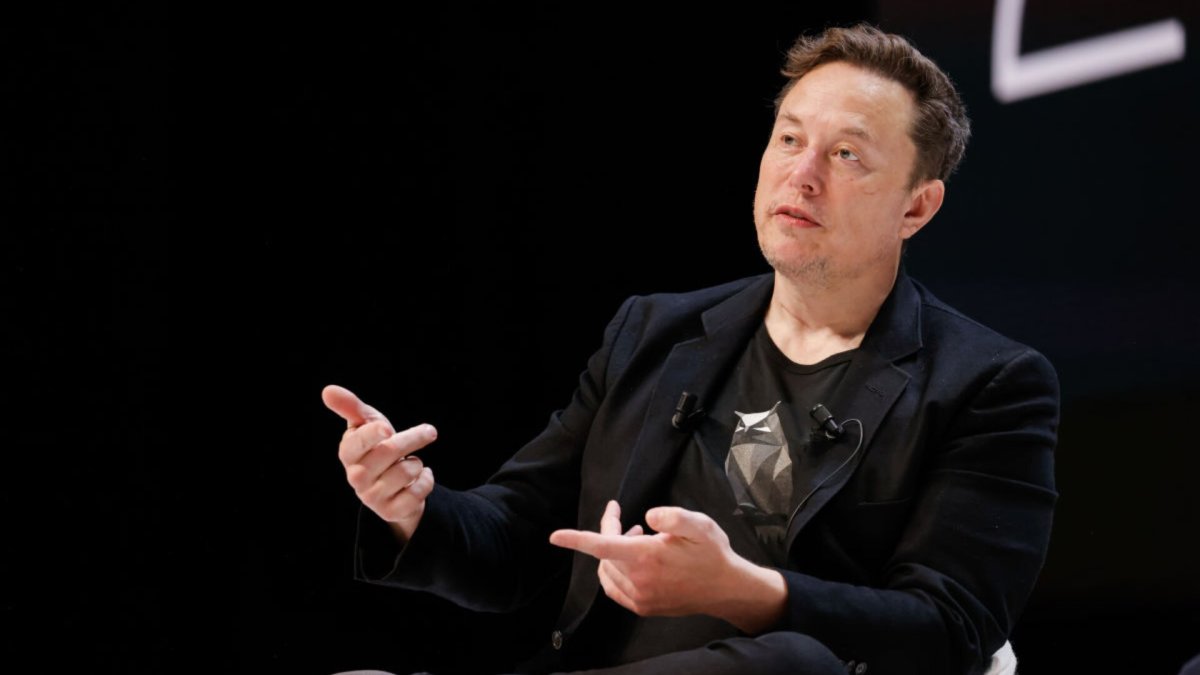 Dan Ives says Tesla’s future lies far beyond EVs with AI, robotics, and Robotaxis leading the charge.
Image source: Getty Images
Tesla’s Q2 results shake investor confidence
Tesla reported a major stumble in Q2, which has its investors fretting over the future.
Sales tanked 12% year-over-year to $22.5 billion, while net income slid 16% to $1.17 billion.
On top of that, adjusted EPS dropped 23% to just 40 cents, underscoring soft momentum that’s been weighed down by waning EV demand.
Related: Elon Musk drops unexpected call on Tesla’s future
Automotive sales also dropped 16.6% to $16.7 billion, with deliveries dropping 14% to 384,122 units, though a 14% sequential improvement.
Elon Musk called it a “weird transition period,” warning of a few rough quarters ahead with the phase-out of EV incentives and tariff headwinds.
Nevertheless, he remained bullish on Tesla’s long-term economics, autonomy push, and humanoid robots.
Despite the topline pressure, there were some bright spots.
Tesla posted improved auto gross margins at 15%, highlighting tighter cost discipline. On top of that, free cash flow stayed positive at $146 million, with the EV giant ending the quarter with $36.8 billion in cash.
Under the hood, Tesla is quietly building its next chapter.
With its Robotaxi pilot launches and expansion into new U.S. markets, Tesla witnessed a 25% spike in FSD subscriptions, highlighting the long-term importance of autonomy.
How EV credits fueled Tesla’s ride
Tesla’s sale of regulatory EV credits has long padded its otherwise thin profits.
From under $500 million in 2018, credit sales jumped to a concerning $1.6 billion by 2021, averaging $1,700 per vehicle through 2024.
In Q2 2025 alone, Tesla booked $439 million in credit sales, which amounted to just 2% of sales but close to half of its operating income.
However, that lever is disappearing.
The federal EV tax credit, under the One Big Beautiful Bill Act, effectively removes the $7,500 bonus for new and used EV buyers on Sept. 30, 2025.
With credits and subsidies fading away, Tesla and peers will need to rely a lot more on margins, autonomy, and software in sustaining future expansion.
Humanoid robots could eclipse EVs as Tesla’s next trillion-dollar play
Tesla’s humanoid robot push is more than just futuristic flair; it is a direct play in a market that could redefine labor and logistics.
According to Grand View Research, the global humanoid robot sector, worth $1.55 billion last year, could jump to $15.26 billion by 2030.
These machines are expected to automate repetitive, high-cost human tasks across factories, warehouses, and homes.
Similarly, Morgan Stanley sees a $5 trillion ecosystem by 2050, with over 1 billion robots deployed. Elon Musk believes Optimus could be “more significant” than Tesla’s EVs over time.
More News:
- Top economist drops 6-word verdict on Trump tariffs, inflation
- Amazon’s quiet pricing twist on tariffs stuns shoppers
- Microsoft software flaw leads to shock nuclear cyber breach
Also, Goldman Sachs projects a $38 billion market by 2035, betting these AI-powered robots could become the backbone of next-generation productivity.
Robotaxis could become Tesla’s most valuable business line
Likewise, according to Musk, Tesla’s robotaxi service, now live in Austin, is perhaps its biggest near-term bet, targeting 50% U.S. population coverage by year-end 2025.
According to Grand View Research, the global robotaxi market, valued at $1.95 billion last year, could soar to $43.76 billion by 2030 (at a 73.5% CAGR).
Maverick investor Cathie Wood of ARK Invest feels Robotaxis could constitute 90% of Tesla’s value by 2029, backing her $2,600 price target.
Related: Cathie Wood drops $36 million on her favorite stock
Nevertheless, the rivals are moving fast: Waymo runs 1,500 fully driverless cars, and Uber is deploying 20,000 Lucid-Nuro units by 2026.
In China, Pony.ai launched 24/7 robotaxi fleets across major cities, which means the race is fully on.
Dan Ives of Wedbush says ‘golden age’ for Tesla begins post-earnings
Tesla’s Q2 stumble will have spooked short-term traders, but to Dan Ives, it’s the setup for something far bigger.
The long-time Tesla bull feels the EV giant is entering a golden age, a phase where the company shifts from an EV pure-play to a physical AI juggernaut.
Related: Nvidia avoids White House crackdown; Trump softens on AI giant
In an interview with Yahoo Finance, Ives said, “When I think about the future, it’s about AI, autonomous, robotics.”
Even as Elon Musk warned of soft deliveries, Ives is looking past the near-term pain. He sees volume bouncing back by late 2025, but says the real value for Tesla lies in its pivot beyond cars.
That means Robotaxis, up to 30,000 city units projected for 2026. It also means Optimus, Tesla’s humanoid robot, which Ives believes could unlock massive new income streams in logistics and manufacturing.
Add it up, and he feels the total value of Tesla’s autonomous platform could be worth a whopping $1 trillion.
To raise more eyebrows, Ives compares Tesla’s next chapter to the dawn of a fourth industrial revolution. That’s where the companies owning AI software and physical execution power will dominate proceedings.
For these reasons, Ives feels Tesla is far from being just a car story, likening it to calling LeBron James merely a basketball player.
That said, Tesla’s robust blend of AI software and hardware positions it alongside giants like Nvidia, Microsoft, and Meta as a physical AI powerhouse
His long-term target is a market cap north of $2 trillion, driven not by EVs, but by AI, autonomy, and robotics.
