
Hoka and Ugg must be doing something right.
Just ask me — I’ve gotten two pairs of Ugg slippers in the last year alone. One for inside. One for outside.
And I’m not the only one.
Deckers, the parent company behind both brands, just reported its best-ever first quarter, with Hoka sales up nearly 20% and Ugg climbing close behind at 19%.
Related: Owner of Louis Vuitton and Dior stumbles hard, leans on beauty
Altogether, the company pulled in nearly $965 million in revenue — a 17% year-over-year jump.
But there’s a downside buried in the good news.
Despite strong demand and growing international sales, the company is bracing for a big blow to its bottom line. New tariffs could drive up the cost of making Hoka and Ugg products — especially those manufactured in Vietnam.
And that’s forcing Deckers to make a tough call: it may need to raise prices.
So even though the brand’s growth shows no signs of slowing, shoppers could feel the impact by the time they check out this fall.
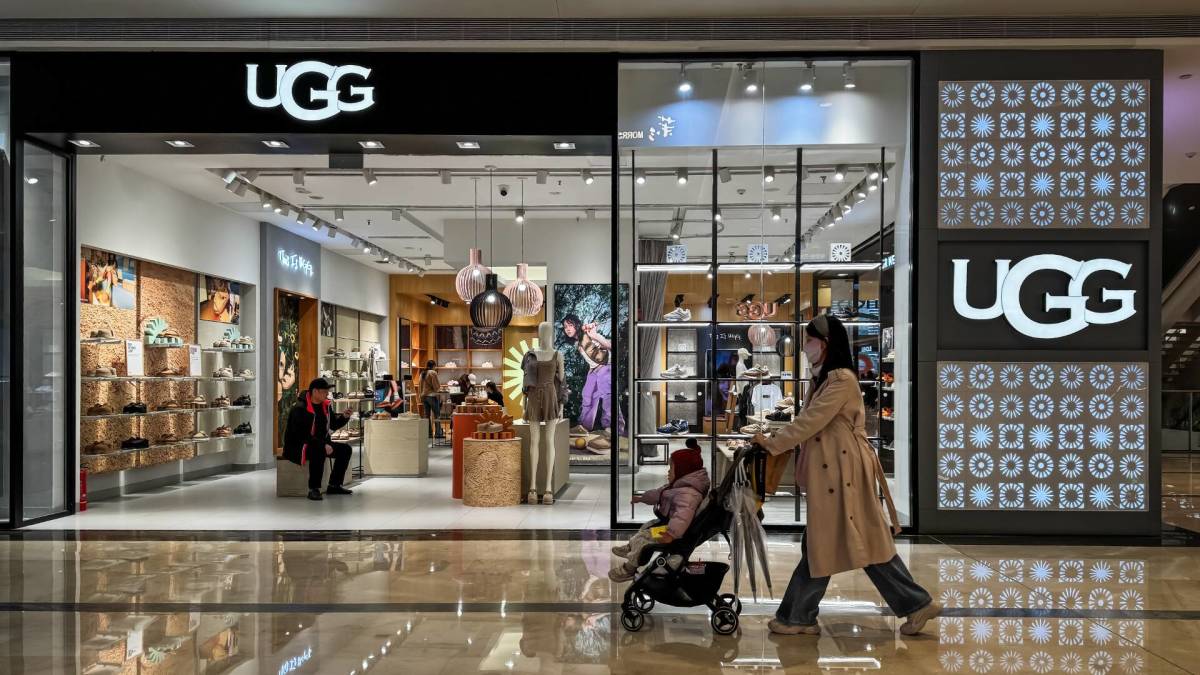 Deckers, the make of Hoka and Ugg, warn prices may rise
Deckers braces for $185 million in rising costs
Deckers’ CFO Steve Fasching didn’t mince words on the company’s latest earnings call.
If tariffs on goods from Vietnam double, rising from 10% to 20%, the impact could total $185 million in fiscal 2026. That’s $35 million more than the company originally anticipated.
Most of Deckers’ merchandise is made in Vietnam, which makes the brand especially vulnerable to changes in U.S. trade policy.
The company says it’s already rolling out staggered price increases to help offset the hit. Some went into effect on July 1, with more planned for spring.
Executives say they’ve seen “no material decline in performance” for shoes that just got more expensive.
Related: Nike eliminating some classic sneaker models
Deckers is also trying to soften the blow by negotiating partial cost-sharing with its factory partners while also leaning on its premium brand positioning.
“We’ve not seen any material changes to our order book,” Fasching told investors on the earnings call.
Still, the company declined to issue full-year guidance, citing ongoing uncertainty. And it doesn’t expect to fully recapture the losses anytime soon.
In the meantime, customers may be footing part of the bill.
Deckers says in-store sales are outperforming e-commerce
Even with costs rising, the demand is there — especially in-store.
While Deckers’ direct-to-consumer (DTC) sales were flat overall, wholesale grew nearly 27%, and international markets jumped 50%.
But the real standout? Brick-and-mortar retail.
“Retail performed better than e-commerce significantly,” said Caroti. He credited in-person stores with driving full-price sales, noting that while many shoppers browse online for deals, they’re still willing to pay full price in-store.
For Hoka specifically, that shift is having an impact. The brand has just 48 company-owned stores worldwide, with only a handful in the U.S. For now, that limited footprint means DTC is still playing catch-up — especially in the U.S.
But the company is betting big on physical retail. New stores are planned in Berlin and Milan, and a new head of retail is leading expansion efforts.
Deckers believes these moves will strengthen consumer loyalty and help Hoka and Ugg stand out in a crowded space.
Whether shoppers will continue to pay full price as those prices go up? That’s still up in the air.
Related: Popular Lululemon rival may be cutting corners, fans angered
