
Starbucks is undergoing more transformative changes as it embarks on a complete rebrand, but this latest move took many by surprise with the unveiling of an unexpected decision.
The coffee giant announced that it will close all its pickup-only stores, as these no longer align with its “Back to Starbucks” strategy, which aims to reverse the company’s concerning sales declines by returning to its roots and personalizing the coffee shop experience.
💵💰 Don’t miss the move: Subscribe to TheStreet’s free daily newsletter 💵💰
Launched in the U.S. in 2019, Starbucks’ pickup-only stores allowed customers to place mobile orders, pay in-app, and quickly collect them without waiting in line. This model focused on speed and convenience while helping the brand expand its store fleet with a much smaller investment.
There are currently around 90 locations nationwide, all of which are in high-traffic areas, such as cities, airports, and hospitals.
Related: Starbucks considers massive change to its second-largest business
However, the pickup-only stores’ minimal décor, no seating or ordering counters, and lack of interaction with baristas, partly replaced by order-tracking digital boards, contrasted with Starbucks’ new vision.
“We found this format to be overly transactional and lacking the warmth and human connection that defines our brand,” said Starbucks CEO Brian Niccol.
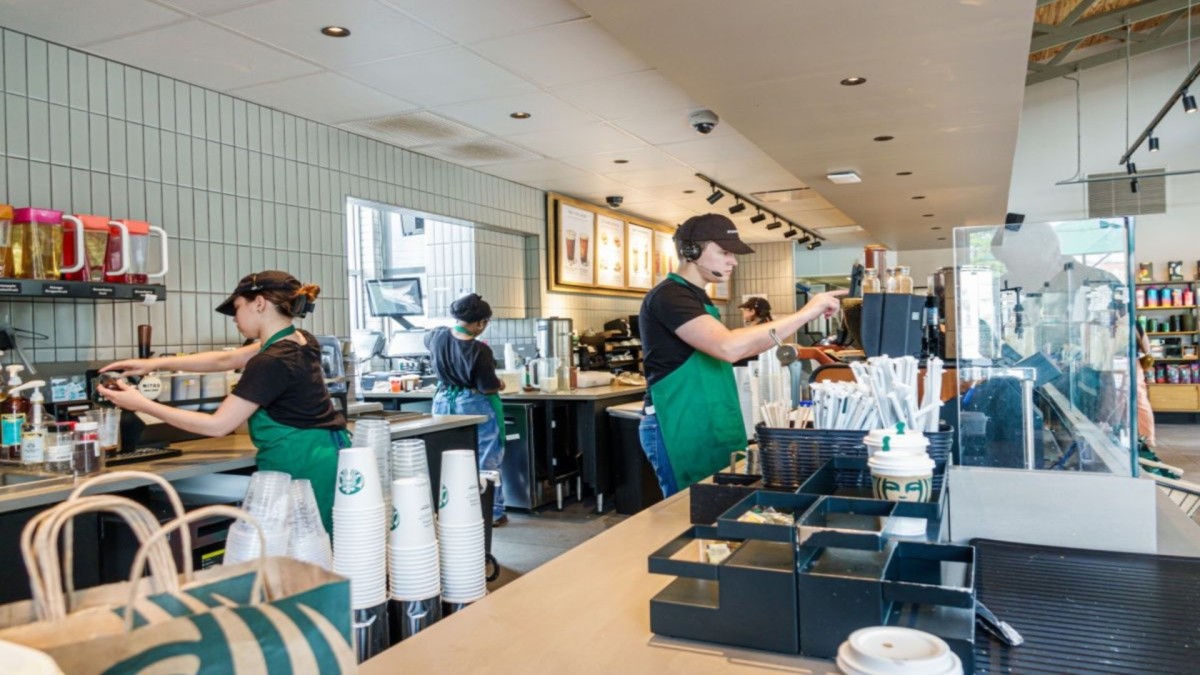 Starbucks announces the closure of all pickup-only stores.
Image Source: Jeff Greenberg/Getty Images
Starbucks reveals new prototypes to replace pickup-only stores
In place of the pickup-only store concept, Starbucks (SBUX) introduced two new prototypes aimed at better balancing convenience and experience:
- A standalone prototype with 32 seats and a drive-thru. This format is expected to open in 2026 and is approximately 30% expensive to build than its traditional coffeehouses.
- A small-format version with around 10 seats. This prototype is currently under construction in New York City and will open in the coming months.
“We believe this new prototype will deliver an exceptional customer experience, improve unit economics, and unlock growth opportunities in more markets,” said Niccol.
Starbucks updates its turnaround strategy
One key objective in Starbucks’ turnaround plan is encouraging customers to spend more time in its stores, which aims to improve declining foot traffic and encourage more in-store purchases.
To achieve this goal, the coffee giant has already made multiple short-term enhancements to improve the customer experience, including free in-café refills, bringing back handwritten notes on cups, reintroducing condiment bars, and using ceramic mugs for in-store beverages.
Related: After big cuts, Starbucks’ menu gets ‘secret’ new additions
As for its long-term goals, Starbucks launched a new “Coffeehouse Uplift” program, with a planned investment of around $150,000 per store. The company aims to upgrade locations with little to no downtime by slowing new builds and major renovations.
“Every coffee house we operate should be warm and welcoming and provide a place for customers to connect and gather,” said Niccol.
In May, Starbucks announced it would begin several store remodeling projects, with New York City as the first target, and Southern California starting in the fourth quarter.
The company expects to complete at least 1,000 uplifts across North America by the end of 2026.
Starbucks rolls out a new model and technology to reignite growth
Along with announcing the pickup-only store closures, Starbucks unveiled a new foundational operating model called “Green Apron Service,” designed to establish repeatable, consistent, and scalable store standards.
This is the company’s biggest investment ever in operating standards and customer service, and it will be rolled out across all company-owned locations in August.
“It is enabled by an evolved staffing model, which includes adjustments to roster size, labor hours, peak coverage, and deployment,” said Niccol.
More Retail News:
Starbucks says the feedback has been positive in just eight weeks since rolling out a 1,500-store pilot. There have been improvements in transactions, sales, and customer service, with peak-hour transaction comps showing growth and all-day transaction comps outperforming the broader North American portfolio.
The coffee giant also introduced SmartQ technology, an advanced order sequencing algorithm designed to ensure consistent and timely service in Starbucks stores. Since its implementation, the company claims to have seen a double-digit increase in the percentage of orders handed off under four minutes, with 80% now meeting that target.
Nonetheless, Starbucks continues to struggle. In the third quarter of fiscal 2025, U.S. comparable sales fell 2%, driven by a 4% transaction decline.
Related: Veteran fund manager unveils eye-popping S&P 500 forecast