
Last month, Elon Musk reached a new milestone: He became the first person in modern history to achieve a net worth of $400 billion.
Musk made the jump after his rocket company, SpaceX, was valued at $350 billion recently, causing a $20 billion jump in his net worth, according to the Bloomberg Billionaires Index.
The jump started speculation that Musk could become the world’s first trillionaire as soon as 2027.
Related: Elon Musk’s net worth: Setbacks on the road to trillionaire status
But the truth is, Musk’s finances have taken a hit in 2025. Year to date, his fortune is down $80.5 billion and currently sits at $352 billion, thanks mainly to a Tesla stock that is down nearly 25% year to date.
While Musk is barely scraping by, Tesla’s board just threw him an 11-figure lifesaver.
On August 3, the board approved a stock award of 96 million shares to Musk, tentatively valued at $23.7 billion, but with Tesla’s gains Monday, that award is already worth nearly $30 billion.
According to a Tesla corporate filing Monday, Musk need only remain “in continuous service as CEO or as an executive officer responsible for product development or operations” for two years from August 3 for the stock options to vest.
Musk only has to pay $23.34 per share of restricted stock that vests. At the time of this writing, Monday, August 4, Tesla shares were trading at $307.11.
While Tesla shareholders have voted repeatedly to reward Musk with multi-billion paydays, new data suggests this latest reward may not be earned.
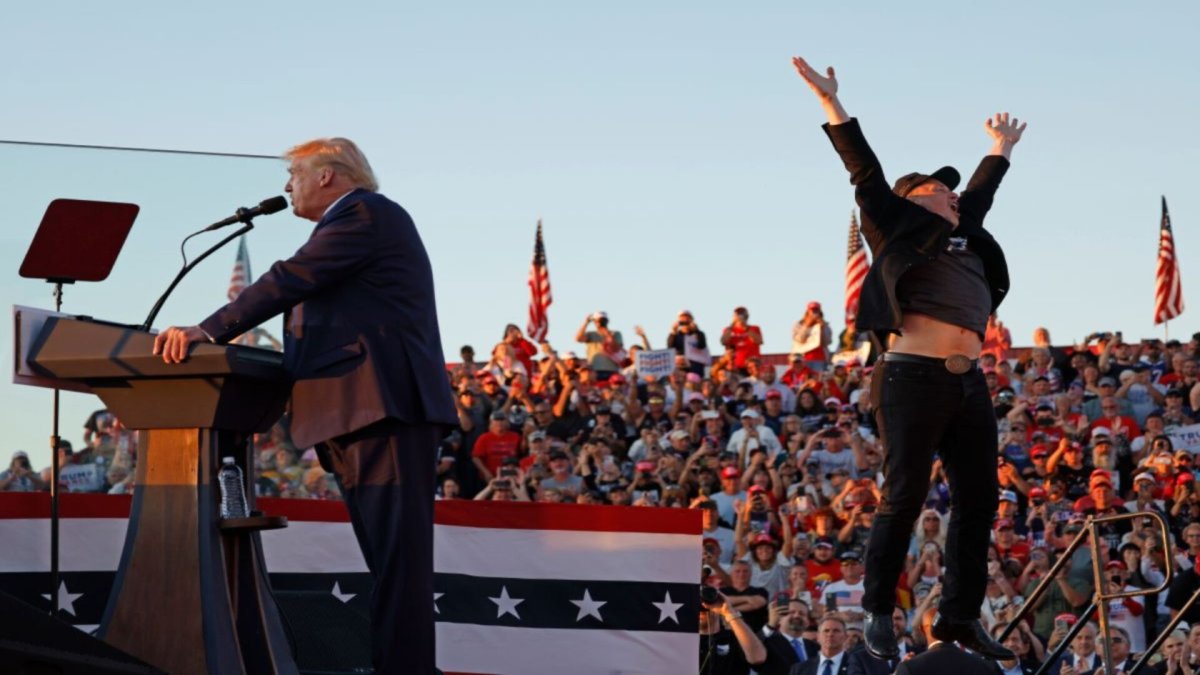 Elon Musk’s political activism has turned from an asset into a liability.
Image source: Moneymaker/Getty Images
Musk’s political activism is costing Tesla brand loyalty and sales
Elon Musk’s political activism was an asset in 2024.
Musk picked the right horse when he used at least $250 million of his own money to help get Donald Trump re-elected.
Trump’s win pushed Tesla’s stock price, and Musk’s fortune, to new heights. But Musk’s short time in Washington as the leader of the Department of Government Efficiency and his relationship with Trump has quickly turned from an asset to a liability for Tesla.
Tesla brand loyalty peaked in June 2024, according to S&P Global Mobility data seen by Reuters, when 73% of Tesla-owning households looking to buy a new car purchased another Tesla.
Related: Elon Musk has a simple solution for Tesla’s problems in Europe
This represented significant brand devotion, since among auto brands from the fourth quarter of 2021 through the third quarter of 2024, only Ford’s quarterly loyalty rate exceeded 60%, and only one time.
Yet more recent data, which tracks registration data across all 50 states, shows that Tesla’s loyalty rate bottomed in March, with just 49.9% of Tesla owners looking for another.
That number ticked back up to 57.4% in May. Musk’s last day at DOGE was May 30.
Tesla’s brand loyalty is no longer a differentiator from other companies
S&P analyst Tom Libby told Reuters that Tesla’s decline from the unquestioned industry brand loyalty leader to industry average was “unprecedented.”
“I’ve never seen this rapid of a decline in such a short period of time,” he said.
For the four years before July 2024, Tesla acquired, on average, five new households for every one it lost, well ahead of any rivals.
The next-closest competitor was Hyundai’s luxury Genesis brand, which averaged 2.8 new households for every one it lost.
But since February 2025, Tesla has only gained fewer than two households for every one it lost to a competitor.
Related: Tesla stock tumbles following latest Elon Musk miscalculation