
OpenAI isn’t going public — well, not yet, anyway.
That didn’t stop the ChatGPT maker from dishing out a very different kind of power move.
The AI frontrunner is reportedly exploring a secondary deal that could send its valuation soaring and have insiders laughing all the way to the bank.
💵💰Don’t miss the move: Subscribe to TheStreet’s free daily newsletter💰💵
It’s a quiet flex, but one that effectively shifts the AI leaderboard once again, putting fresh pressure on rivals like Elon Musk’s xAI.
It’s more than a number; it’s a major signal.
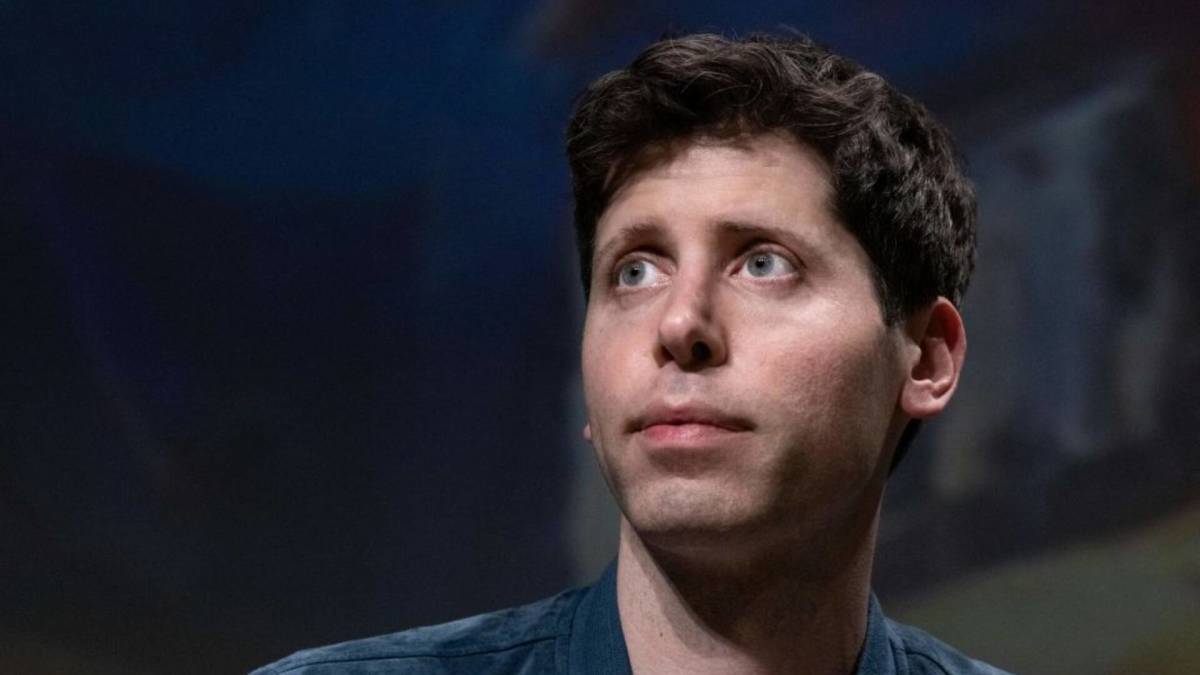 OpenAI’s rumored $500 billion valuation redefines the race and leaves rivals playing catch-up.
Image source: Saget/AFP via Getty Images
ChatGPT’s dominance feels like a global takeover
OpenAI’s ChatGPT hasn’t just been leading the AI chatbot space; it has steamrolled the competition.
As of July 2025, ChatGPT held an eye-catching 82.7% share of the global chatbot industry, according to a report from StatCounter Global Stats.
That’s effectively eight times the market share of its closest competition. Also, the user numbers back that story up remarkably well.
Related: Jim Cramer drops jaw-dropping price target on Palantir stock post-earnings
ChatGPT now serves north of 700 million weekly active users as of August, a massive step up from 400 million earlier this year.
Some third-party estimates put the number even higher, between 800 million and 1 billion weekly users.
On top of that, it’s not just usage — it’s reach.
In July, a Sensor Tower report showed that ChatGPT was the fastest app ever to zoom past both 500 million monthly active users and 1 billion downloads on iOS and Android.
That footprint covers individuals and enterprise teams, giving OpenAI a massive edge that’s remarkably wide and deep.
Why no one’s catching ChatGPT anytime soon
ChatGPT’s edge lies in its sticky and robust ecosystem.
The AI runs on OpenAI’s top-tier GPT-4 and GPT-4o architectures, delivering context-aware, humanlike responses compared to its peers.
There’s also the integration bit where, with Microsoft’s backing, ChatGPT is now wired directly into Azure AI, Copilot, and the full Office suite.
That essentially makes it the default assistant for tens of millions of knowledge workers globally.
Related: Cathie Wood splurges $4.1 million on popular AI stock
It’s also winning with developers.
OpenAI’s flexible API offerings have solidified the company’s position as the go-to infrastructure layer for startups and enterprises. That also creates a sprawling web of use cases, integrations, and custom tools, efficiently feeding into the core product.
On top of that, ChatGPT’s pace of innovation hasn’t slowed one bit. Recent features like real-time voice, image input, and plugin support have only made it stickier and driven greater engagement.
On the flip side, reports show that Google’s Gemini holds just 2.2% of the global market, with roughly 47 million active users as of this year.
Even in the U.S., where its market share improves and goes up to double-digits, it trails substantially behind ChatGPT’s near-60% dominance.
Anthropic’s Claude is further back, with just a 0.91% market share and close to 18.9 million users, per reports from StatCounter and Analyzify. Despite its success in privacy-focused enterprise, it lacks consumer momentum.
And Musk’s xAI Grok?
It’s been showing strong early traction with 35.1 million monthly users and 5.68 million daily visits, backed by a built-in X (formerly Twitter) audience.
However, it’s still comfortably behind ChatGPT’s product maturity, integrations, and powering its growth flywheel.
OpenAI’s quiet $500 billion play sends a strong market signal
OpenAI’s rumored $500 billion valuation just flipped the script on the AI investment game.
The ChatGPT maker is reportedly in early talks for a secondary share sale, allowing its employees and early investors to cash out on a massive payday (several billion dollars in equity).
It’s the kind of liquidity event most startups can only dream about, especially before an IPO. What’s more surprising is that it comes just months after a jaw-dropping $40 billion funding round led by SoftBank.
The leap from a whopping $300 billion valuation in March to a potential $500 billion today tells investors a couple of things.
First, they’re not dealing with a frothy AI market, but what seems more like a runaway train. Second, OpenAI isn’t slowing down.
With ChatGPT pulling in crazy active user numbers, users, and a projected $20 billion in annual recurring sales by year-end, the company is sending a very clear message to its competition.
More News:
- Warren Buffett’s stock sends louder signals than Berkshire’s earnings beat
- Veteran analyst spots unexpected star in Apple’s earnings report
- Nvidia avoids White House crackdown; Trump softens on AI giant
And with every funding round, from the 2015 Y Combinator grant to Microsoft’s $1.3 billion in 2023, OpenAI keeps pulling fatter checks, faster.
xAI’s valuation gap could start to sting
Needless to say, this is a very tough act to follow if you’re Elon Musk.
xAI, Musk’s AI venture, was valued at close to $113 billion during its own secondary share sale in June.
That’s more than a respectable number, until you put it toe-to-toe against OpenAI’s rumored $500 billion.
For xAI, that gap is more than just symbolic.
Naturally, investors currently view OpenAI as the clear frontrunner in generative AI. That might make backing xAI a lot less compelling, while pushing talent and future funding toward Sam Altman’s outfit instead.
In a tight AI talent market, we’ve seen that perception hits hard.
To stay competitive, xAI will want to offer richer equity packages or accept tougher capital terms.
Moreover, now with OpenAI’s valuation acting as a new pricing benchmark for the entire AI industry, the pressure is on.
Related: JPMorgan drops 3-word verdict on Amazon stock post-earnings