
Kroger CEO Ronald L. Sargent came to the company four months ago with a strong mandate to shake things up. He entered his position just after the company’s merger with Albertsons fully fell apart. Essentially, he joined the company at a time when any existing plans needed to be thrown out the window. That deal took roughly two years to not happen, leaving Kroger (KR) a company lacking direction and leadership. Sargent filled that void and has started to show results.”Kroger identical sales, excluding fuel and adjustment items, increased 3.2%. And adjusted net earnings per diluted share were $1.49 in the first quarter, which was an increase of 4%,” he shared during the grocery company’s first-quarter earnings call.He also began to lay out his long-term vision (albeit in a very basic fashion).”My priorities in this role are to position Kroger for long-term growth, accelerate top line sales and run great stores. We can do this by better focusing on our core business and by creating a growth culture in the company. Kroger has a long runway with many opportunities ahead and I’m grateful to be part of the team as we transition to our next phase of growth,” he shared.
That’s all very basic, but the CEO also shared three tangible ways the company has already shifted course.
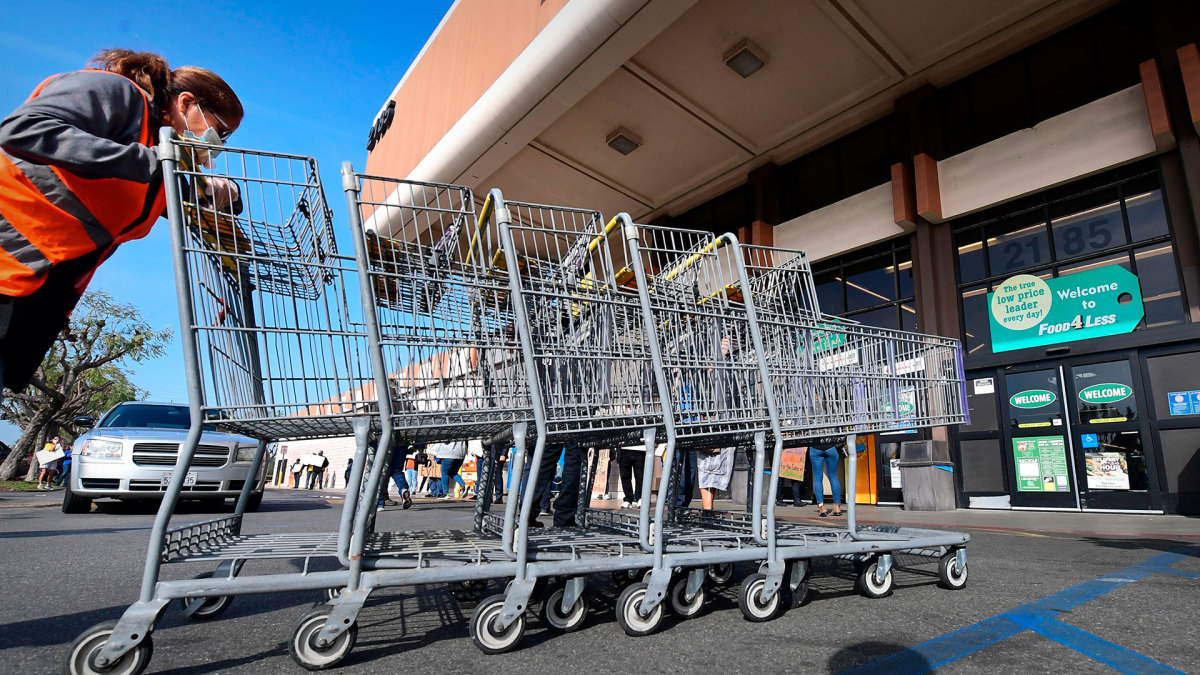 Kroger’s new CEO has a vision for the company’s growth.
Image source: AFP/Getty Images
1. Kroger plans to follow customers trends
“Earlier this year, we identified protein as a major customer trend. And soon, Simple Truth will introduce 80 new protein products to our assortment,” he shared.
It will be a broad product range.
“Targeted directly at this important trend, these products include everything from bars and powders to shakes, all from a natural and organic brand that customers trust. This is just one way that Kroger and our brands are innovating to stay ahead of what our customers want,” he added.
2. Kroger invests in digital growth
Walmart, Amazon, and Target have always had a digital edge over Kroger. That’s something Sargent has been working to fix.
“E-commerce continues to be a key part of our business with 15% growth in the first quarter, driven by strong demand in delivery,” he said.
That growth happened, at least partly, due to the company’s investments.
“To keep improving the customer experience, we are working to deliver more accurate orders faster and reduced pickup wait times. These improvements are attracting new households to e-commerce and giving our current households more reasons to shop with us,” he added.
More Retail:
- Warren Buffett’s Berkshire Hathaway dire retail warnings
- Huge retail chain nears Chapter 11 bankruptcy after harsh closure
- Walmart introduces mobile new store format for younger customers
3. Kroger house brands are leading the way
Kroger calls its house brands, which include a number of different labels, “Our Brands.” Sargent has supported investing in those brands.
“Turning to Our Brands. As more customers search for value, we are excited about the potential for the Our Brands business. We are growing sales by offering high-quality products to customers at all budget levels,” he shared.
In Q1, Our Brands grew faster than national brands for the seventh consecutive quarter.
“Simple Truth and Private Selection led our sales growth, highlighting that customers want premium products, while also spending less. Our Brands is also creating new products that support customers’ healthier eating habits,” he added.
4. Kroger wants to deliver more value
Sargent noted that customers have told the chain they’re wary about money and have been eating more meals at home. That’s something the CEO believes is good for his company.
“Kroger is well positioned to support our customers’ changing shopping habits. We offer compelling promotions and fuel rewards, outstanding Our Brands products, and personalized promotions that offer families better savings on the products they use the most,” he said.
The grocery chain is also working to improve its promotions.
“We’re simplifying our promotions to make it easier for customers to save and to see clear value at the shelf. In fact, we have lowered prices on more than 2,000 additional products so far this year,” he added.
Sargent also shared that the chain is ready for any tariff-related pricing issues.
“As part of our work to keep prices low, we’re also watching the changing environment around tariffs. Our business model is flexible to respond to those kinds of shifts. And as a domestic food retailer, we expect a smaller business impact than some of our competitors,” he added.
Related: Amazon enters used car market to disrupt broken dealer process
A look back at the Kroger and Albertsons merger efforts
- October 14, 2022: Kroger announces its proposed acquisition of Albertsons for $24.6 billion, aiming to close the deal in early 2024.
- January 15, 2024: Kroger, Albertsons, and C&S Wholesale Grocers cite continued engagement with regulators and push the anticipated closing to the first half of Kroger’s fiscal 2024.
- February 26, 2024: The FTC files an antitrust lawsuit to block the merger, arguing consumers and workers would be harmed by reduced competition.
- July 9, 2024: The companies unveil a revised divestiture plan: selling 579 stores, plus 8 distribution centers and 2 regional offices to C&S, as a remedy for antitrust concerns.
- December 10, 2024: A U.S. District Judge in Oregon issues an injunction blocking the merger; a Washington judge issues another similar injunction.
- December 11, 2024: Albertsons terminates the merger agreement and files suit against Kroger for breach of contract, seeking a $600 million termination fee (and more in damages). Kroger responds by denying liability and fighting the payout.
Related: Costco accused of massive violation of members’ trust