
During uncertain economic times, it makes perfect sense that consumers become much more cautious about spending. The caution extends to anything considered discretionary, from restaurant meals to travel to household goods, especially pricey ones like furniture and appliances.
People only “need” a new couch or dining set every few years, so furniture is one of those categories that’s especially vulnerable when people are worried or they’re reluctant to move to a new home.
💰💵Don’t miss the move: SIGN UP for TheStreet’s FREE Daily newsletter💰💵
In after-hours trading and ahead of La-Z-Boy Incorporated’s latest earnings call, on August 20, 2025, the company’s stock dropped 16%. The drop highlighted furniture retailers’ ongoing struggles as inflation and a sluggish housing market drag down consumer demand.
While the company continues to expand its retail footprint and strengthen its balance sheet, sales growth remains uneven and profitability is under pressure.
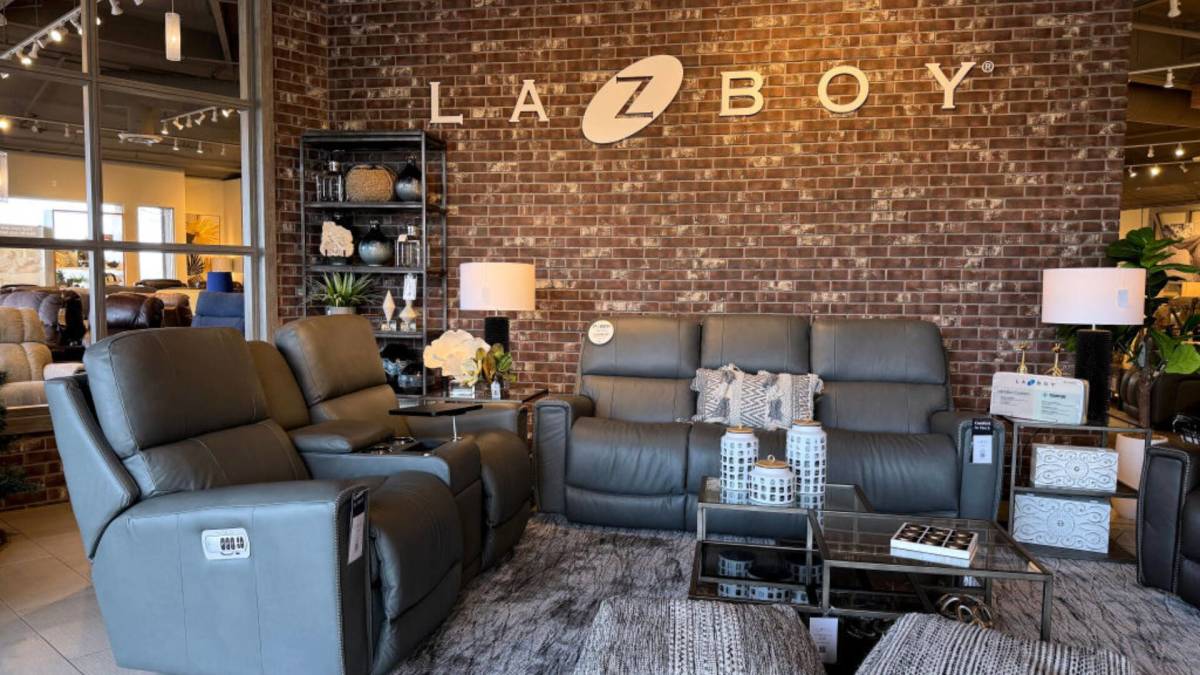 La-Z-Boy stock tumbled due to a sales slump in the company’s Joybird brand.
Image source: Sullivan/Getty Images
La-Z-Boy sales take a hit as Joybird brand drags results
For the fiscal 2026 first quarter, consolidated sales fell 1% year over year to $492 million, per La-Z-Boy Incorporated CEO Melinda Whittington. The company’s core retail and wholesale segments posted modest gains, according to the company announcement.
Retail sales rose 2% to $207 million and wholesale climbed 1% to $353 million, but the improvements were offset by a 20% decline at Joybird, the customizable, modern, and mid-century-inspired furniture line that La-Z-Boy acquired in 2018.
Related: Home Depot, Lowe’s quietly raising prices due to tariffs
Whittington highlighted progress on the company’s long-term Century Vision strategy, discussing the opening of two new company-owned La-Z-Boy Furniture Galleries.
She also announced a significant milestone: the pending acquisition of a 15-store Furniture Galleries network in the Southeast, the largest independent acquisition in the company’s history.
Whittington said on the call:
“We’re balancing our optimism in the long-term industry fundamentals and our competitive positioning with a pragmatic approach to current uneven consumer demand.”
The company is transitioning to a new Arizona distribution center, the first of three planned centralized hubs to modernize La-Z-Boy’s supply chain.
“We delivered sales growth in both our retail and wholesale segments as well as margin expansion in wholesale,” Whittington added, emphasizing strategic execution despite “continued industry headwinds.”
La-Z-Boy margins under pressure
La-Z-Boy (LZB) generated $36 million in operating cash flow and invested $18 million in capital expenditures, mostly in new stores, remodels, and manufacturing, according to CFO Taylor Luebke.
More Retail Stocks:
- Kroger brings back paper coupons in a new way
- Target’s customers walked away; How it plans to win them back
- Amazon analysts turn heads with surprising take on grocery plan
The company ended the quarter with $319 million in cash and no borrowings on its $200 million revolving credit facility, which was recently amended to extend maturity to 2030. It also returned $21.5 million to shareholders through dividends and share repurchases ($12.5M repurchases, $9M dividends).
In addition to the Furniture Galleries stores, La-Z-Boy intends to open three to four new Joybird stores.
Analysts concerned about consumer weakness
During Q&A, analysts focused on demand trends. Whittington acknowledged that traffic improved through the quarter and into early August but cautioned that it was “too early to call that a trend.”
On new store profitability, Luebke explained that new retail locations typically drag on margins in their first year, improve in year two, and reach incremental growth levels by year three.
Related: Target has a problem (it’s coming from inside the building)
Some participants on the call asked about tariffs, but Whittington stressed that most La-Z-Boy products are manufactured in North America, leaving the company less exposed than some competitors.
She emphasized the company’s long-term confidence: “We’re navigating prudently as we go forward.”
Risks and red flags for La-Z-Boy
Persistent weakness in the housing market, often a driver of furniture sales, continues to weigh on demand for large-ticket items.
Analysts flagged several risks, including:
- Margin pressure from new store openings and fixed cost de-leverage.
- Consumer uncertainty leading to choppy sales and traffic.
- Joybird’s ongoing struggles, with a 20% year-over-year revenue decline.
- Tariff volatility, particularly in Canada, where retaliatory tariffs are impacting unit volumes.
Still, La-Z-Boy is doubling down on its long-term growth strategy, highlighted by the acquisition of the Furniture Galleries stores and investments in a modernized supply chain.
The company also boasts a strong financial foundation, with ample cash reserves and no debt. For now, La-Z-Boy is balancing aggressive investment with cautious execution, betting that its Century Vision plan will pay off once consumer spending stabilizes.
Related: Dollar General adds a new perk many customers can’t afford